






Products
SW Capacitor Discharge Stud Welder for Industrial Stud Welding
CAPACITOR DISCHARGE WELDERS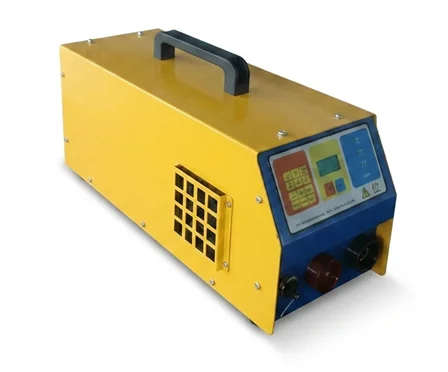
Reliable capacitor discharge stud welding solution for threaded studs, weld pins and metal fasteners on thin sheet metal, with technical support and application advice from ATS.
In modern manufacturing environments, where components must be assembled quickly while maintaining accuracy and a clean surface finish, capacitor discharge stud welding represents an effective solution for fixing threaded studs and metal fasteners onto thin sheet materials.
The SW Series stud welding machine has been developed for industrial applications requiring fast production cycles, consistent weld quality and minimal heat transfer to the workpiece. The process creates a strong permanent connection while reducing the risk of distortion, marking or damage to the surrounding material.
Unlike conventional joining methods that may require drilling, additional preparation or secondary operations, capacitor discharge welding allows studs and pins to be directly attached to the sheet metal surface with a highly localised energy release. This makes the technology particularly suitable for manufacturers working with precision components, fabricated sheet metal parts and assemblies where appearance and dimensional stability are important.
The operating principle is based on storing electrical energy inside a high-capacity capacitor bank and releasing it through a controlled discharge cycle. When the welding gun places the stud against the workpiece, the electrical discharge melts the stud tip and the base material simultaneously, creating a small and controlled weld pool that solidifies almost immediately.
With a welding cycle of only 1 to 3 milliseconds, the SW Series provides excellent process speed while maintaining repeatable welding performance. The reduced thermal input makes this technology particularly suitable for thin sheet metal welding from 0.5 mm thickness, where excessive heat could affect the final component quality.
The system can be used for welding threaded studs type pt, non threaded studs type ut and internal threaded studs type it (DIN EN ISO 13918) in materials including mild steel, stainless steel, aluminium and brass. It supports stud diameters from M3 to M8 (M10 depending on configuration) and lengths from 5 to 35 mm, making it suitable for a wide range of industrial applications.
Typical applications include sheet metal fabrication, industrial components, electrical cabinets, mechanical assemblies and manufacturing processes where reliable fastening, production efficiency and repeatability are required.
Before selecting a capacitor discharge stud welding system, several factors must be evaluated, including material type, sheet thickness, stud dimensions, production volume and integration requirements. ATS supports companies in analysing these parameters to identify the most suitable configuration for each specific application.
| Specification | Value |
|---|---|
| Technology | Capacitor Discharge Stud Welding |
| Power supply | 220 V / 50 Hz |
| Charging voltage | 20–200 V adjustable |
| Capacitor capacity | 99,000 µF |
| Capacitor rating | 250 VDC – 2 million cycles |
| Stud diameter | M3–M8 (M10) |
| Stud length | 5–35 mm (>35 mm depending on configuration) |
| Suitable materials | Mild steel, stainless steel, aluminium and brass |
| Recommended minimum sheet thickness | ≥ 0.5 mm |
| Welding time | 1–3 ms |
| Production speed | 25–30 studs/min |
| Control system | Microprocessor |
| Automation | Optional RS485 connection |
| Welding cable | T2 copper – 25 mm² |
| Weight | 25 kg |
| Machine dimensions | 550 × 211 × 238 mm |
The SW welding gun has been designed to provide accurate positioning and stable operation throughout the welding cycle. The controlled contact pressure ensures a reliable electrical connection before the discharge starts, while the guided vertical movement helps achieve consistent stud positioning during the welding process.
| Specification | Value |
|---|---|
| Stud diameter | M3–M8 (M10) |
| Stud length | 5–35 mm (>35 mm depending on configuration) |
| Welding cable length | 3 metres |
| Gun dimensions | 182 × 130 × 35 mm |
The selection of a capacitor discharge stud welder should always consider the real production requirements rather than only the machine specifications. Material characteristics, component geometry, stud dimensions, operating conditions and production targets all influence the most effective solution.
ATS Lamberti supports manufacturers in choosing the correct SW Series configuration by providing technical consultancy, application evaluation, system configuration support and assistance in identifying the most suitable solution for the customer's production process. The standard to which this type of welding refers is DIN EN ISO 13918.
With dedicated technical support, ATS helps companies implement reliable and efficient stud welding solutions designed around their specific manufacturing needs.
FAQ and insights
A capacitor discharge stud welding machine is a system designed for welding threaded studs, non-threaded studs and internal threaded studs directly onto metal surfaces, especially thin sheet materials.
The operating principle is based on storing electrical energy inside a capacitor bank and releasing it through a controlled discharge cycle lasting only a few milliseconds. The generated current melts the stud tip and the base material simultaneously, creating a strong and permanent welded joint.
Compared with other joining methods, capacitor discharge welding technology provides extremely low heat input, reducing the risk of distortion, surface damage and changes to the properties of the workpiece.
The SW Series stud welding system is designed for industrial applications where high production speed, process accuracy and repeatable welding quality are required, including sheet metal fabrication, mechanical components and industrial assemblies.
The SW capacitor discharge stud welding machine can weld different types of metal fastening elements according to DIN EN ISO 13918, depending on the application and the material to be joined.
The system is suitable for welding threaded studs type PT, non-threaded studs type UT and internal threaded studs type IT, allowing strong fixing points to be created on thin sheet metal without drilling or additional machining operations.
The SW Series can process stud diameters from M3 to M8 (up to M10 depending on the configuration) with lengths from 5 to 35 mm. The most suitable stud type depends on the required function, component design and production requirements.
ATS Lamberti supports manufacturers in selecting the correct configuration by evaluating the fastening element, base material and operating conditions in order to achieve a reliable and repeatable welding process.
The SW capacitor discharge stud welding system can be used for welding different metallic materials, including mild steel, stainless steel, aluminium and brass.
Thanks to the capacitor discharge technology, the welding energy is released in an extremely short time, allowing the installation of threaded studs type PT, non-threaded studs type UT and internal threaded studs type IT even on thin sheet metal starting from 0.5 mm thickness.
The correct system configuration depends on the base material, sheet thickness, fastening element dimensions and production requirements. The technical team at ATS Lamberti supports companies in selecting the most suitable solution to achieve a reliable, efficient and properly configured welding process.
Capacitor discharge stud welding provides several advantages compared with traditional fastening methods, especially when a strong mechanical connection is required while keeping heat input to the component extremely low.
The very short welding cycle, between 1 and 3 milliseconds, helps minimise sheet distortion, reduce surface marks and maintain the original characteristics and appearance of the workpiece.
This technology also allows the direct welding of threaded studs type PT, non-threaded studs type UT and internal threaded studs type IT without drilling holes or performing additional machining operations, improving production efficiency and reducing assembly times.
Thanks to accurate energy control and excellent process repeatability, the SW Series is a reliable solution for industrial applications where weld quality, production speed and consistent results are essential. The technical team at ATS Lamberti supports companies in selecting the most suitable configuration according to their production requirements.
Informative
We and selected third parties use cookies or similar technologies for technical purposes and, with your consent,
also for other purposes as specified in the .
If you close this banner with a tick or click on "Decline", only technical cookies will be used. If you want to select the
cookies to be installed, click on 'Customise'. If you prefer, you can consent to the use of all cookies, including
cookies other than technical cookies, by clicking on "Accept all". You can change your choice at any time.