10 articles available

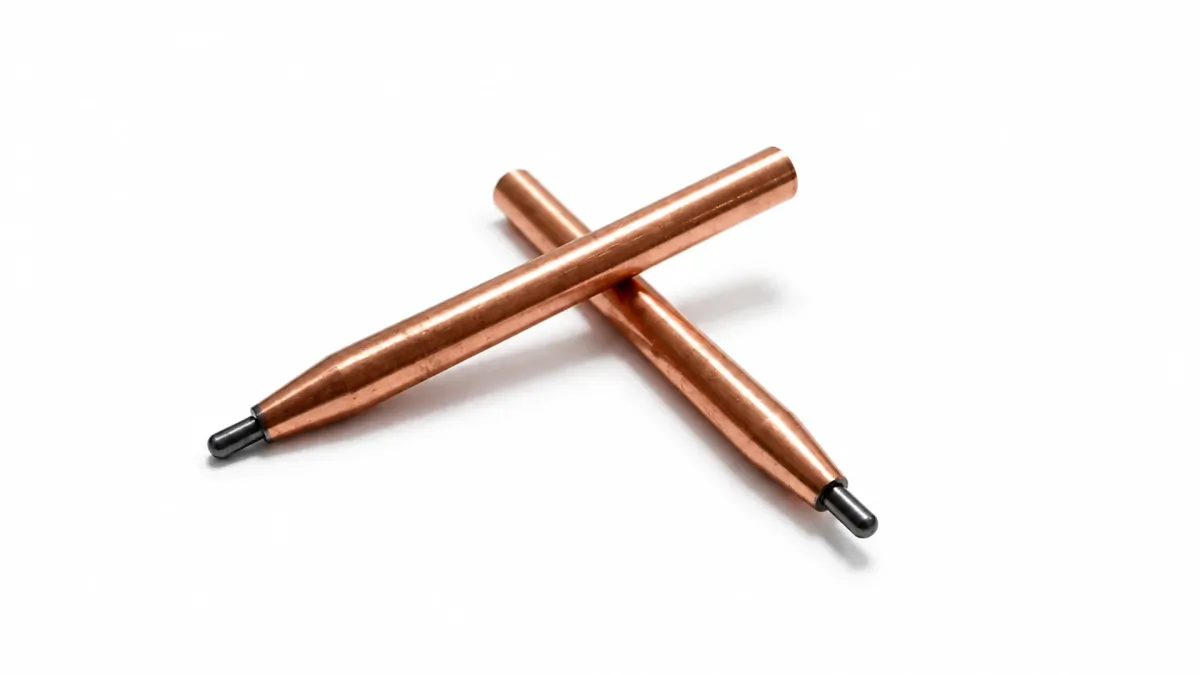
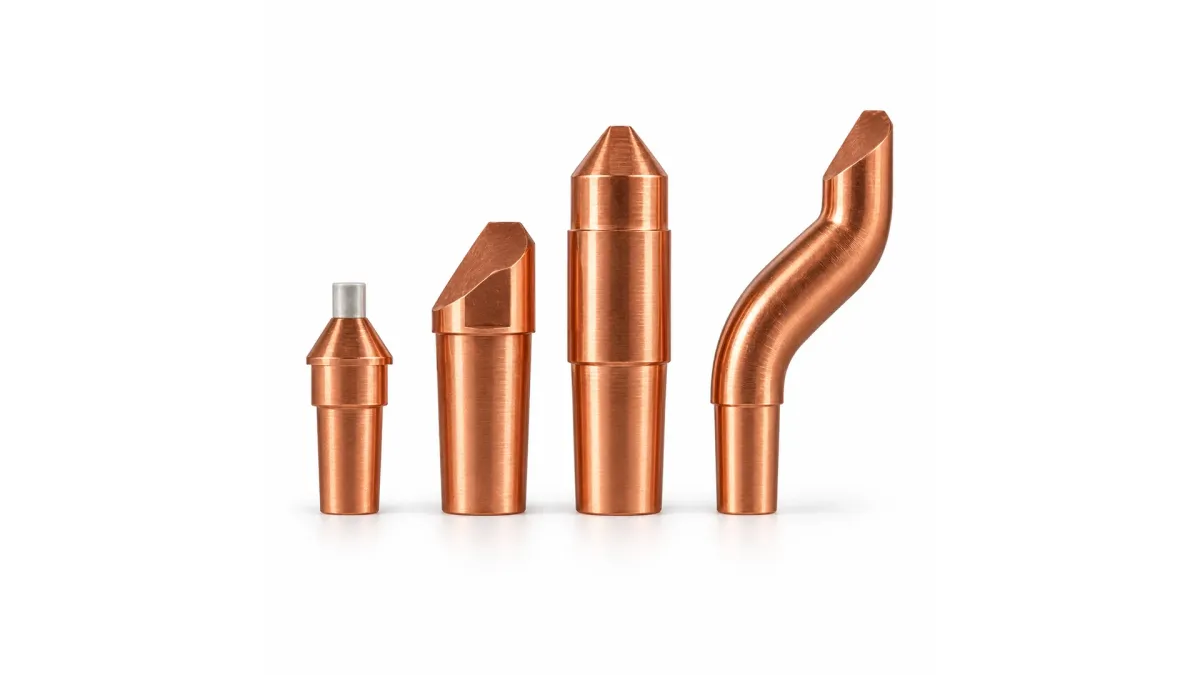
Electrodes with Tungsten Insert for Resistance Welding In the resistance welding field, the use of suitable spot welding electrodes is essential to guarantee the quality of the welded joint, the durability of the tool and the efficiency of the production process.A.T.S. Lamberti offers a complete line of copper alloy electrodes with Tungsten or Molybdenum inserts, designed for high-performance applications where strength, precision and operational continuity are required.Electrodes with Tungsten insert consist of a highly conductive copper body (such as CuCr1Zr or CuCoBe) and a tungsten or molybdenum tip, which is welded or brazed.This configuration combines the advantages of both materials: copper ensures effective electrical and thermal conductivity, while tungsten offers mechanical strength, hardness and dimensional stability even at high temperatures.The result is a spot welding electrode particularly suitable for welding difficult materials, such as high-strength steels, galvanised steels, stainless steels or dissimilar alloys.The main advantages of these electrodes include high wear resistance, reduced indentation, maximum operating life, consistent weld quality and the possibility of customisation according to specific requirements.Thanks to the stability of the active material in tungsten, it is possible to perform intensive or automated welding cycles while maintaining high performance.Typical applications are in high-tech sectors such as automotive (including electric vehicle production), household appliance components, precision mechanics, and the production of electrical or electronic components.Electrodes with Tungsten tip are ideal for spot, roller or resistance welding on materials of different thicknesses, where precise concentration of current and pressure is required.A.T.S. Lamberti offers a wide range of standard electrodes for resistance welding and, above all, is a qualified supplier of electrodes that can be fully customised to the customer's design.It is possible to produce pointed, roller, threaded, flanged electrodes or electrodes with specific fastening systems.A.T.S. provides technical support: from the choice of material to the definition of the electrode geometry, the goal is to optimise the customer's process, reducing machine downtime, waste and maintenance costs.With over forty years of experience in resistance welding, A.T.S. Lamberti is a market leader for those seeking robust, reliable and high-performance solutions.Request a consultation, technical enquiry or customised quote for electrodes with Tungsten insert now. Resistance spot welding
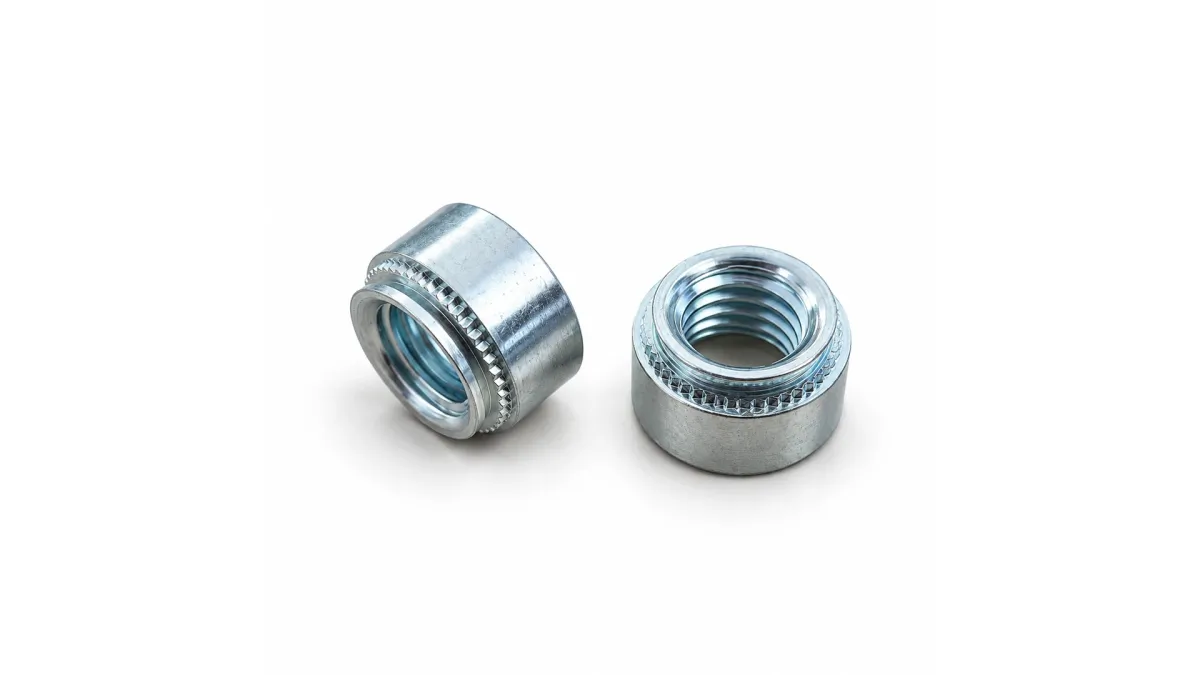
Self-Clinching Nuts Self-clinching nutsrepresent an advanced solution for mechanical fastening on thin sheets. Ideal for industrial applications requiring high mechanical strength and ease of installation, these components offer optimal performance in sectors where precision and reliability are paramount.Technical characteristics of self-clinching nuts These threaded nuts are installed through a controlled deformation process by applying pressure to a pre-punched sheet. This method ensures a secure and permanent union, eliminating the need for welding or thermal operations. The main characteristics include:quick and cold installation, without the need for heat treatments;compatibility with various types of sheets, including steel, stainless steel, and aluminum;high mechanical strength, thanks to the specific design of flanges and grooves.Types of self-clinching nuts available A.T.S. offers a complete range of self-clinching nuts designed to meet the needs of various industrial sectors:ATSS and ATSCLS self-clinching nuts: these press nuts are equipped with knurled flanges and grooves that enhance resistance to torsion. They are particularly suitable for thin sheets and offer excellent resistance in applications subject to dynamic stresses.Flush self-clinching nut: ideal for applications requiring flush surfaces. This type allows for reliable threading in confined spaces, maintaining a compact and robust profile.Hexagonal self-clinching nut type Kalei: thanks to its hexagonal geometry, this nut offers high values of resistance to torsion and pull-out. It is a versatile solution, particularly suitable for structural applications on thin sheets.Blind self-clinching nuts ATSB and ATSBS: these nuts ensure sealed closures, making them ideal for use in environments subject to humidity or contamination, such as electronic devices or exposed components.Advantages of self-clinching nutsEfficiency in the production process: press installation allows for quick assembly, reducing production times and costs.Versatility of use: the wide range of available materials, including galvanized steel, 300 and 400 series stainless steel, and aluminum, ensures solutions suitable for every need.Durability over time: resistance to corrosion ensures reliable fastening even in harsh environmental conditions.A.T.S. self-clinching nuts offer advanced technical solutions for fastening on thin sheets. Thanks to a complete range of types and materials, these components represent the ideal choice for industry professionals who require reliability, durability, and high performance. Their versatility and ease of installation make them essential for a wide range of industrial applications. Contact us for personalized advice or a tailored quote! Industrial fasteners
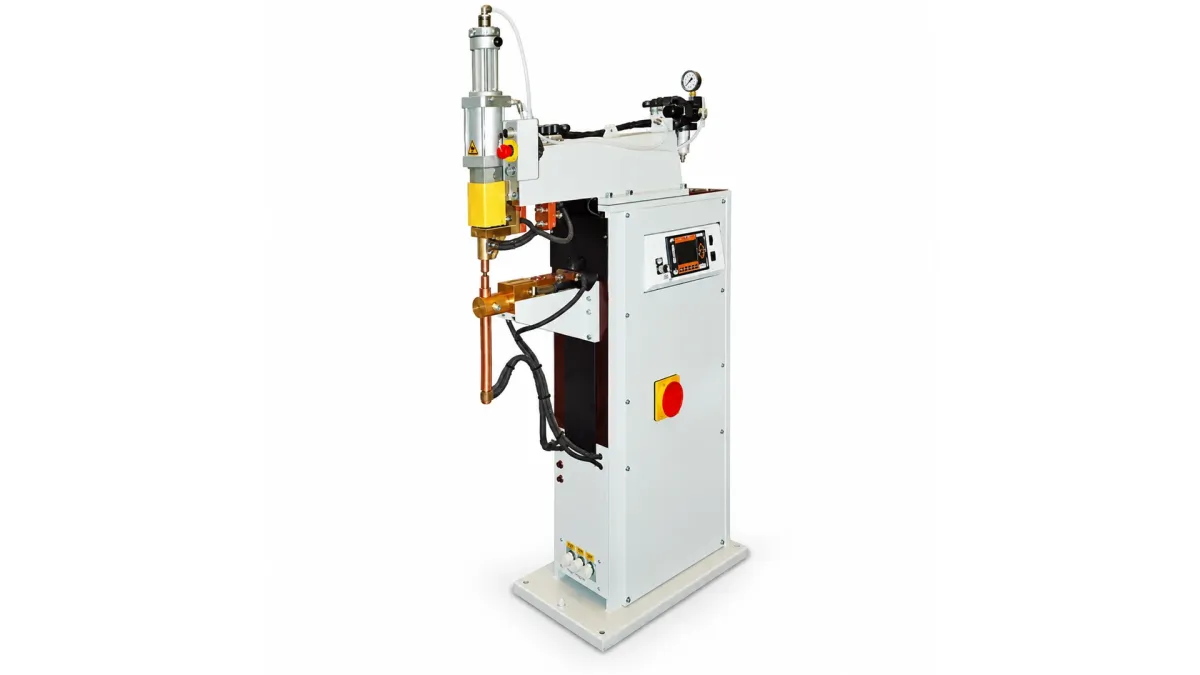
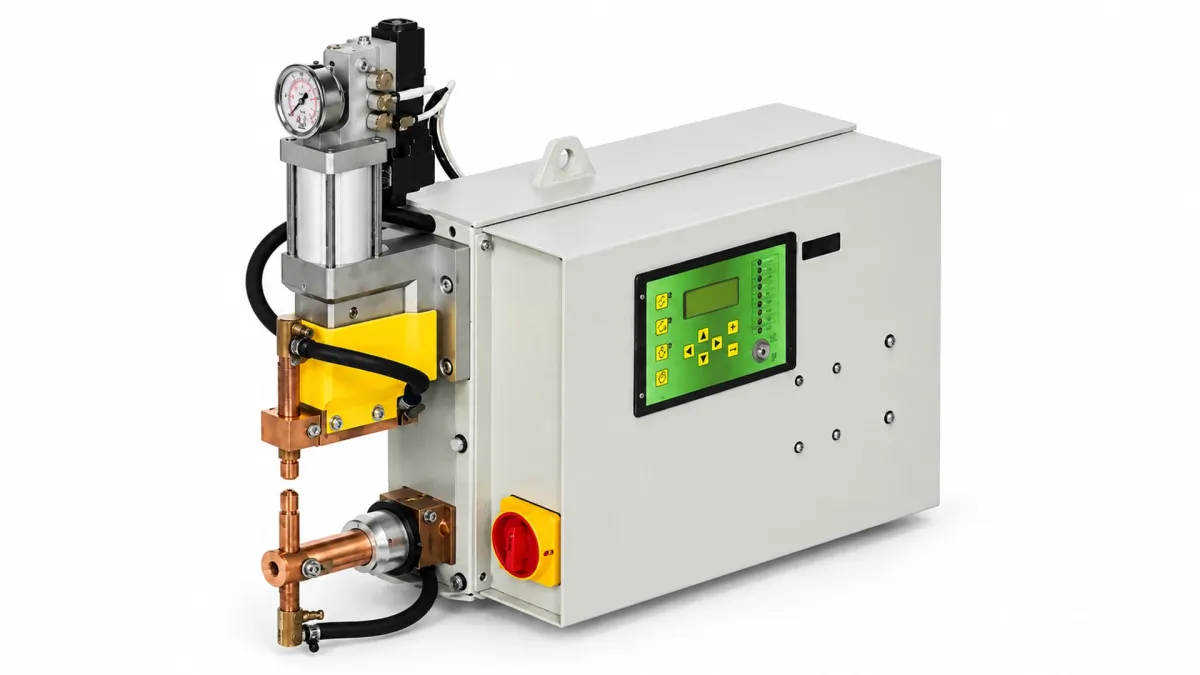
Spot welder In the metalworking industry, choosing the most suitable tools impacts operational efficiency and process optimization. Tools like spot welders can significantly enhance productivity, delivering results that meet the highest quality standards.The importance of spot welding in metalworking Spot welding offers tangible advantages in terms of assembly speed, joint uniformity, and reduced operating costs. Based on controlled metal fusion leveraging resistance to electrical current, this process ensures precise and durable joints, making it an indispensable technology for several reasons:Immediate efficiency: The speed at which a spot welder performs joints is remarkable. This translates into less time spent on each piece and thus higher productivity, making it ideal for mass production.Automation: Spot welding processes can be easily automated, increasing efficiency and repeatability.Cost savings: Spot welding requires fewer consumables than other techniques, reducing the cost per piece. Additionally, the latest generation of welders, such as those offered by A.T.S. Lamberti, are designed for energy-efficient operation.When and why to invest in a spot welder? The ideal time to integrate a spot welder into your production processes is when you aim to significantly enhance the quality and efficiency of your operations. Acquiring this machine is not merely an instrumental investment but an adoption of advanced technology that:is ideal for mass production: spot welders enable handling high volumes without compromising quality.expands your capabilities: the ability to work with various materials, from light alloys to coated metals, opens new market opportunities.reduces waste: thanks to precise control of welding parameters, every joint is optimized, avoiding overloads or defects.Which spot welder model should you choose? The right spot welder depends on the type of work, production volume, and quality standards required. A.T.S. Lamberti offers two main solutions, each designed to meet specific needs and deliver excellent results in various production contexts.Bench spot and projection welders 16kva..150kVA   Power range: with a rated power ranging from 16kVA to 150kVA at 50% direct current, these machines can handle a wide variety of thicknesses and materials.Precision and control: the microprocessor control system ensures optimal management of the welding current, guaranteeing uniform and high-quality joints.Durable construction: the thick chrome-plated steel cylinder and stem ensure long-lasting performance, while the adjustable anti-rotation device enhances reliability during intensive use.Ease of use: the two-stage electric pedal allows precise clamping of pieces, welding only when correctly positioned, reducing errors and increasing efficiency.Simplified maintenance: pneumatic components require no lubrication, simplifying maintenance tasks.Optimized cooling: the transformer, plates, electrode holders, and copper alloy electrodes are water-cooled to prevent overheating, ensuring consistent performance during intensive production cycles.   These machines are also notable for their flexible design: some are equipped for the connection of additional accessories, such as dual controls or supplementary pedals, to easily adapt to various production configurations.  Inverter bench spot and projection welders 32kVA..90kVA   Mid-frequency technology: thanks to the integrated inverter, these welders ensure more stable and uniform welding currents, resulting in superior joint quality and significantly reduced waste.Advanced cylinder: the thick chrome-plated steel cylinder and stem, combined with an adjustable anti-rotation device, ensure longevity and optimal resistance even in demanding applications.Complete control: the control cabinet integrates all key functions, including the inverter, TE700 welding control, and protection devices, for centralized and intuitive management.Operational safety: the two-stage electric pedal and two-hand control with timer enhance safety, reducing operator risks and improving productivity.Silence and precision: electrode speed regulators, exhaust silencers, and end-of-stroke dampers minimize noise and optimize positioning during the process.Energy efficiency and cooling: the welding transformer and copper alloy electrodes are water-cooled, enabling continuous operation without overheating.   Choose Quality with A.T.S. Lamberti The spot welder is much more than a tool; it’s an ally to improve your work. With models suitable for every need, A.T.S. Lamberti offers you the chance to take the next step toward efficiency, quality, and competitiveness.Learn more about our spot welders and transform your way of working. Contact us for more information! Resistance spot welding
Welding electrodes Resistance welding is one of the most widely used techniques in the industrial sector for joining metal materials, especially in areas such as automotive, domestic appliance industry and mechanical component manufacturing. A.T.S. Lamberti offers a wide range of resistance welding electrodes, designed to guarantee high performance in every application. In this article, we will examine the different types of electrodes available, their characteristics and specific applications.Electrodes for resistance spot weldingResistance spot welding electrodes are among the most common in this type of welding. They are used to join metal sheets by creating localised melting points through the passage of electric current. Electrodes must be made of materials that combine high electrical and thermal conductivity with wear and high temperatures resistance. A.T.S. Lamberti's resistance welding solutions include a wide range of electrodes designed to withstand prolonged welding cycles while maintaining consistent joint quality. Common applications include the joining of steel and aluminium components used in the automotive and industrial sectors.Copper alloy electrodes for resistance weldingCopper alloy electrodes are particularly suitable for resistance welding due to their excellent ability to conduct both heat and current. Copper alloys, especially those enriched with molybdenum and tungsten, also offer high wear resistance, increasing the service life of the electrodes and reducing maintenance costs.Key features:High electrical and thermal conductivity: The copper alloy ensures optimum current transmission, promoting controlled melting of the material to be welded.High wear resistance: The combination of copper with other alloying elements ensures that the electrodes withstand the high temperatures and pressures involved in the welding process, increasing product life.Versatile applications: These electrodes are used in various sectors, including automotive, electronics and industrial production.   Swinging ball electrodes in copper alloy Swinging ball electrodes are a flexible solution for resistance welding. The articulated structure allows the electrode to be adjusted to different angles, facilitating welding on uneven surfaces and improving machining accuracy. A.T.S. Lamberti supplies swinging ball electrodes in high-quality copper alloys, ideal for applications requiring both precision and versatility.Advantages of swinging ball electrodesAdaptability: The ability to move the electrode makes it easy to handle complex welding operations on uneven flat surfaces.Durability: The copper alloy ensures that the electrodes maintain their structural integrity even after numerous welding cycles.Specialised applications: Used mainly in applications requiring high precision, such as welding automotive components.Copper Alloy Tips and Caps ElectrodesTips and Caps electrodes are interchangeable components used in resistance welding operations. Made of copper alloy, these electrodes are designed to join metals through direct contact and precise fusion control. Tips and Caps are particularly valued for their ability to be quickly replaced, reducing downtime and improving operational efficiency.Features of Tips and Caps electrodesQuick replacement: Designed to be easily removed and replaced, reducing downtime during welding operations.Long life: The wear resistance typical of the copper alloy used ensures an extended life cycle even under intensive use.Multiple applications: Ideal for industrial mass production, where high welding volumes are required, such as in the production of automotive chassis or household appliances.Tips for using welding electrodes To ensure maximum efficiency and durability of electrodes used in resistance welding, it is important to adopt certain operating practices:Regular maintenance: Electrodes must be periodically cleaned and inspected to avoid the accumulation of contaminants that could reduce the quality of welds.Preventive replacement: In the event of advanced wear and tear, it is essential to replace electrodes to ensure consistent quality in welding operations.Accurate parameter adjustment: The electric current, pressure and welding time must be adjusted correctly to prevent the electrodes from overheating and ensure uniform, strong welds.   The welding electrodes offered by A.T.S. Lamberti are the result of constant research to guarantee maximum quality and durability in every application. From copper alloy solutions for resistance welding, to jointed electrodes for complex operations, to interchangeable Tips and Caps, A.T.S. Lamberti can provide state-of-the-art products for every industrial welding need.Choosing the right electrode for your application not only improves weld quality, but also reduces operating costs and optimises overall productivity. For more information on available products or for a personalised consultation, contact the A.T.S. Lamberti team: we are available to offer technical support and suggest the right solution. Resistance spot welding
Resistance welding Resistance welding is a fundamental technology in many industrial sectors, exploiting the heat generated by electrical resistance to join metal components. A.T.S. Lamberti, with its complete range of welding equipment and components, is a reliable partner for professionals working in metal carpentry, sheet metal working and numerous other industrial applications. Let us therefore delve into the principles and solutions that make resistance welding an optimal choice for these processes.Working principles of resistance welding Resistance welding is based on the generation of heat by the Joule effect, which occurs when an electric current passes through the materials to be joined, which are placed under pressure. The heat generated at the point of contact between the metals brings them to a plastic or molten state, enabling a strong joint. The electrodes used for welding are essential for concentrating the current and applying the correct pressure. Key parameters include:Electrical current: adapted to the type of material and thickness.Welding time: crucial to avoid faulty joints or weaknesses in the material.Electrode pressure: to ensure correct fusion without excessively deforming the parts.A.T.S. Lamberti's resistance welding solutions A.T.S. Lamberti offers a complete range of resistance welders, used in metal carpentry, sheet metal working and other industrial applications requiring precision and speed. Our most popular solutions include:Rocker arm spot welders and straight column resistance welders: These machines guarantee precision spot-welding operations on metal materials of various thicknesses, ideal for large industrial applications.Spot or projection bench welding machines: Versatile and compact instruments, particularly suitable for welding small and medium-sized components, widely used in the automotive and sheet metal working sectors.Suspended and portable spot welders: These extremely handy and flexible models are perfect for jobs requiring mobility and access to hard-to-reach places, guaranteeing a uniform result even on large components.Innovation with inverter welding machinesA.T.S. Lamberti also offers a line of inverter resistance welding machines, a technology that optimizes production processes thanks to precise electronic current control. These welders are particularly effective when processing materials such as aluminum, where accurate heat management is essential to avoid deformation and ensure joint quality. The use of inverters offers a decisive advantage in terms of energy efficiency and performance, making them ideal for demanding industrial applications. Thanks to its wide range of equipment and components, A.T.S. Lamberti offers advanced technological solutions to meet the needs of specialized technicians. From spot and projection welders to modern inverter welders for aluminum, each product is designed to guarantee efficiency, precision and safety in production processes. Our technicians are available to provide advice and support in choosing the most suitable solution for your needs. Contact us for more information. Resistance spot welding
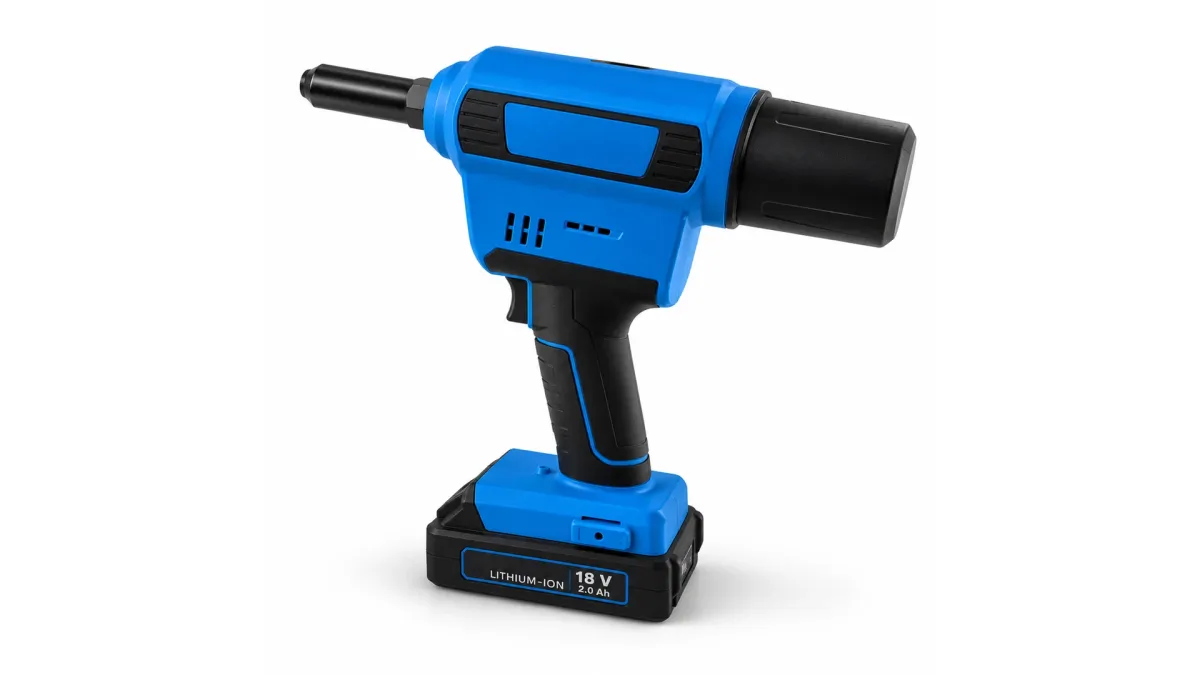
A.T.S. Lamberti battery riveting tools ATSRL520 battery-powered blind rivet tool: features and industrial applicationsWorking with a pneumatic rivet gun is not always convenient, particularly when fastening sheet metal panels, assembling large structures or carrying out repairs away from a fixed workstation. The air hose can get in the way, while moving the workpiece closer to a compressed-air connection may not be practical.A battery-powered blind rivet tool removes these restrictions. The operator can move around the assembly without an air line and install rivets wherever the work needs to be carried out.A.T.S. Lamberti supplies the ATSRL520 battery-powered riveter, designed for setting blind rivets from Ø2.4 to Ø6.4 mm in aluminium, steel, stainless steel and other compatible alloys.Powered by rechargeable lithium batteries, the ATSRL520 is suitable for workshop assembly, sheet metal fabrication, on-site installation and industrial maintenance, particularly where access is limited to one side of the joint.ATSRL520 cordless rivet gun: technical featuresThe ATSRL520 uses an electrically driven pulling mechanism to set blind rivets. Once the rivet mandrel has been inserted into the nosepiece, operating the trigger draws the mandrel backwards, deforming the rivet body until the mandrel breaks at its designed break point.Unlike a hand-operated riveter, the tool does not require the operator to generate the pulling force through repeated lever movements. This is useful when working with larger rivet diameters or carrying out several fastening operations in succession.Main features:Rivet capacity: suitable for blind rivets ranging from Ø2.4 to Ø6.4 mm, covering a range of fastening requirements in sheet metal fabrication and industrial assembly.Rivet materials: aluminium, steel, stainless steel and other compatible alloys. Material and rivet construction affect the required setting force, so compatibility should be checked for the specific fastener rather than by diameter alone.Electric pulling mechanism: the tool pulls the mandrel through the rivet body, forming the blind-side head and securing the assembled components. Correct rivet selection and joint thickness remain essential for a reliable installation.Cordless operation: rechargeable lithium batteries allow the riveter to be used without compressed air or an external power supply. This is particularly useful for maintenance work and installations involving large or fixed structures.Handling and positioning: its compact, ergonomic design helps the operator position the nosepiece correctly against the workpiece. Keeping the tool aligned with the mandrel reduces unwanted side loading during the setting process.Supplied equipment: the ATSRL520 comes in a carrying case with two lithium batteries and a charger. Having a spare battery makes it possible to alternate charging and operation during the working day.How does a battery-powered blind riveter work?Blind riveting is used to join two or more components when the operator cannot reach the back of the assembly with a conventional fastening tool.After drilling the correct hole through the materials, the blind rivet is inserted until its flange rests against the outer surface. The mandrel is then placed inside the riveter nosepiece.When the trigger is pressed, the pulling mechanism draws the mandrel through the rivet body. The mandrel head causes the rivet sleeve to expand and form a closing head behind the material. Once the required load is reached, the mandrel breaks at its predetermined point.The result is a permanent mechanical fastening that can be installed entirely from the accessible side.Hole diameter and rivet grip range are particularly important. An oversized hole may allow unwanted movement within the joint, while an unsuitable grip range can prevent the rivet from forming correctly behind the workpiece.For thin sheet metal or assemblies exposed to vibration, these details should be checked before production starts. A correctly rated rivet will not perform as intended if it has been installed in an unsuitable hole or outside its specified grip range.Industrial applications of the ATSRL520In sheet metal fabrication, battery riveters are used for joining panels, brackets, protective covers and lightweight metal assemblies. Cordless operation is useful when working on large fabricated components that cannot easily be moved to a fixed production station.Within automotive manufacturing and vehicle maintenance, blind rivets are used in selected bodywork, panel and protective-cover applications. The fastening system must be chosen according to the loads and requirements of the individual component, especially where the joint forms part of a safety-related assembly.The ATSRL520 can also be used in electrical enclosure manufacturing, where rivets are employed to secure brackets, panels and sheet metal components. Mechanical fastening may be preferable to welding when parts have already received a protective surface treatment.For industrial maintenance, a battery-operated riveter allows technicians to replace covers, attach guards or assemble replacement sheet metal parts without arranging a compressed-air supply at every work location.Battery-powered or hydropneumatic riveter?Both tools install blind rivets using a pulling mechanism. The main difference is how that force is generated and how the equipment fits into the working environment.A hydropneumatic riveter is commonly used at fixed assembly stations where compressed air is already available. It can be an appropriate choice for repetitive operations involving large quantities of rivets.A cordless rivet gun is more convenient when the operator regularly moves between work areas or needs to install fasteners on machinery and structures that are already in place.Neither system automatically produces a stronger joint. Fastening performance depends on rivet design, material, hole preparation and correct setting. The riveter must also provide sufficient pulling force and stroke for the selected rivet.ATSRL520 blind riveter: product information and technical supportA.T.S. Lamberti offers the ATSRL520 for professional blind riveting applications, with a working range of Ø2.4–6.4 mm and a carrying case containing two lithium batteries and a charger.Before selecting a riveting tool, it is worth checking the rivet material, diameter, grip range and expected workload. Two rivets of identical diameter may require different setting forces, particularly when comparing aluminium and stainless steel fasteners.A.T.S. can assist with selecting a suitable tool for the intended fastening operation.For specifications and product availability, see the ATSRL520 battery-powered blind riveter or contact A.T.S. Lamberti. Industrial equipment
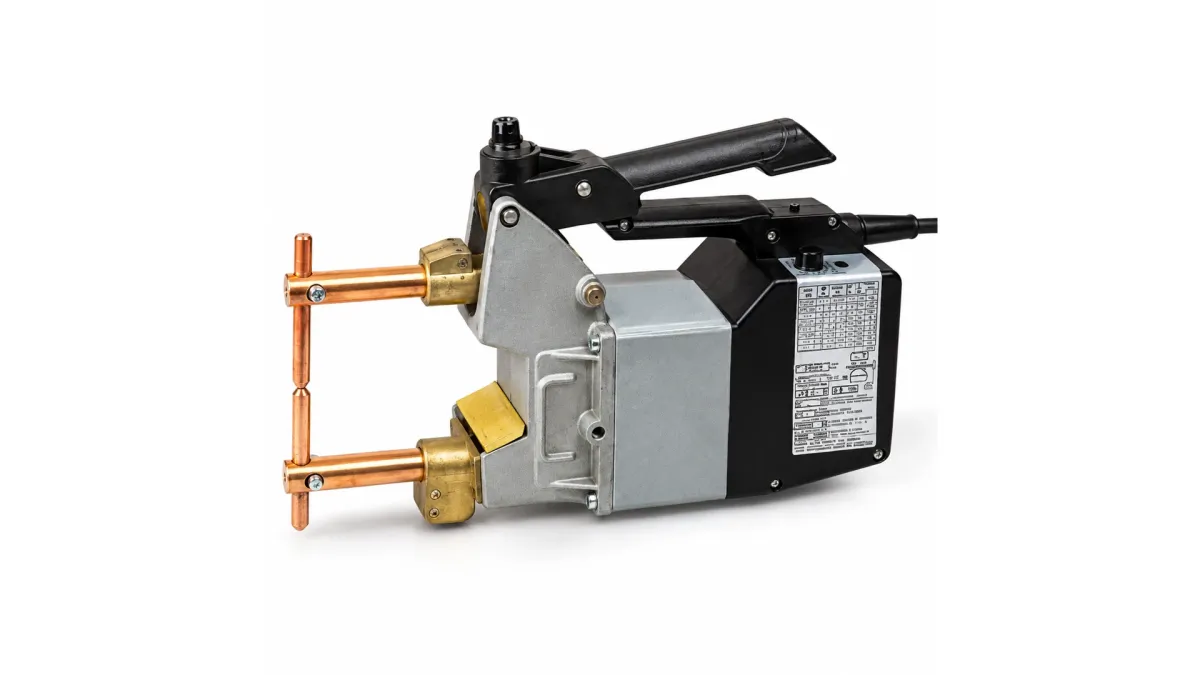
Technical insights: portable spot welder In the panorama of welding equipment, the portable spot welder is a tool that meets the needs of professionals for flexibility, efficiency and practicality.Technical characteristics of portable spot welders A.T.S. Lamberti's portable spot welders are equipped with advanced features that make them ideal for highly specialised industrial and maintenance applications:Reduced weight and compact design: made from high-quality materials, our welders have a significantly lower weight than conventional models, facilitating transport and use in complex operating situations.Available powers 2kVA, 2.5kVA and 6kVA at 50%: our welders offer different power options to suit various operating requirements. With 2kVA, 2.5kVA and 6kVA power, operators can choose the machine that best suits the type of work and material to be welded. The 50% capacity means that these machines can operate at their maximum power level for half the working cycle, ensuring optimum performance without overheating.Built-in Electronic Timer: A built-in electronic timer allows precise control of welding times, improving the uniformity and quality of joints. This feature is particularly useful in applications where repetitiveness and precision are essential, allowing operators to set specific welding times for different operations and materials.Wide range of arms and electrodes: A.T.S. Lamberti portable spot welders are compatible with a wide range of arms and electrodes, offering flexibility and versatility. This feature allows operators to customise the machine for different applications, from precision work on thin materials to more intensive operations on thicker materials. The wide choice of accessories makes it easy to adapt the welding machine to specific operational needs, improving efficiency and reducing tool changeover times.Operating advantages of portable spot welders The adoption of a portable spot welder offers several specific operational advantages for welding professionals:Mobility and flexibility: The light weight and ergonomic design allow operators to easily transport the welder to the workplace, whether on construction sites, mobile workshops or extraordinary maintenance work. This drastically reduces setup and down time, increasing operational efficiency.Welding accuracy and quality: The built-in electronic timer allows precise control of welding times, ensuring uniform, high quality joints. Advanced arc control features and customisable settings allow operators to tailor the welder to the specific needs of the job, resulting in high quality joints and reducing the need for trimming.Operational versatility: The wide range of available arms and electrodes allows operators to quickly adapt the welder to different applications, improving efficiency and productivity. This flexibility allows a wide range of materials and thicknesses to be addressed with the same equipment, reducing the need for multiple machines for different tasks.Applications and fields of use A.T.S. Lamberti's portable spot welders find application in a wide range of industries, including:Manufacturing and engineering industry: Ideal for the assembly and repair of complex metal structures, industrial machinery and specialised components.Construction and building industry: Essential for construction and maintenance work in dynamic and difficult-to-reach environments, such as bridges, high-rise buildings and underground infrastructure.Automotive and transport: Perfect for repair and maintenance work on vehicles, including bodies, chassis and precision mechanical components.Energy and infrastructure: Used for the maintenance and repair of power plants, pipelines, and other critical infrastructure, where weld quality and reliability are critical.A.T.S. Lamberti's portable spot welders are an advanced solution for welding professionals who need reliable, efficient and high-performance equipment. Thanks to our continuous research and development, we offer products that improve the productivity and quality of welding operations, meeting the technical challenges of an ever-changing market. For more details on our portable spot welders and to find out how they can enhance your operations, please contact us directly or visit our website. Resistance spot welding