




Solutions for Metal Fabrication
Welding, fastening and assembly technologies for sheet metal, fabricated structures and industrial components.
Metal fabrication covers a broad range of products, from sheet-metal enclosures, guards and panels to frames, brackets and complete fabricated structures.
Each job can involve a different combination of materials, thicknesses, dimensions and production quantities. The joining process therefore needs to match the actual component rather than follow a single standard solution.
A.T.S. supports fabrication applications with resistance welding equipment, copper-alloy electrodes and welding components, capacitor-discharge and arc stud welding systems, rivet nuts, self-clinching fasteners, blind rivets and related installation equipment.
Selecting the correct process requires an understanding of the material, joint geometry, accessibility, production volume and the function the connection has to perform in the finished structure.

Which joining technologies are used in metal fabrication?
Fabricators may use resistance welding, stud welding, rivet nuts, self-clinching fasteners, blind rivets and other mechanical fastening methods. Material thickness, accessibility, mechanical requirements, surface finish and production quantity determine the most appropriate process.
Resistance Welding for Sheet-Metal Fabrication
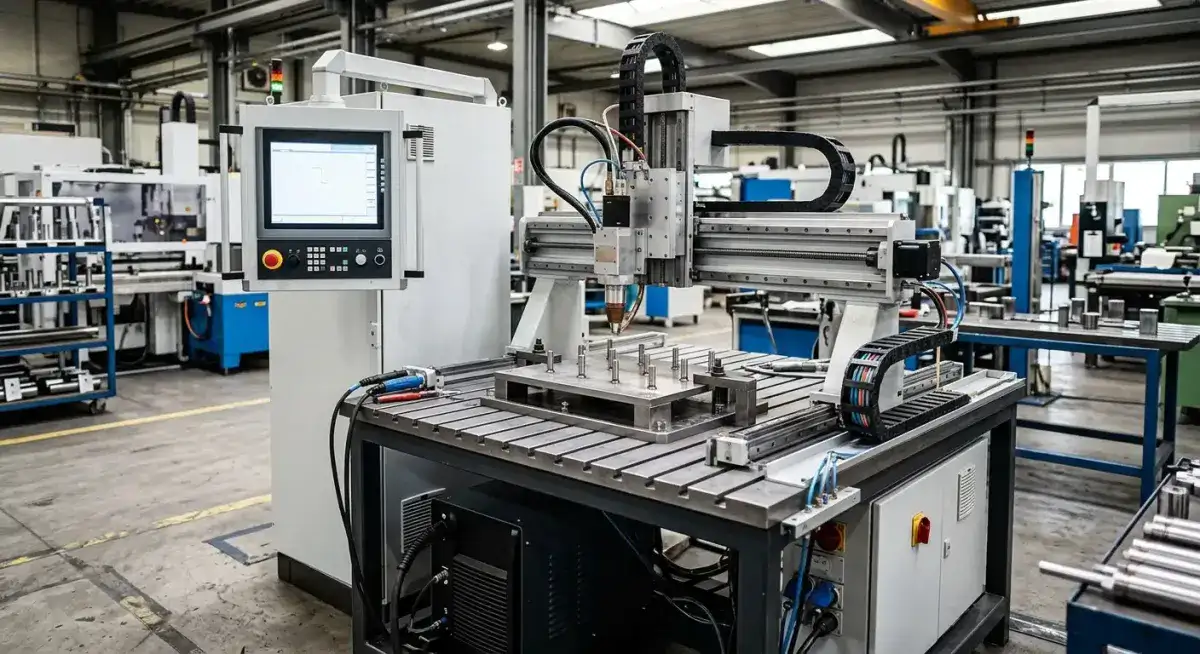
Resistance welding provides a fast method of joining sheet-metal and metallic components without adding conventional filler material.
It can be used for panels, fabricated enclosures, covers and other sheet-metal assemblies where repeatable weld cycles are required.
Process performance depends on welding current, weld time, electrode force, material thickness and joint geometry.
Depending on the component and production requirements, fabricators may use manual or pneumatic spot welders, welding guns, press welders or dedicated resistance welding equipment.
Copper-alloy electrodes, welding arms and electrical connections form part of the same system and need to match both the material and operating conditions.
Adding Studs and Threaded Elements Directly to Sheet Metal
Fabricated components frequently need studs, threaded attachment points or other functional elements added directly to the metal surface.
Stud welding makes it possible to weld threaded studs, internally threaded elements and other fasteners without using a conventional through-fastener.
Capacitor-discharge stud welding is particularly suited to many thin-sheet applications because welding energy is released over a very short period, limiting heat input into the component.
Short-cycle and drawn-arc processes provide additional options where material thickness and mechanical requirements differ.
For repetitive work, automatic stud feeding can also be incorporated into the production process.
Mechanical Fastening for Thin Sheet and Fabricated Assemblies
Not every fabricated component should be welded.
Removable panels, access covers, enclosures and brackets often require reliable threaded fixing points for later assembly or servicing.
Rivet nuts can provide threads in thin materials, including applications where only one side of the component is accessible.
Self-clinching fasteners integrate nuts, studs or standoffs permanently into sheet metal through controlled pressing rather than welding.
Blind rivets provide another practical option for permanent mechanical joining, particularly where joint geometry or material combinations make welding less appropriate.
From One-Off Fabrication to Repeatable Production
Fabrication shops may produce anything from prototypes and one-off structures to recurring batches of identical components.
This variation changes the way joining equipment should be selected.
Occasional assembly operations may be handled with simple manual tooling. Higher production quantities can justify pneumatic or hydro-pneumatic tools, presses or automated feeding equipment.
The same principle applies to welding equipment, where the number of welds, accessibility and required production continuity affect the configuration.
Joining technology therefore has to match both the part and the manufacturing workflow.
Selecting the Process Around the Fabricated Component
One fabricated assembly may combine several joining methods.
A panel may be spot welded, a bracket may incorporate a self-clinching nut, an enclosure may use rivets and a threaded stud may be welded directly to the sheet.
A.T.S. therefore approaches metal fabrication by evaluating the application before the individual product.
Material, thickness, joint geometry, accessibility, mechanical load, surface requirements and production volume all contribute to defining the most appropriate welding or fastening solution.
The right solution for your application, with the support of our experts
Our experts will help you find the right product for your needs, with no obligation. Tell us what you need: together we will find the most suitable solution.
Contact us, no obligation