





Manual capacitor discharge welding guns
4 products available
Contact and gap welding guns, including models for insulation pins, with configurations for welding studs and threaded bushes onto sheet metal
Manual capacitor discharge stud welding guns are used to position and weld threaded studs, internally threaded bushes and other metallic fasteners onto sheet metal and fabricated components. The welding gun controls the movement of the fastener during the cycle, while its spring mechanism and positioning accessories influence the contact conditions between the stud and the workpiece.
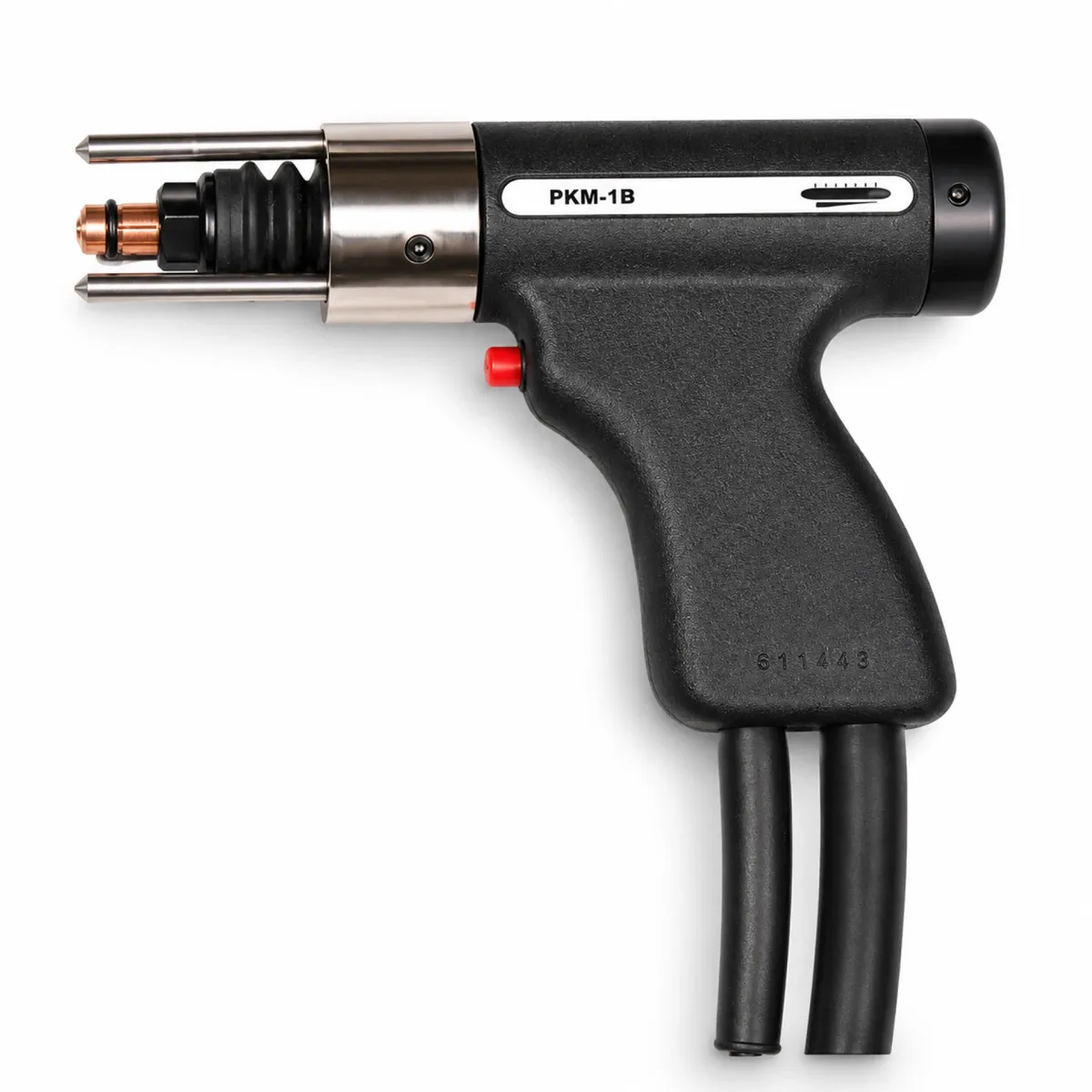
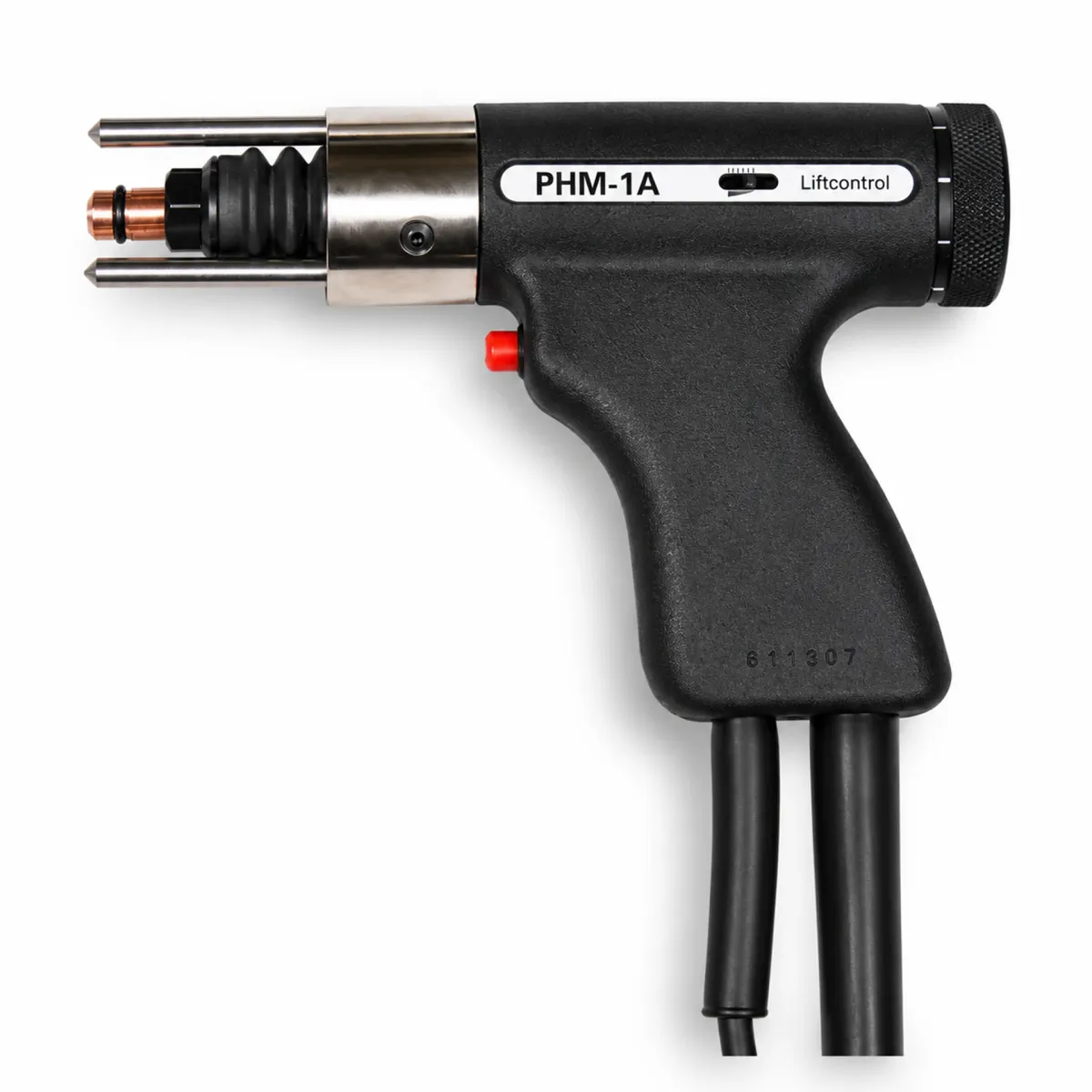
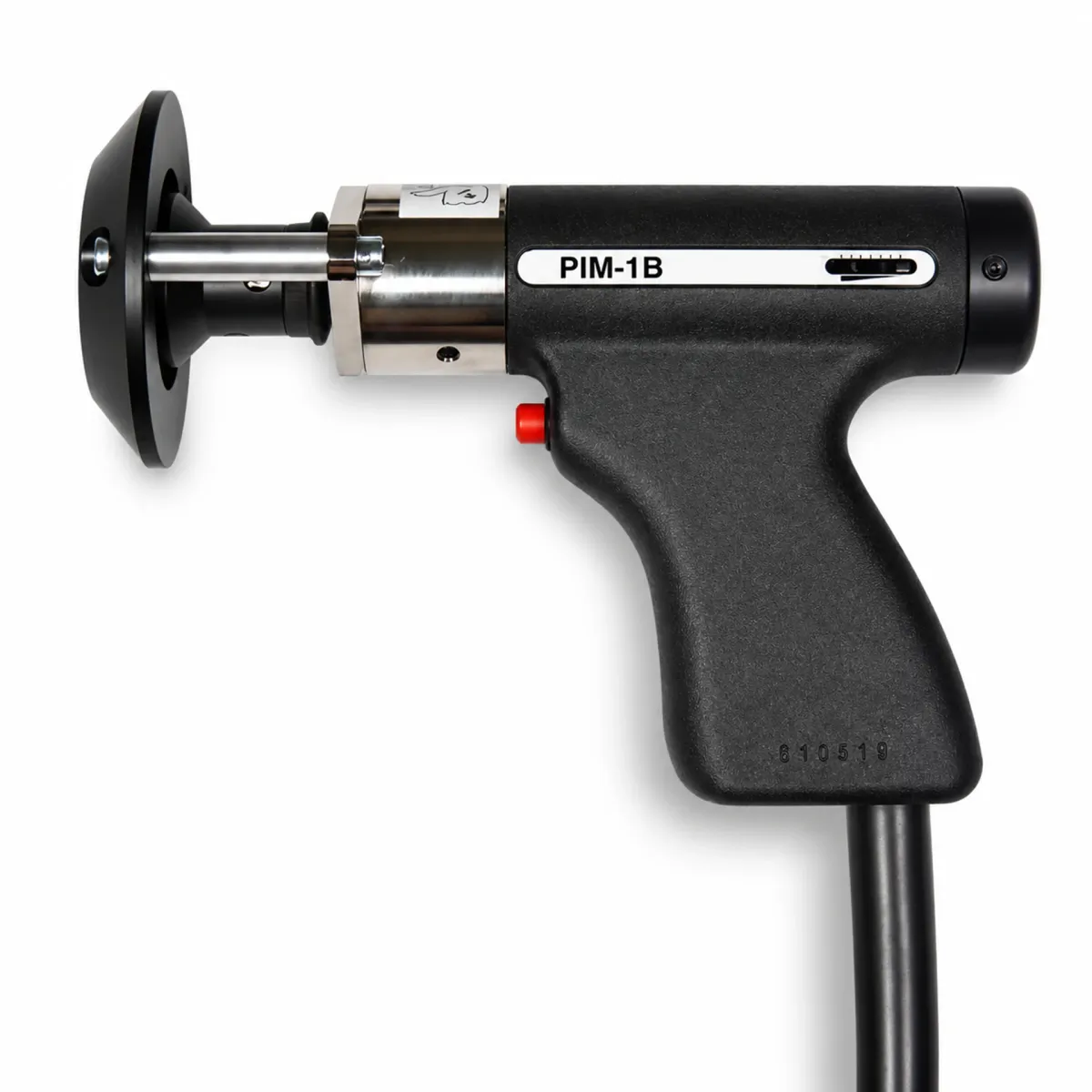
A.T.S. supplies contact and lift-type welding guns for use with compatible capacitor discharge stud welding machines. The range includes the PKM-1B and PHM-1A for stud welding operations, together with the PIM-1B and PIM-1K, designed for specific insulation fixing applications.
Contact and lift welding guns: how they differ
The main difference between contact and lift welding guns is the way the stud is positioned and moved during the welding cycle.
With a contact welding gun, the stud is placed against the metal surface before the discharge. The welding current produces localised melting at the stud tip and the workpiece, while the gun mechanism controls the movement of the stud into the weld area.
The PKM-1B contact gun is intended for welding steel and stainless steel studs. Its adjustable spring pressure and stud projection allow the operator to adapt the mechanical setting to the selected fastener.
A lift welding gun, also referred to as a gap welding gun, uses a controlled lifting movement to establish the required conditions before welding. The stud is subsequently driven towards the workpiece during the cycle.
The PHM-1A magnetic lift gun can be used for applications involving aluminium and brass studs and threaded bushes, in addition to compatible steel fasteners. Selecting the correct operating method requires consideration of the base material, fastener design and welding unit.
Stud diameters and compatible materials
The published specifications for the PKM-1B and PHM-1A state a welding diameter range of 2–10 mm. Both guns can be equipped with pin holders starting from Ø2 mm and threaded stud chucks covering M3 to M10.
For these two models, the specified stud length range is 6–40 mm. Longer studs may be accommodated using suitable optional accessories, subject to the actual gun configuration.
These figures apply to the named models and should not be interpreted as a common specification for every capacitor discharge welding gun.
Material compatibility must also be checked individually. The PKM-1B is specified for steel and stainless steel studs, whereas the PHM-1A additionally accommodates aluminium and brass. The welding unit, chuck and fastener must be suitable for the selected material.
The range of weld studs and welding fasteners includes externally threaded studs, internally threaded bushes and other elements. Their weld tip design, diameter and material affect both gun selection and the welding parameters required.
Welding guns for insulation pins
Insulation fixing requires dedicated tooling because the fastener geometry and holding arrangements differ from those used for conventional threaded studs.
The PIM-1B is intended for welding cupped-head insulation pins, while the PIM-1K is designed for insulation pins used with clips. These guns are suitable for applications where insulation materials need to be secured to a metallic surface.
The dimensions of the insulation fastener, the required attachment method and the condition of the underlying metal must be considered when selecting the equipment. The diameter and material specifications of the PKM-1B and PHM-1A should not be assumed to apply to these insulation welding guns.
Setting the gun for repeatable welding
Consistent capacitor discharge stud welding requires the gun, generator and stud to operate as a compatible system.
Spring force, stud projection and, where applicable, lift adjustment influence how the fastener moves and contacts the molten metal. Incorrect adjustment can affect positioning, electrical contact and weld formation, even when the generator is operating correctly.
The equipment is used in sheet metal fabrication, electrical enclosure production, industrial component manufacturing and insulation installation.
A.T.S. provides technical guidance on selecting manual capacitor discharge welding guns, taking into account stud dimensions, material, welding method, machine compatibility and operating conditions. This helps manufacturers choose the appropriate gun and accessories for reliable positioning and repeatable welding operations.
The right solution for your application, with the support of our experts
Our experts will help you find the right product for your needs, with no obligation. Tell us what you need: together we will find the most suitable solution.
Contact us, no obligation