




Technologies for the Appliance Industry
Solutions for assembly, welding, fastening and automation across appliance manufacturing processes.
Appliance manufacturing brings together a wide range of materials, components and production stages within highly organised industrial processes. Refrigerators, washing machines, ovens, dishwashers and other appliances combine sheet-metal structures, plastic parts, mechanical assemblies and electrical or electronic components that must be integrated through carefully coordinated production sequences.
The characteristics of each appliance determine the most appropriate manufacturing and assembly approach. Depending on the application, production may involve joining metal components, attaching welded elements to sheet metal, creating mechanical connections, installing fastening points or integrating components through automated assembly operations. Each process must be compatible with the materials, geometry and production requirements of the finished product.
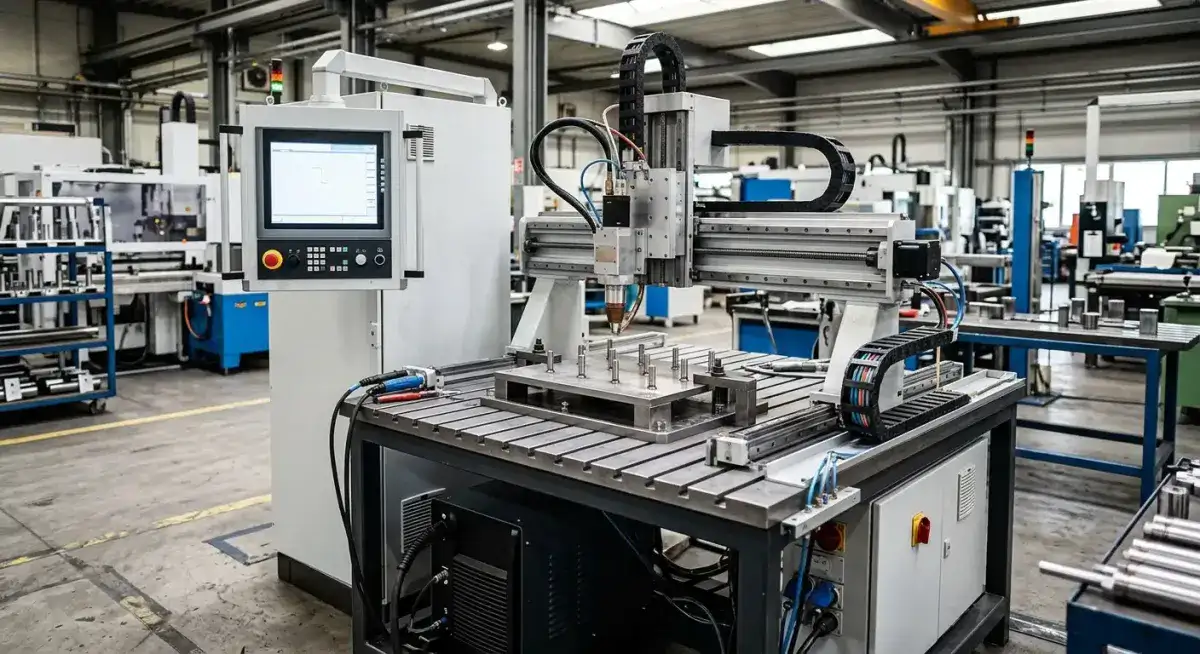
A.T.S. develops solutions for different manufacturing requirements, combining joining technologies, fastening systems, installation equipment and automation. The starting point is the application itself and the process that needs to be achieved, allowing the technology to be selected according to the product, production line and required level of repeatability.
Integrated Technologies for Appliance Manufacturing
From component preparation to final assembly, appliance manufacturing requires technologies suited to specific materials, geometries, production volumes and cycle times. A.T.S. develops solutions that can combine welding, fastening, installation and automation according to the application.
Materials, Components and Assembly Processes
An appliance is the result of integrating components manufactured from different materials and through different production methods. Sheet metal and profiles are used for frames, panels and structural elements, while plastics form housings, covers, supports and functional components. Mechanical, electrical and electronic parts must then be incorporated into the product at different stages of the manufacturing process.
The joining method must be selected according to the characteristics of each component. Depending on the application, production may require welding metal parts, attaching weldable elements directly to sheet metal, creating mechanical connections or producing fastening points for subsequent assembly operations.
Typical production requirements can include:
- assembly of metal and plastic components;
- joining operations on sheet-metal parts;
- integration of mechanical elements into the product;
- creation of threaded or dedicated fastening points;
- repeatable operations across high-volume production lines;
- automatic feeding and positioning of components;
- monitoring of assembly operations.
The technology therefore needs to be assessed as part of the complete product and production process, taking into account material, thickness, geometry, accessibility and manufacturing method.
Quality and Repeatability Throughout the Production Cycle
In high-volume manufacturing, appliance quality also depends on the ability to perform numerous operations consistently throughout the production cycle. When the same task is repeated thousands of times, process stability becomes essential for maintaining consistent cycle times, characteristics and results.
This applies both to the technology itself and to the way it is integrated into the production line. A welding operation, fastening process or component positioning task must be performed within defined parameters and with a level of variation compatible with the manufacturing process.
Material, thickness, component geometry and accessibility influence the choice of technology, while operating frequency, cycle time and automation level determine the requirements of the equipment and production system.
For this reason, process design needs to consider the component, technology and installation method together. An effective solution is not simply one that performs an individual operation, but one that can be integrated efficiently and consistently into the wider production cycle.
Automation and the Evolution of Production Lines
Appliance manufacturing is moving towards increasingly integrated production environments, where automation, material handling, assembly and inspection operate as part of a connected process. The need to combine high production volumes with a wider range of product variants requires systems capable of maintaining efficiency and repeatability even when production configurations change.
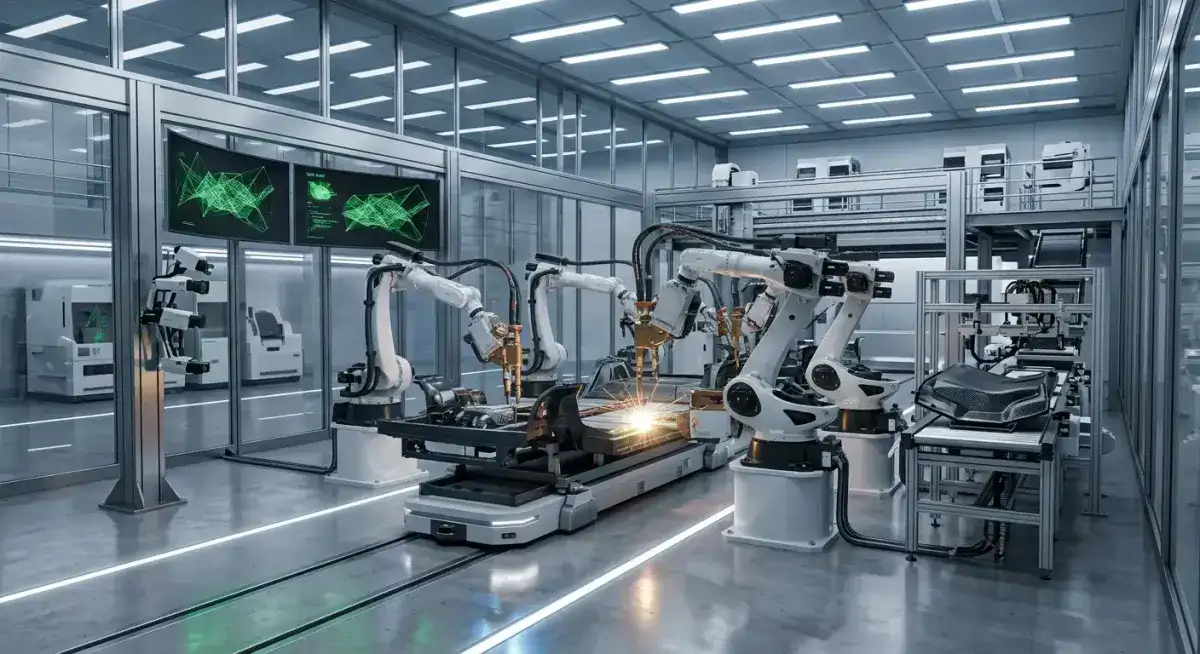
Modern lines may incorporate robots, automatic feeding and positioning systems, joining equipment, in-line inspection and production data management. Individual technologies therefore need to fit into the overall architecture of the manufacturing line rather than operate as isolated processes.
A.T.S. develops solutions for industrial applications that can include welding technologies, fastening systems, installation equipment and automated operations. The configuration is defined according to the application, considering component characteristics, materials, production volumes, cycle times, assembly methods and the required level of automation.
The objective is to integrate technology into the manufacturing process rather than simply introduce an individual product into the line.
The right solution for your application, with the support of our experts
Our experts will help you find the right product for your needs, with no obligation. Tell us what you need: together we will find the most suitable solution.
Contact us, no obligation