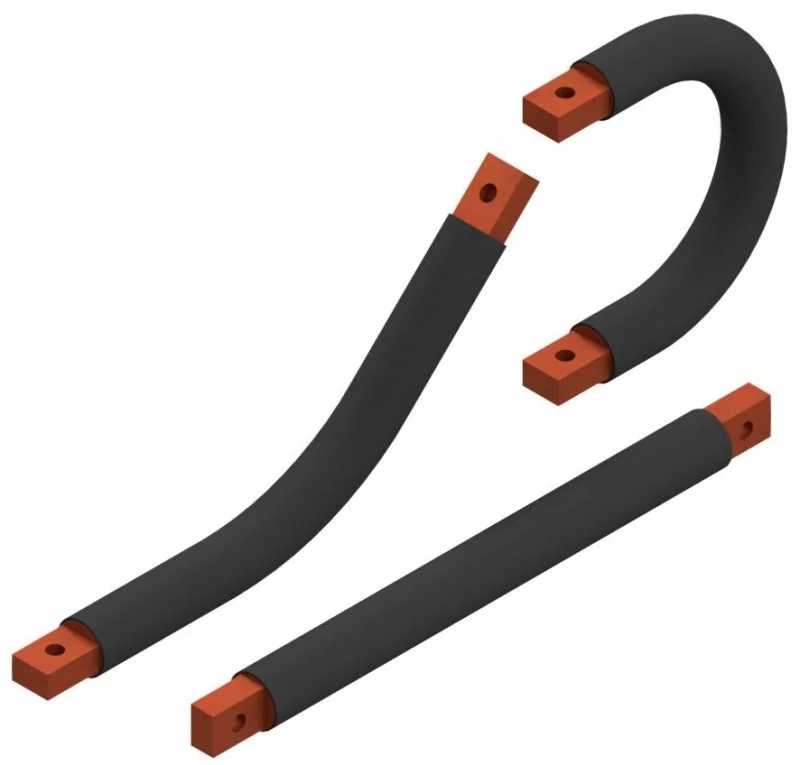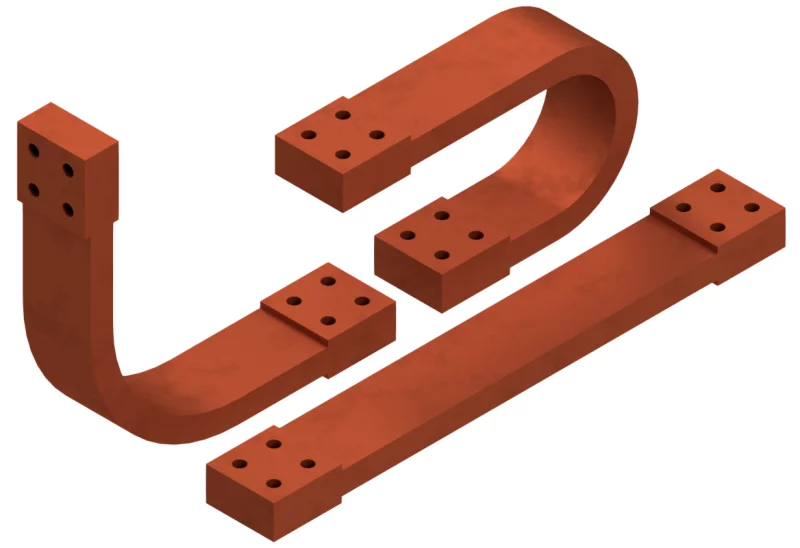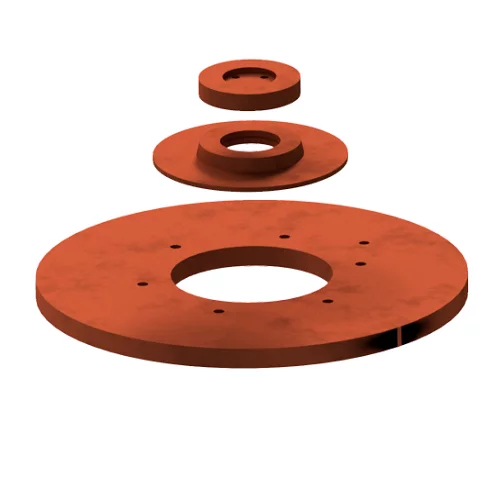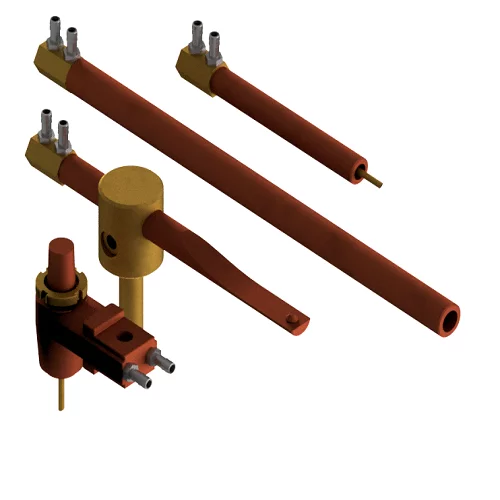






Reliable current transfer is essential in resistance welding equipment, particularly where electrical connections are also exposed to movement, vibration or repeated thermal loads. Flexible copper connections and flexible copper shunts provide a conductive link while allowing the necessary flexibility within the welding circuit. A.T.S. supplies standard and customised solutions, including flexible connections, copper earth shunts, water-cooled connections and laminated copper packs.
The dimensions and configuration of a flexible connection must match the operating conditions of the application. Current rating, cross-sectional area and overall length are among the main factors to consider when selecting the appropriate solution. Higher welding currents generally require a suitable conductor cross-section to manage the electrical load, while the geometry and available space determine how the connection can be installed and how much movement it needs to accommodate.
For demanding welding cycles, air cooling may not provide sufficient heat dissipation. In these situations, water-cooled flexible copper connections and shunts can be used to improve thermal management within the welding circuit. Cooling water circulates through the connection and helps control its operating temperature, making this configuration particularly suitable for high-current applications, intensive production cycles and installations where heat dissipation is restricted.
Where the connection must also compensate for thermal expansion, small movements or vibration, laminated copper packs offer a flexible alternative. They are manufactured from thin copper sheets, generally with thicknesses between 0.1 and 0.5 mm, assembled to provide electrical conductivity together with the flexibility required by the application. Different dimensions and configurations can also be supplied according to customer specifications or technical drawings.
A.T.S. supplies flexible copper connections, copper shunts, water-cooled connections and laminated copper packs, supporting customers in selecting the most suitable configuration for their resistance welding equipment. The technical assessment can take into account welding current, connection length and cross-section, available installation space, mechanical movement, vibration and thermal conditions, allowing the solution to be matched to the requirements of the specific application.