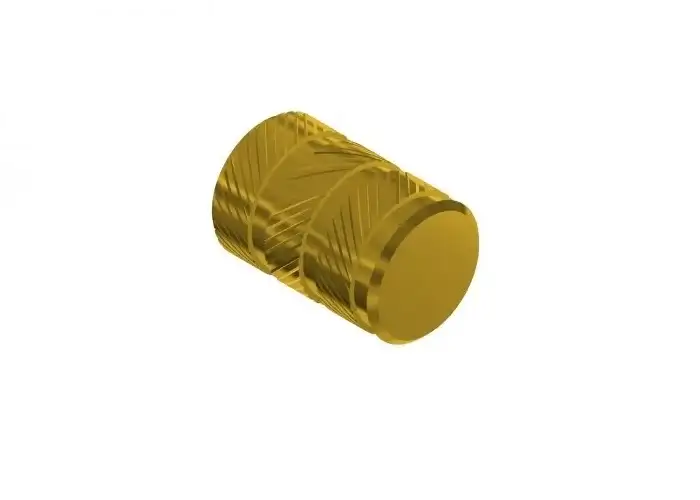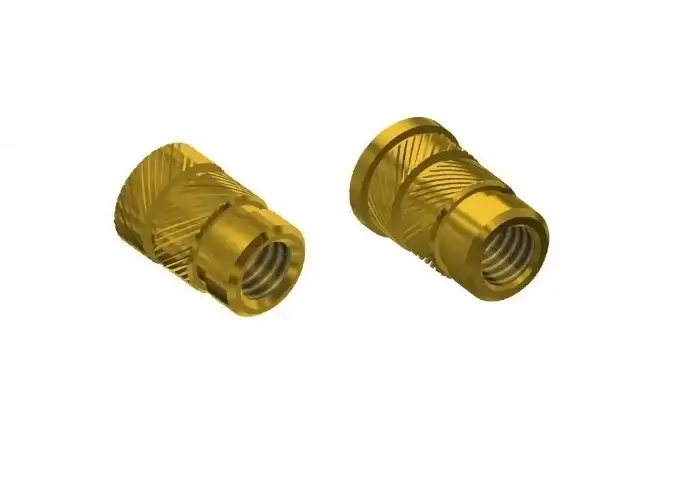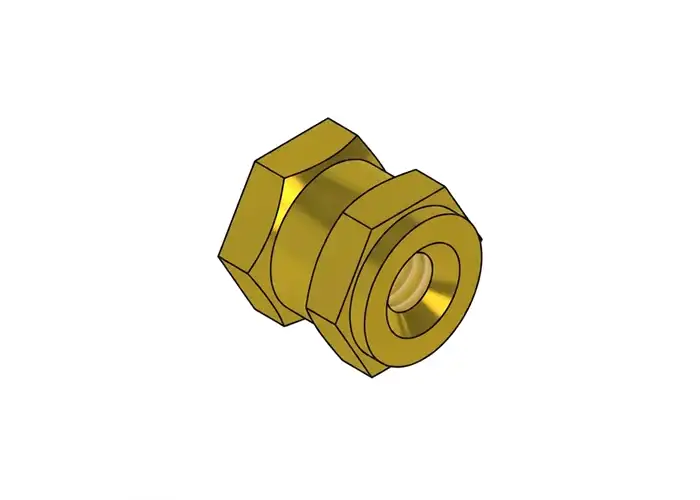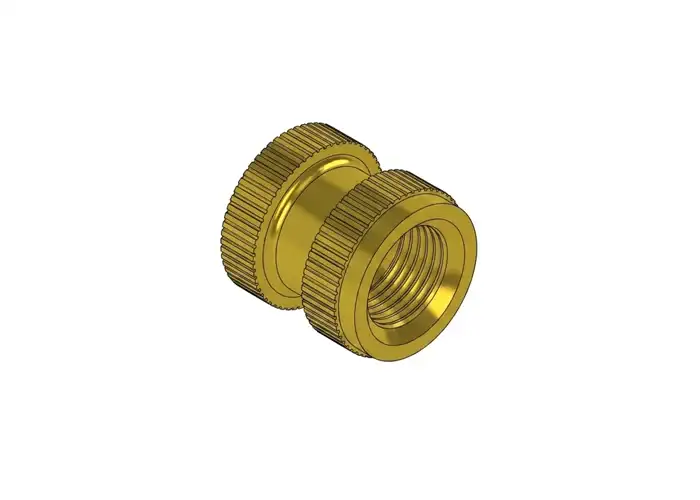





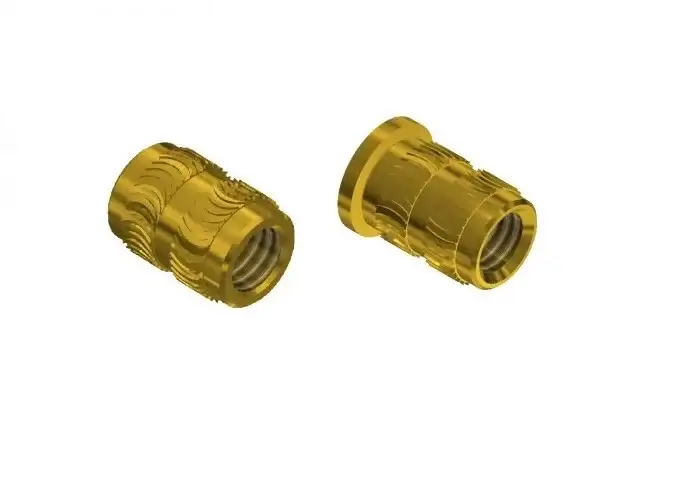
Brass threaded insert for heat installation or insert moulding (UHL_HHL)
Reliable metal threaded fastening solutions for plastic applications with heat staking or insert molding installation
When a thread directly formed in a plastic component cannot provide the required mechanical strength, durability or reliability, the UHL-HHL brass threaded insert for plastic provides an effective solution by creating a stable and reusable metal fastening point inside the component.
This type of threaded insert for plastic applications is mainly used with amorphous thermoplastic materials and can be installed through heat staking or integrated during the insert molding process, depending on production requirements, component design and application conditions.
ATS Lamberti supplies brass threaded inserts for plastic components and supports design engineers, technical departments and production teams in selecting the most suitable fastening solution, evaluating the plastic material, installation method and operating conditions of the final component.
The UHL insert, also known as a plastic threaded bushing, allows a metal threaded connection to be integrated into plastic parts where precision, mechanical resistance and repeatable assembly performance are required. Compared with a thread directly made in plastic, the use of an insert helps maintain more consistent fastening performance even after repeated assembly and disassembly cycles.
A distinctive feature of the UHL threaded insert is its rounded knurling geometry. This configuration allows effective anchoring in the plastic material while promoting a more uniform distribution of stresses around the insert.
Compared with inserts featuring sharper knurl profiles, the rounded geometry helps reduce local stress concentrations and makes the insert particularly suitable for notch-sensitive amorphous thermoplastics, where excessive localized stresses may affect component performance over time.
During installation and operation, the plastic material must absorb the forces generated by the insert without creating critical stress areas. For this reason, the correct combination of insert geometry, plastic material and installation method is essential to achieve a reliable and long-lasting fastening solution.
For applications requiring a larger bearing surface, the HHL version with head is available. The integrated head helps distribute loads over a wider area of the plastic component and can be suitable where additional support, positioning or retention requirements are needed.
Heat staking is one of the most common installation methods for this family of inserts. The heat allows the plastic material to progressively adapt to the insert profile, filling the spaces between the knurling and creating a uniform anchoring effect.
When the insert must be integrated directly during the manufacturing process of the plastic component, insert molding allows the insert to be positioned inside the mold before plastic injection.
Selecting the correct threaded insert does not depend only on thread size. The type of plastic material, wall thickness, applied loads, assembly frequency and production process all influence the final result. A complete evaluation of the application is therefore essential to identify the most suitable solution.
UHL and HHL brass threaded inserts are used in plastic components for different industrial sectors, including automotive, electronics, electrical equipment, industrial automation, lighting, medical devices and household appliances.
They represent a suitable solution whenever a strong and reliable threaded connection is required inside a plastic component while maintaining precision, repeatability and long-term performance.
Thanks to its experience in fastening systems, ATS Lamberti supports customers in selecting the most suitable insert by providing technical assistance and application guidance to identify the solution that best matches specific project requirements.
The dimensional characteristics and technical specifications of UHL and HHL brass threaded inserts are available in the dedicated plastic insert product section, where configurations, available sizes and technical data can be consulted.
Technical specifications
Brass threaded insert with heat insertion or molded-in installation (UHL_HHL)
Request information about this product
Leave us your details: we will get back to you as soon as possible with all the information about this product.
Products in the same category
Insert moulding installation