




A.T.S. Lamberti battery riveting tools
Professional solutions for effective joining
5 min read
ATSRL520 battery-powered blind rivet tool: features and industrial applications
Working with a pneumatic rivet gun is not always convenient, particularly when fastening sheet metal panels, assembling large structures or carrying out repairs away from a fixed workstation. The air hose can get in the way, while moving the workpiece closer to a compressed-air connection may not be practical.
A battery-powered blind rivet tool removes these restrictions. The operator can move around the assembly without an air line and install rivets wherever the work needs to be carried out.
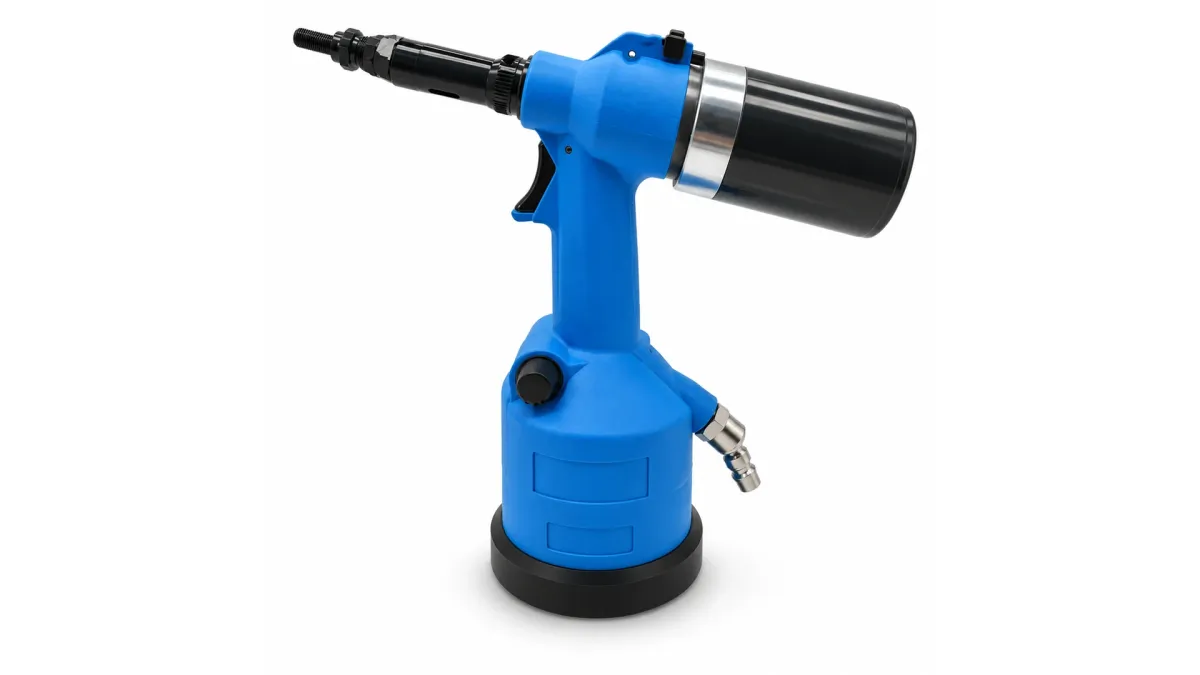
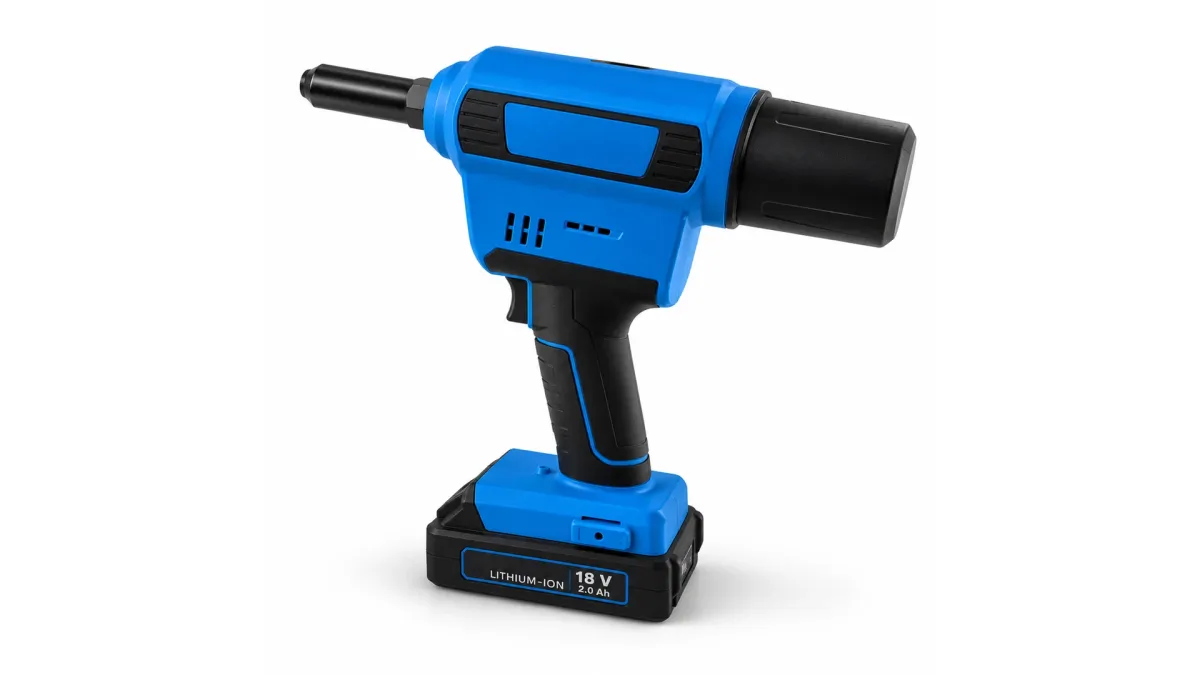
A.T.S. Lamberti supplies the ATSRL520 battery-powered riveter, designed for setting blind rivets from Ø2.4 to Ø6.4 mm in aluminium, steel, stainless steel and other compatible alloys.
Powered by rechargeable lithium batteries, the ATSRL520 is suitable for workshop assembly, sheet metal fabrication, on-site installation and industrial maintenance, particularly where access is limited to one side of the joint.
ATSRL520 cordless rivet gun: technical features
The ATSRL520 uses an electrically driven pulling mechanism to set blind rivets. Once the rivet mandrel has been inserted into the nosepiece, operating the trigger draws the mandrel backwards, deforming the rivet body until the mandrel breaks at its designed break point.
Unlike a hand-operated riveter, the tool does not require the operator to generate the pulling force through repeated lever movements. This is useful when working with larger rivet diameters or carrying out several fastening operations in succession.
Main features:
- Rivet capacity: suitable for blind rivets ranging from Ø2.4 to Ø6.4 mm, covering a range of fastening requirements in sheet metal fabrication and industrial assembly.
- Rivet materials: aluminium, steel, stainless steel and other compatible alloys. Material and rivet construction affect the required setting force, so compatibility should be checked for the specific fastener rather than by diameter alone.
- Electric pulling mechanism: the tool pulls the mandrel through the rivet body, forming the blind-side head and securing the assembled components. Correct rivet selection and joint thickness remain essential for a reliable installation.
- Cordless operation: rechargeable lithium batteries allow the riveter to be used without compressed air or an external power supply. This is particularly useful for maintenance work and installations involving large or fixed structures.
- Handling and positioning: its compact, ergonomic design helps the operator position the nosepiece correctly against the workpiece. Keeping the tool aligned with the mandrel reduces unwanted side loading during the setting process.
- Supplied equipment: the ATSRL520 comes in a carrying case with two lithium batteries and a charger. Having a spare battery makes it possible to alternate charging and operation during the working day.
How does a battery-powered blind riveter work?
Blind riveting is used to join two or more components when the operator cannot reach the back of the assembly with a conventional fastening tool.
After drilling the correct hole through the materials, the blind rivet is inserted until its flange rests against the outer surface. The mandrel is then placed inside the riveter nosepiece.
When the trigger is pressed, the pulling mechanism draws the mandrel through the rivet body. The mandrel head causes the rivet sleeve to expand and form a closing head behind the material. Once the required load is reached, the mandrel breaks at its predetermined point.
The result is a permanent mechanical fastening that can be installed entirely from the accessible side.
Hole diameter and rivet grip range are particularly important. An oversized hole may allow unwanted movement within the joint, while an unsuitable grip range can prevent the rivet from forming correctly behind the workpiece.
For thin sheet metal or assemblies exposed to vibration, these details should be checked before production starts. A correctly rated rivet will not perform as intended if it has been installed in an unsuitable hole or outside its specified grip range.
Industrial applications of the ATSRL520
In sheet metal fabrication, battery riveters are used for joining panels, brackets, protective covers and lightweight metal assemblies. Cordless operation is useful when working on large fabricated components that cannot easily be moved to a fixed production station.
Within automotive manufacturing and vehicle maintenance, blind rivets are used in selected bodywork, panel and protective-cover applications. The fastening system must be chosen according to the loads and requirements of the individual component, especially where the joint forms part of a safety-related assembly.
The ATSRL520 can also be used in electrical enclosure manufacturing, where rivets are employed to secure brackets, panels and sheet metal components. Mechanical fastening may be preferable to welding when parts have already received a protective surface treatment.
For industrial maintenance, a battery-operated riveter allows technicians to replace covers, attach guards or assemble replacement sheet metal parts without arranging a compressed-air supply at every work location.
Battery-powered or hydropneumatic riveter?
Both tools install blind rivets using a pulling mechanism. The main difference is how that force is generated and how the equipment fits into the working environment.
A hydropneumatic riveter is commonly used at fixed assembly stations where compressed air is already available. It can be an appropriate choice for repetitive operations involving large quantities of rivets.
A cordless rivet gun is more convenient when the operator regularly moves between work areas or needs to install fasteners on machinery and structures that are already in place.
Neither system automatically produces a stronger joint. Fastening performance depends on rivet design, material, hole preparation and correct setting. The riveter must also provide sufficient pulling force and stroke for the selected rivet.
ATSRL520 blind riveter: product information and technical support
A.T.S. Lamberti offers the ATSRL520 for professional blind riveting applications, with a working range of Ø2.4–6.4 mm and a carrying case containing two lithium batteries and a charger.
Before selecting a riveting tool, it is worth checking the rivet material, diameter, grip range and expected workload. Two rivets of identical diameter may require different setting forces, particularly when comparing aluminium and stainless steel fasteners.
A.T.S. can assist with selecting a suitable tool for the intended fastening operation.
For specifications and product availability, see the ATSRL520 battery-powered blind riveter or contact A.T.S. Lamberti.
The right solution for your application, with the support of our experts
Our experts will help you find the right product for your needs, with no obligation. Tell us what you need: together we will find the most suitable solution.
Contact us, no obligation