




Capacitor discharge vs arc stud welding: differences and selection criteria
Comparing CD, short-cycle and drawn arc welding by sheet thickness, stud diameter, material and joint requirements
5 min read
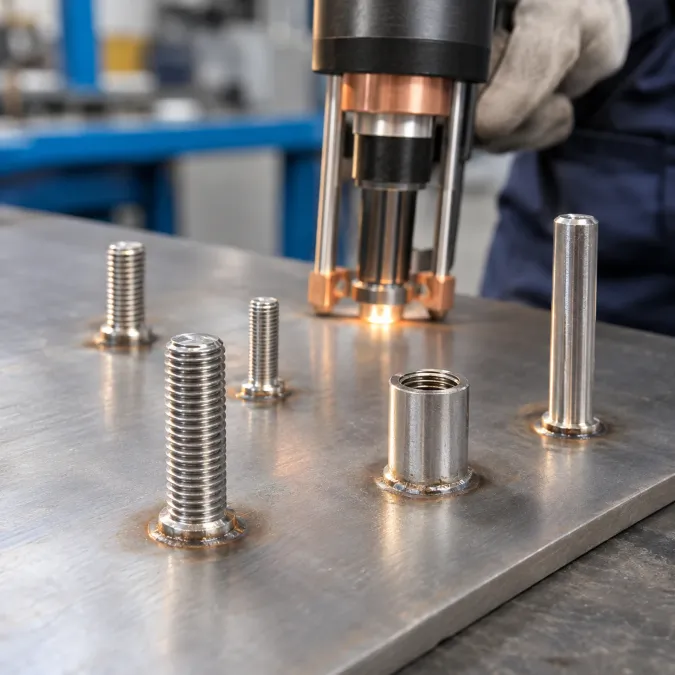
Stud welding attaches threaded studs, internally threaded bushes, plain pins and other metallic fasteners directly to a metal workpiece. Among the available processes, capacitor discharge (CD), short-cycle arc welding and drawn arc stud welding differ in how welding energy is supplied and how the joint is formed. These differences determine which process is appropriate for a particular sheet thickness, stud diameter and mechanical requirement.
Capacitor discharge is commonly associated with smaller fasteners and thin sheet metal, where limited heat input is important. Drawn arc welding is also used for larger studs and structural applications. Short-cycle welding provides another option for suitable stud and sheet combinations, but it should not be treated as identical to capacitor discharge welding.
Capacitor discharge stud welding and its operating principle
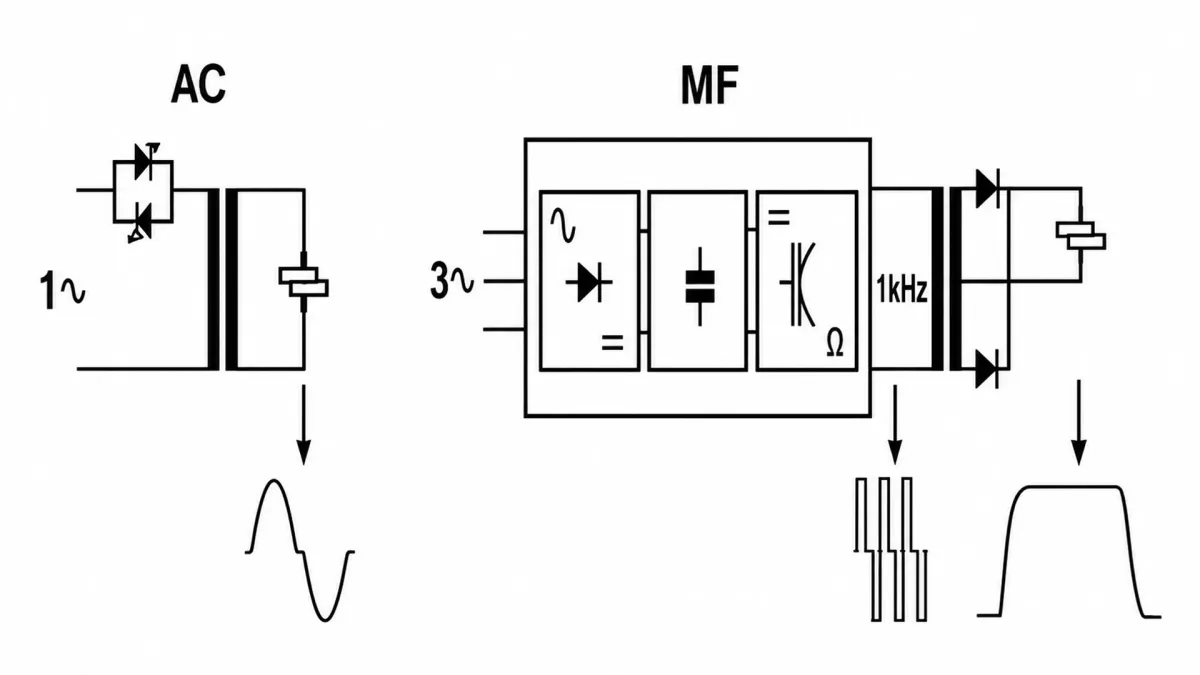
In CD stud welding, electrical energy is stored in capacitors and released through the welding circuit in a very short pulse. A specifically designed stud tip or projection contributes to initiating the weld. Melting occurs at the interface, and the stud is brought into contact with the workpiece to complete the joint.
The energy stored in a capacitor bank follows E = ½ × C × V², where C is capacitance and V is charging voltage. This describes stored electrical energy rather than the amount effectively transferred to the weld. Contact conditions, cable losses, stud geometry and surface preparation influence the resulting fusion.
The short pulse limits heat spreading into the surrounding metal, making the process suitable for many thin-sheet applications. However, the risk of backside marking or distortion depends on material thickness, stud size and welding settings; it cannot be ruled out universally.
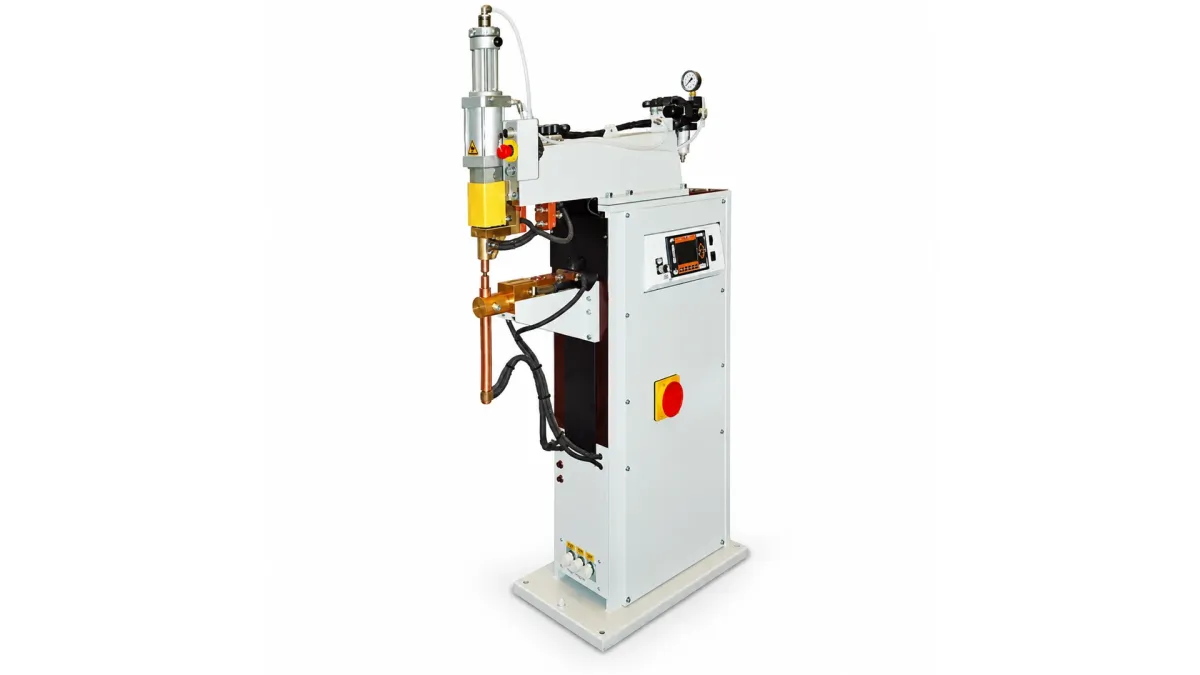
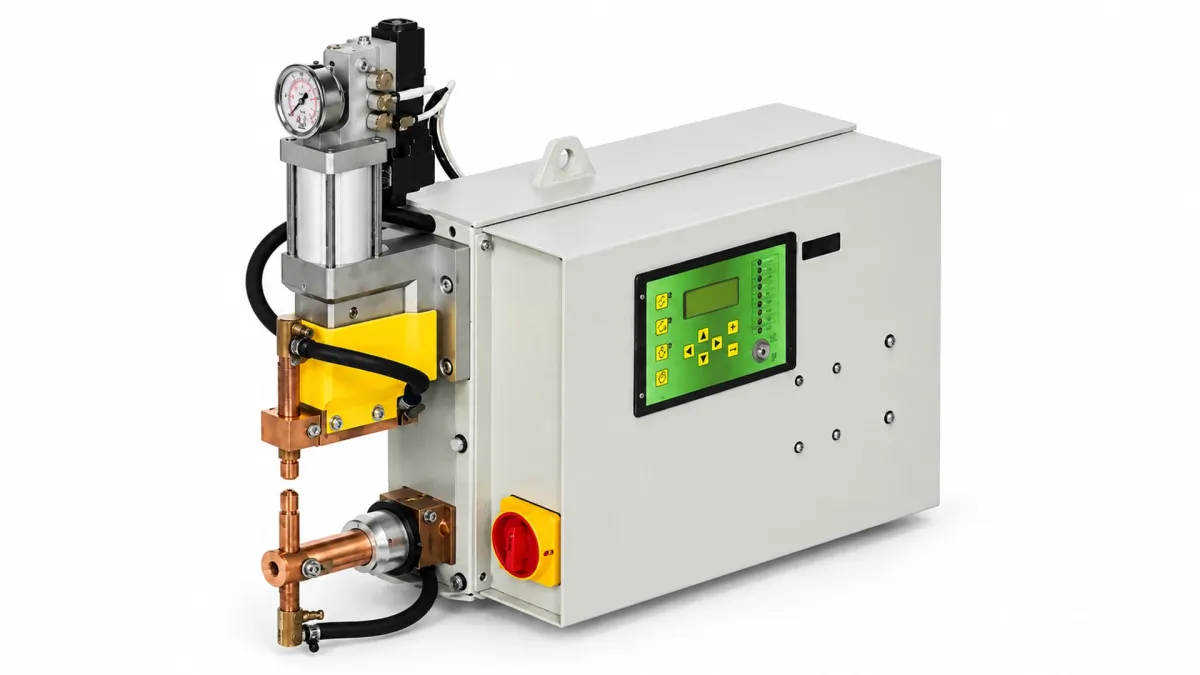
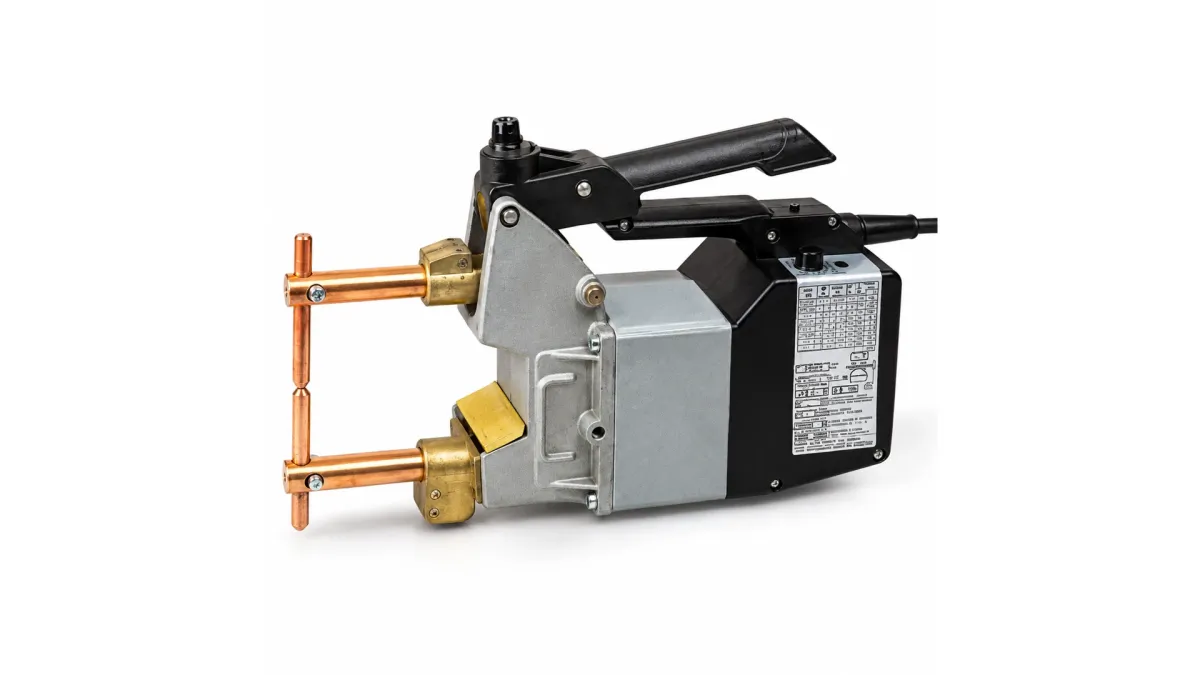
Contact and gap techniques use different arrangements for positioning and moving the stud during ignition. The correct welding gun must match the process and fastener. A.T.S. supplies capacitor discharge stud welding machines for manual and selected automated applications, with corresponding welding guns and accessories.
Short-cycle and drawn arc stud welding
With drawn arc stud welding, the power source supplies current while the welding gun lifts the stud away from the workpiece. The resulting arc melts the stud end and the adjoining base metal. The gun then plunges the stud into the molten pool, allowing the joint to solidify.
Current, arc time, lift height and plunge movement must be coordinated with the stud diameter and material. In short-cycle stud welding, the arc duration is reduced and the process is used for certain smaller studs and compatible sheet-metal assemblies. Unlike capacitor discharge welding, the energy is supplied by the welding source during the arc cycle.
Longer-cycle drawn arc welding is commonly used for heavier applications, including suitable shear connectors in steel structures. Ceramic ferrules may be used to protect and contain the molten pool. Other equipment configurations use shielding gas, where the welding procedure and fastener design permit it.
A.T.S. supplies short-cycle and drawn arc welding equipment, including LBH, PRO-D and PRO-I ranges. Individual machines support different stud sizes, current ranges and welding modes.
Capacitor discharge, short-cycle and drawn arc compared
The following comparison summarises typical process characteristics. It is not a universal specification for minimum sheet thickness or maximum stud diameter.
| Factor | Capacitor discharge | Short-cycle arc | Drawn arc, longer cycle |
|---|---|---|---|
| Energy source | Stored capacitor energy | Arc welding power supply | Arc welding power supply |
| Fusion time | Very short pulse | Short arc duration | Generally longer, application-dependent |
| Base material | Suitable for many thin-sheet applications | Selected thin and medium-thickness applications | Commonly used on thicker workpieces |
| Typical fasteners | Threaded studs, bushes, pins and insulation fasteners | Compatible threaded studs and bushes | Studs, pins and shear connectors |
| Heat input | Highly localised and generally limited | Depends on selected schedule | Generally greater |
| Weld-pool protection | Normally without ceramic ferrule | Depending on process and equipment | Often ceramic ferrule or shielding gas |
Sheet thickness, stud diameter and material compatibility
Base-metal thickness is a primary selection factor because it determines how much heat can be applied without excessive distortion or burn-through. A universal minimum thickness cannot be specified for all CD studs. It must be checked against the stud's weld-end diameter, the actual material and the applicable welding procedure.
Steel, stainless steel, aluminium and brass have different electrical and thermal properties. The choice of process and equipment must be compatible with the exact fastener grade and base metal. An assumption based only on the nominal thread diameter is insufficient, since the welding projection, flange and stud-end design also influence joint formation.
The mechanical loads acting on the finished joint must also be considered. A threaded attachment for a removable panel and a structural shear connector serve different purposes and require different levels of process verification.
Common weld defects and process verification
Surface contamination, inadequate grounding and incorrect welding-gun positioning can produce inconsistent fusion. In CD welding, insufficient energy or unsuitable contact can result in incomplete bonding. In arc welding, incorrect current, arc duration, lift or plunge can affect weld-pool formation and joint integrity.
Visual appearance alone does not establish joint strength. Depending on the application, appropriate visual inspection, bend testing and further mechanical examinations may be required. The relevant technical framework includes EN ISO 14555 for arc stud welding and EN ISO 13918 for studs and ceramic ferrules.
Which stud welding process should be selected?
For a relatively small stud welded to thin sheet metal, particularly where backside appearance matters, capacitor discharge is often the first process to assess. Short-cycle welding can be considered for compatible applications requiring a different fusion mechanism. Larger studs or structural connections may require longer-cycle drawn arc welding and the specified weld-pool protection method.
A technical selection should identify stud material and geometry, base-metal thickness, required joint strength, access and production volume. A.T.S. supplies stud welding machines, suitable welding guns and related components, with technical advice and after-sales support. Reviewing these conditions before choosing equipment helps avoid unsuitable welding schedules and unnecessary rework.
The right solution for your application, with the support of our experts
Our experts will help you find the right product for your needs, with no obligation. Tell us what you need: together we will find the most suitable solution.
Contact us, no obligation