




Stud welding defects: causes and corrective actions
Troubleshooting incomplete fusion, spatter, porosity and arc blow in capacitor discharge and drawn arc welding
4 min read
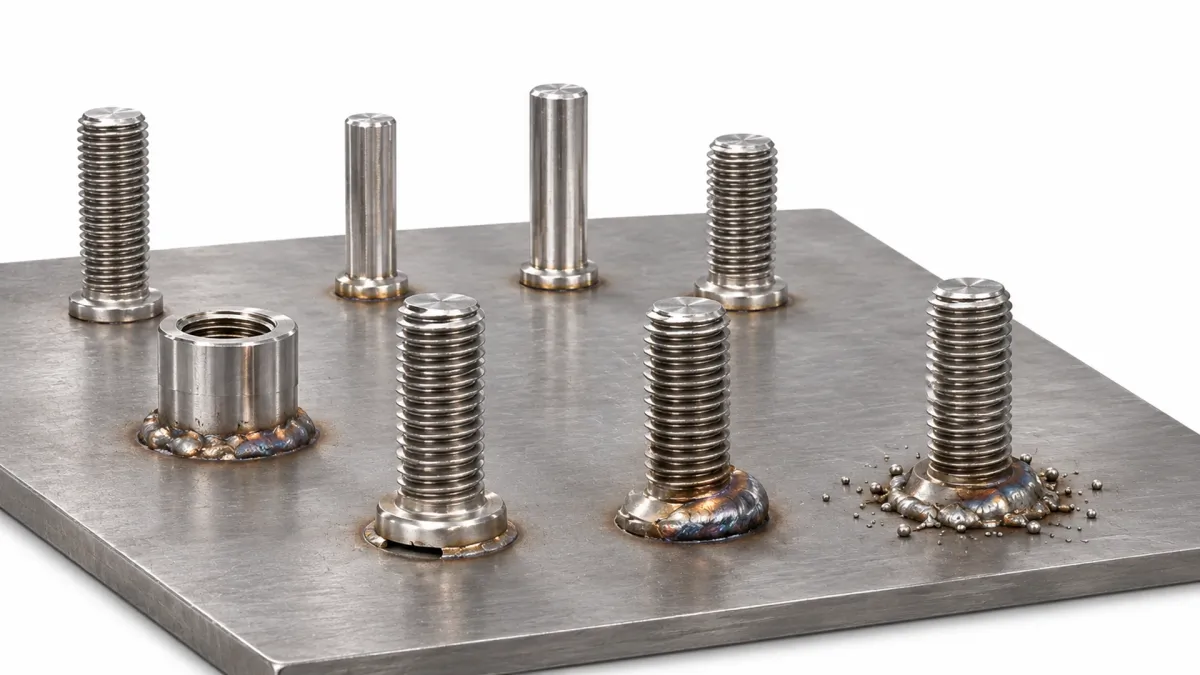
Stud welding defects can affect joint strength, production consistency and the condition of the surrounding workpiece. A stud that breaks away, an uneven weld collar or excessive spatter may be caused by unsuitable welding parameters, but mechanical movement, surface contamination and grounding conditions must also be investigated.
Troubleshooting should distinguish capacitor discharge stud welding from short-cycle and drawn arc welding. In CD welding, stored energy, ignition-tip condition and stud movement are particularly important. Arc welding also involves current, arc time, lift height, plunge movement and, where required, weld-pool shielding. Similar-looking defects can therefore have different causes.
How to identify an unacceptable stud weld
Visual inspection begins with stud alignment, the shape of the fused region and the presence of excessive spatter or obvious gaps. A small, relatively even ring of expelled material may be normal for particular capacitor discharge studs. In drawn arc welding, collar appearance depends on the stud, ferrule and welding procedure.
External appearance alone does not establish joint integrity. Lack of fusion, internal pores and cracking may require mechanical testing or examination of a weld cross-section. Acceptance must follow the applicable production specification.
Stud welding troubleshooting table
The following checks identify possible causes rather than universal parameter corrections. Welding settings should only be changed within the limits of the approved procedure and equipment instructions.
| Observed defect | Possible causes | Checks and corrective action |
|---|---|---|
| Weak weld or incomplete fusion | Insufficient heat input, contaminated surface, unsuitable materials or incorrect movement | Check materials, preparation, approved settings and gun operation |
| Gap beneath the stud flange in CD welding | Low stored energy, slow stud return or unsupported sheet | Check energy, movement and workpiece support |
| Excessive spatter | Excessive energy, delayed plunge or unsuitable surface conditions | Review welding schedule and stud movement |
| One-sided weld collar | Arc blow, asymmetric earth connections or gun misalignment | Check grounding arrangement and gun position |
| Porosity in drawn arc weld | Contamination, inadequate shielding or damp ferrule | Inspect surface preparation, ferrules and shielding equipment |
| Incomplete stud plunge | Mechanical restriction, incorrect lift or obstructed ferrule | Check gun travel, collet, alignment and mechanical clearance |
| Burn-through or sheet distortion | Excessive heat input for workpiece thickness | Review base-metal thickness, process and approved energy settings |
Capacitor discharge welding: weak joints and excessive spatter
In capacitor discharge stud welding, insufficient energy can prevent proper fusion of the stud's ignition tip and the workpiece. However, the same appearance may result from insufficient sheet support or incorrect gun movement. Thin panels can flex during the welding pulse, altering contact conditions.
Excessive spatter may indicate that the applied energy is too high or that the stud is not moving into the molten region quickly enough. Increasing the charging voltage is therefore not a general remedy for a weak weld. The ignition tip, surface condition, collet grip and gun mechanism should be checked first.
Contact and gap guns use different ignition arrangements. Their spring settings, initial position and movement checks cannot be treated as interchangeable. The selected gun must also match the stud material and welding power source.
Drawn arc defects: penetration, plunge and porosity
In drawn arc welding, insufficient current or arc duration can lead to incomplete fusion. Excessive heat input may cause a large irregular collar, excessive workpiece melting or distortion. Welding current, arc time, lift and plunge must be evaluated together.
Incomplete plunge can be caused by friction between the stud and ferrule, spatter restricting movement or a poorly operating gun mechanism. Incorrect footplate alignment and inappropriate damping may also prevent the stud from reaching the intended position.
Porosity may be associated with contamination, oxidation or inadequate weld-pool protection. Where ceramic ferrules are specified, their condition and suitability should be checked. Gas shielding systems require verification of the correct gas, flow and delivery arrangement. Ferrules and shielding gas must not be substituted without confirming process compatibility.
Arc blow and asymmetric weld collars
Magnetic arc blow can deflect the welding arc and produce an uneven weld collar. Its severity is influenced by welding current, the geometry of the workpiece, ferromagnetic masses and the arrangement of earth connections.
If weld collars consistently develop on one side, check gun perpendicularity and the positioning of return-current connections. Any changes to the grounding arrangement must follow the equipment manufacturer's instructions. An asymmetric collar should not automatically be treated as evidence of low welding current.
Weld inspection and preventing repeated defects
Inspection may include visual examination, bend testing, tensile testing or macro examination, depending on the process and joint requirements. EN ISO 14555:2025 provides requirements relating to arc stud welding procedures, qualification and production testing. Relevant stud and ceramic ferrule specifications are addressed by EN ISO 13918.
Suspect parts should be identified and handled under the applicable quality procedure. Rewelding the same location without an approved repair method can introduce further defects.
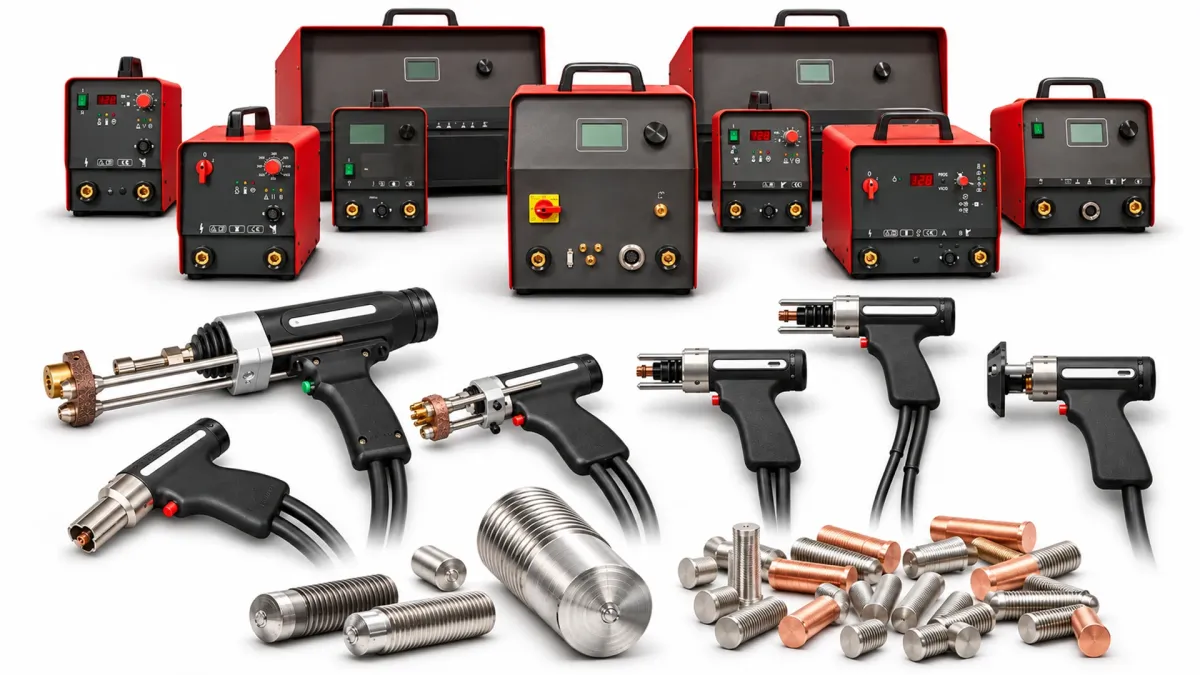
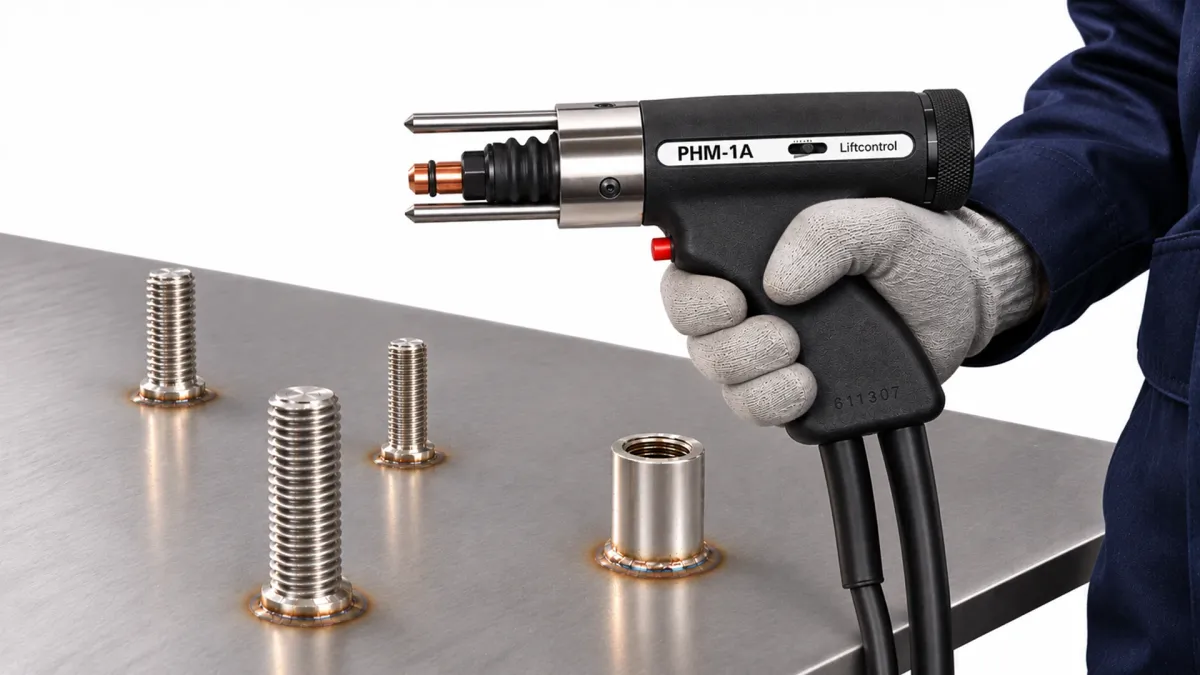
A.T.S. supplies capacitor discharge and arc stud welding equipment, welding guns and associated components, with technical advice and after-sales assistance. Comparing the visible defect with machine settings, workpiece conditions and gun operation helps identify the actual cause before corrective action is taken.
The right solution for your application, with the support of our experts
Our experts will help you find the right product for your needs, with no obligation. Tell us what you need: together we will find the most suitable solution.
Contact us, no obligation