




Self-clinching nuts vs blind rivet nuts: how to choose
Installation methods, sheet hardness, one-sided access and mechanical performance in sheet metal
6 min read
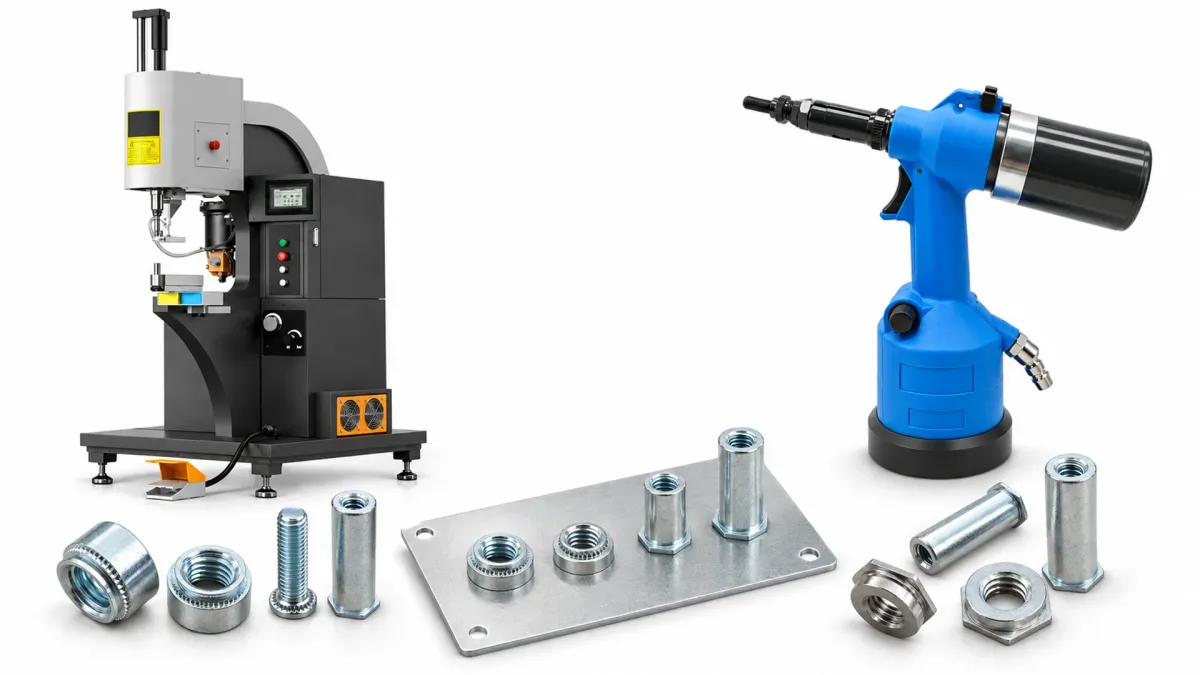
Self-clinching nuts and blind rivet nuts provide threaded fastening points in sheet-metal components that are too thin to support a sufficiently strong tapped thread. Although both allow removable screw assemblies, they rely on different mechanical locking principles. A self-clinching nut is retained by plastic deformation of the surrounding sheet, whereas a blind rivet nut forms a retaining bulge by deforming its own body during installation.
A.T.S. supplies self-clinching fasteners and blind rivet nuts for sheet metal, together with installation equipment. Selecting the correct system requires examining sheet hardness, material thickness, hole design, mechanical loads, accessibility and the sequence in which components are manufactured and assembled.
How self-clinching nuts are installed
A self-clinching nut is positioned in a hole manufactured to the dimensions specified for the fastener. A press applies a controlled compressive force through a punch and anvil, causing the sheet metal to flow plastically into the nut's retaining grooves or undercut features. This produces a mechanical interlock that resists rotation and axial displacement when the installation requirements are satisfied.
The installation principle depends on the workpiece being sufficiently ductile. If the sheet is too hard, the metal may not flow correctly into the retaining geometry. Increasing the installation force beyond the specified range will not necessarily improve the connection and may damage the nut or deform the surrounding sheet.
Self-clinching nuts are therefore selected according to maximum permitted sheet hardness, minimum thickness, recommended hole diameter and distance from edges or bends. The fastener's material must also be suitable for the workpiece; a stainless steel nut is not automatically compatible with every stainless steel sheet.
Besides nuts, the self-clinching family includes threaded studs, standoffs and related components. They can be installed during sheet-metal manufacturing, before subsequent operations make the rear side inaccessible. A.T.S. supplies dedicated presses for self-clinching fasteners and equipment suitable for different production requirements.
How blind rivet nuts create a threaded fixing point
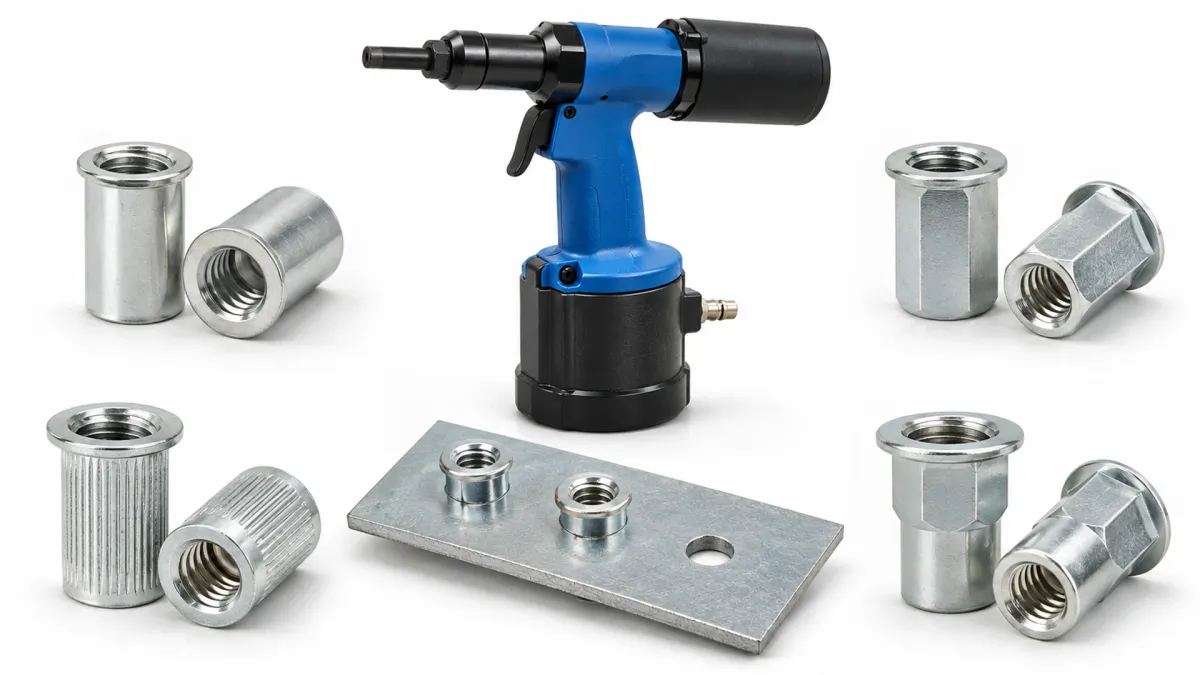
A blind rivet nut is inserted into a prepared hole from the accessible side of the panel. A setting tool engages the internal thread with a mandrel and applies axial pulling force. A designed section of the rivet nut body shortens and expands behind the sheet, creating a retaining bulge that clamps the material between the head and the deformed body.
The main installation advantage is one-sided access. A backing anvil is not required behind the workpiece, making the method suitable for closed profiles, metal enclosures and previously assembled components. Sufficient clearance must still be available behind the sheet to accommodate the formed bulge.
Blind rivet nuts are available with round, knurled, hexagonal and half-hexagonal bodies. The external geometry influences resistance to turning. Hexagonal inserts fitted into correctly manufactured hexagonal holes can provide effective rotational restraint, while round-bodied variants can be installed in conventional circular holes where their specified performance is sufficient.
Self-clinching nuts and blind rivet nuts compared
| Selection criterion | Self-clinching nut | Blind rivet nut |
|---|---|---|
| Locking principle | Plastic flow of sheet metal into retaining features | Controlled deformation of the fastener body behind the sheet |
| Installation access | Normally both sides for punch and anvil | One-sided installation |
| Equipment | Press and suitable tooling | Blind rivet nut setting tool |
| Hole design | Typically a precisely sized round hole | Round or shaped hole depending on the fastener |
| Sheet hardness | Critical to material flow and mechanical interlocking | Considered together with hole geometry and setting behaviour |
| Sheet thickness | Must meet the specified minimum thickness | Must fall within the fastener's grip range |
| Rear clearance | Depends on fastener design | Required for formation of the retaining bulge |
| Mechanical performance | Depends on clinch quality, sheet and fastener design | Depends on deformation, body geometry and sheet |
Neither method is inherently stronger in every application. The correct comparison must consider the actual fastener model, the sheet material and the conditions used to measure torque resistance and axial retention.
Sheet hardness, thickness and hole preparation
With self-clinching fasteners, sheet hardness directly affects whether sufficient material can flow into the retaining features. A hole outside the specified diameter tolerance or a fixing point too close to an edge can also reduce retention. The correct fastener grade and dimensions must therefore be selected before establishing the pressing operation.
Blind rivet nuts are instead matched to a defined grip range. This is the interval of material thicknesses for which the body is intended to deform correctly. If the sheet falls outside the range, the rear bulge may form in the wrong position or fail to clamp the panel adequately. The setting stroke or force must be compatible with the insert design and the tool.
Hole geometry remains important for both systems. Hexagonal rivet nuts require suitable shaped holes, while knurled cylindrical inserts rely on different mechanisms to resist rotation. Coatings and surface treatments should also be considered when defining whether installation takes place before or after painting.
Torque resistance, push-out and pull-through performance
The mechanical performance of a threaded fastener cannot be expressed as a single strength value. Torque-out resistance concerns the tendency of the nut to rotate in the sheet, while push-out and pull-through describe different axial failure modes. The permissible tightening torque of the screw assembly also depends on thread strength, screw grade and joint geometry.
A self-clinching nut installed in material exceeding its specified hardness may fail to achieve proper engagement. An incorrectly set blind rivet nut may rotate during tightening or become loose under repeated use. For vibrating assemblies or components that are regularly dismantled, verification should cover the relevant operating loads and assembly cycles.
Installation equipment and production volume
Self-clinching nuts require a press with suitable tooling and access to both sides of the sheet during installation. Presses may be equipped with automatic fastener feeding where production volume and part geometry justify it. Alignment, installation force and workpiece support must remain controlled.
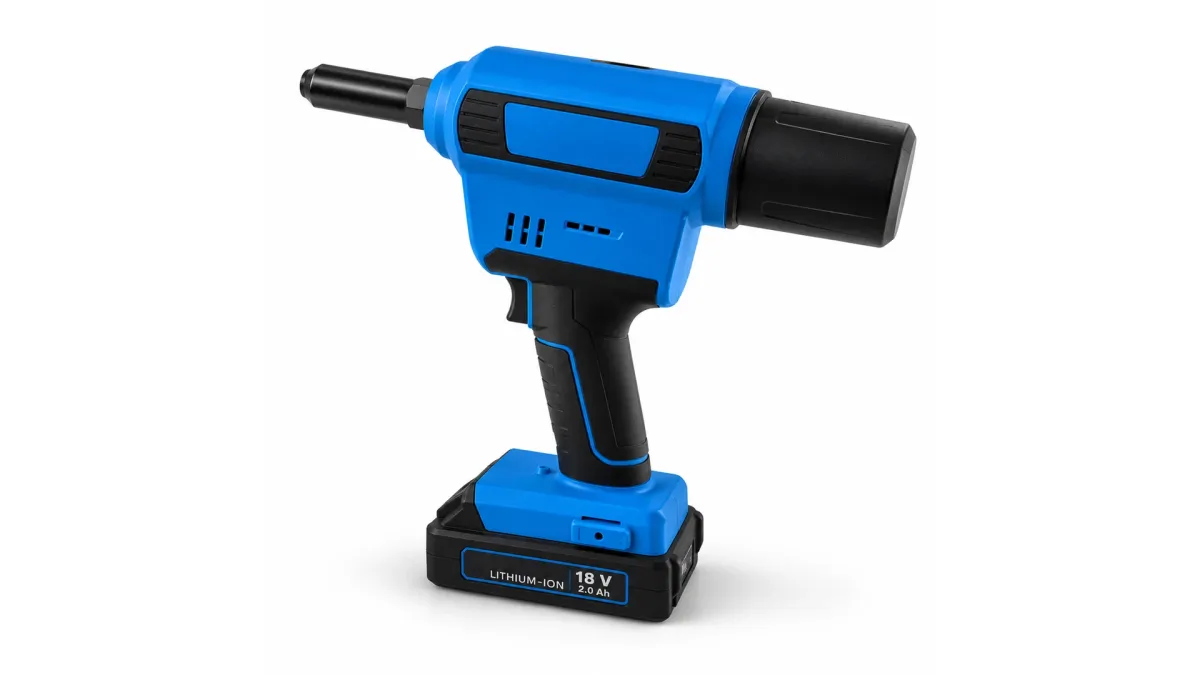
Blind rivet nuts are fitted using rivet nut setting tools such as the ATSRL312, with compatible threaded mandrels and nosepieces. This equipment is specified for particular thread sizes and materials; the nominal thread range alone does not establish suitability for every blind rivet nut.
For a broader choice of equipment, A.T.S. supplies industrial fastening and assembly tools for manual and repetitive production requirements.
When should each fastening method be selected?
Self-clinching nuts are particularly suitable when both sides of the sheet can be accessed during manufacturing, the material meets the prescribed hardness and thickness limits, and press installation can be integrated into the production sequence.
Blind rivet nuts are generally preferable where access is available from only one side, including closed sections and already assembled housings. Their selection must account for the grip range, required rear clearance, hole geometry and mechanical loads.
A.T.S. supplies industrial fastening systems and provides technical advice and after-sales support. Comparing material properties, installation access, loading requirements and tooling before choosing the fixing method helps prevent spinning nuts, insufficient retention and unnecessary rework.
The right solution for your application, with the support of our experts
Our experts will help you find the right product for your needs, with no obligation. Tell us what you need: together we will find the most suitable solution.
Contact us, no obligation