




Smooth, knurled or hexagonal blind rivet nuts: which to choose
Comparing body geometry, spin-out resistance, hole preparation and grip range for sheet-metal assemblies
5 min read
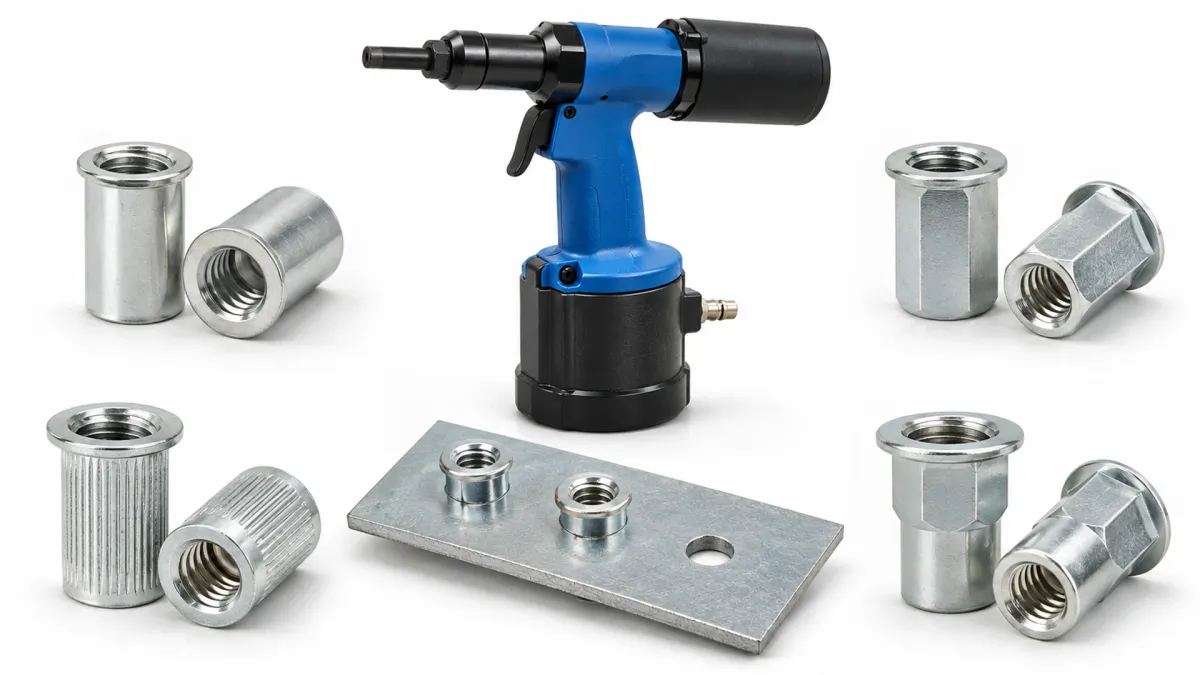
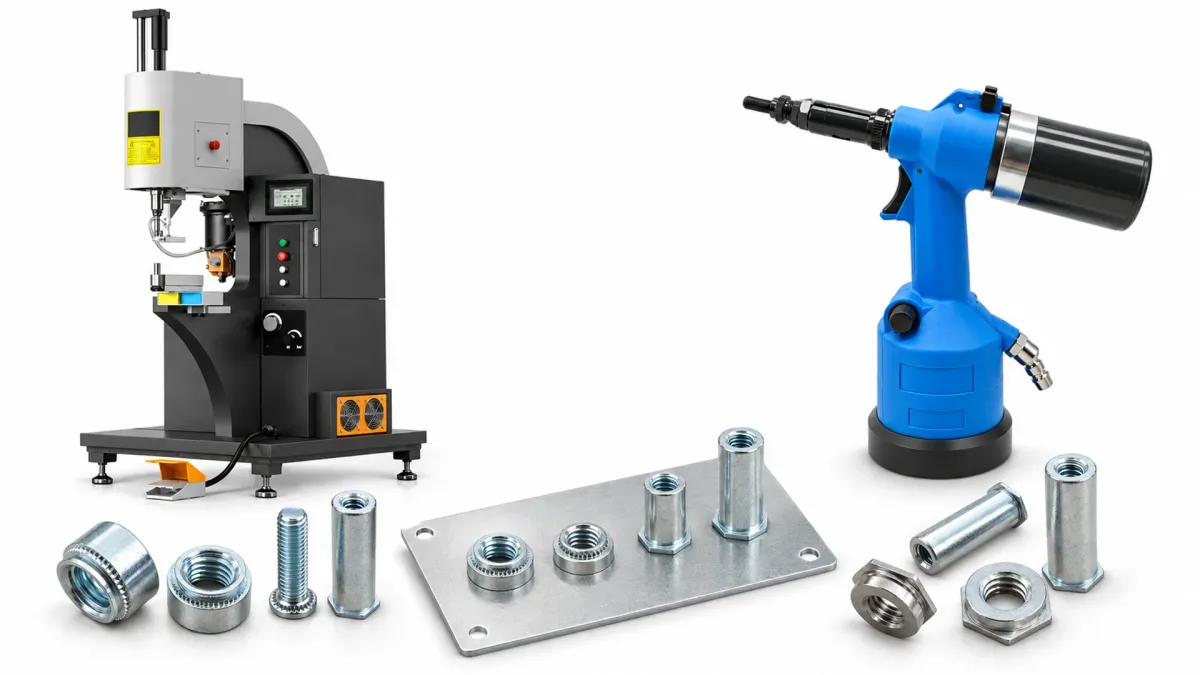
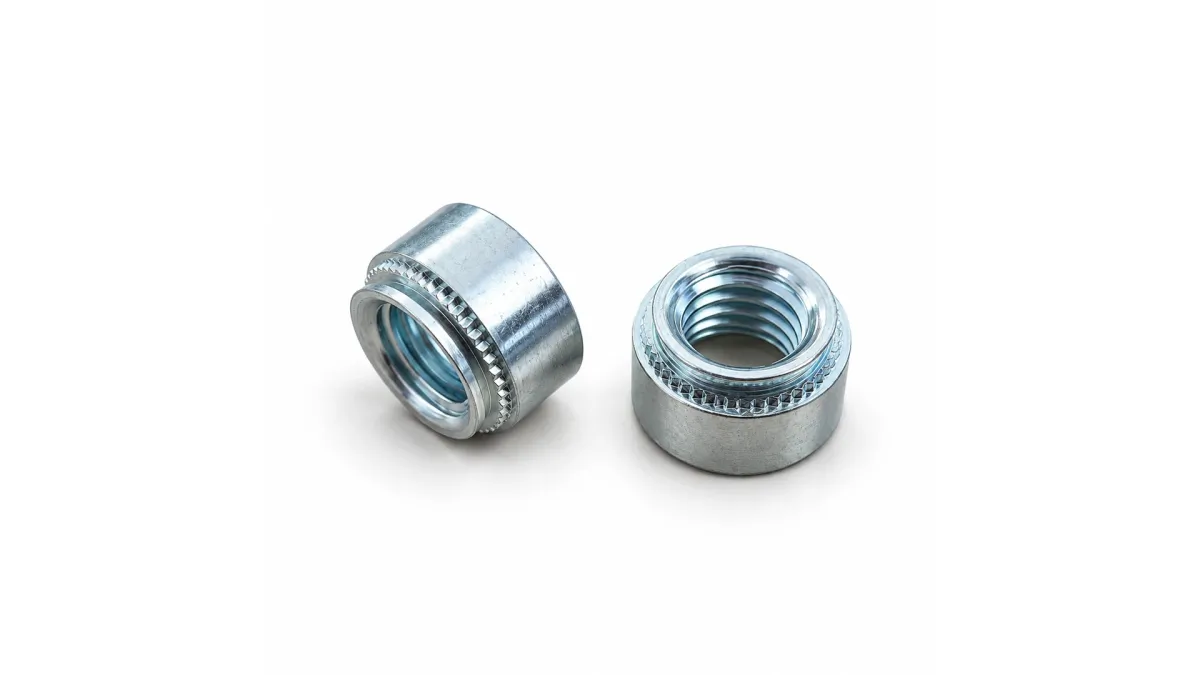
Smooth-body, knurled and hexagonal blind rivet nuts provide reusable internal threads in sheet-metal components where direct tapping would not offer adequate thread engagement. Each design is installed by deforming a section of the fastener body behind the workpiece, but the external shank geometry changes how the rivet nut resists turning in its mounting hole.
A.T.S. supplies blind rivet nuts for sheet metal in multiple materials, thread sizes and body designs. Choosing between them involves sheet thickness, hole manufacturing, expected tightening torque, mechanical loads and the possibility of repeated assembly. Selecting the largest available thread or the most aggressive external profile is not necessarily the most appropriate solution.
Why body geometry matters in a blind rivet nut
During installation, a setting tool pulls on a threaded mandrel and compresses a designated section of the rivet nut. A retaining bulge forms behind the sheet, clamping the panel between the fastener head and the deformed body. This process permits installation from one side, making blind rivet nuts suitable for hollow sections and closed enclosures.
The retaining bulge mainly provides axial retention, while resistance to spinning also depends on the fit between the shank and the hole. Round smooth, round knurled and polygonal shanks achieve rotational restraint differently. Hole tolerances and the surrounding sheet material therefore matter as much as the nominal thread diameter.
Smooth round-body rivet nuts and circular holes
Smooth cylindrical blind rivet nuts are installed in round holes that can be produced using conventional drilling or punching. Their uninterrupted outer surface makes them suitable for applications where circular-hole preparation is preferred and the specified torque resistance meets the assembly requirements.
The fastener is secured through deformation and the resulting contact with the sheet. Because there is no dedicated external knurling or polygonal locking profile, the actual resistance to rotation must be checked particularly carefully when bolts will be tightened repeatedly or exposed to substantial torque.
Available head arrangements include standard, reduced and countersunk styles. These are selected according to protrusion, seating and workpiece requirements. A smaller head should not be assumed to provide the same pull-through performance as a larger one.
Knurled round-body rivet nuts for improved grip
Knurled cylindrical rivet nuts have raised features on the outer shank. During setting, the surrounding sheet interacts with these features, potentially increasing spin-out resistance compared with a smooth fastener of similar dimensions.
This is particularly relevant where a round mounting hole is preferred but additional rotational restraint is desirable. The benefit depends on the hardness and deformation characteristics of the panel, the knurl design and the quality of the setting operation. Knurling cannot compensate for a substantially oversized hole or incorrect grip-range selection.
Knurled bodies are therefore a useful option between simple smooth shanks and polygonal designs, rather than a universal replacement for hexagonal fasteners.
Hexagonal and semi-hexagonal designs
Hexagonal blind rivet nuts have six external flats that engage with a matching hexagonal mounting hole. The mechanical contact between the flats provides positive resistance to rotation during tightening and removal.
This arrangement can be particularly useful when the assembly requires substantial rotational restraint or frequent screw servicing. However, the sheet must be prepared with an accurately shaped hole. Poorly formed corners, excessive clearance or deformation around the opening can reduce the benefit of the hexagonal shank.
Semi-hexagonal rivet nuts combine a polygonal portion with a round section. This construction may ease insertion into the specified shaped hole while retaining mechanical engagement against rotation. The exact mounting-hole requirements must always follow the product drawing.
Technical comparison of rivet nut body designs
| Factor | Smooth round | Knurled round | Hexagonal | Semi-hexagonal |
|---|---|---|---|---|
| Hole geometry | Round | Round | Hexagonal | Specified shaped hole |
| Rotational restraint | Setting deformation and friction | Deformation and knurl engagement | Positive engagement of flats | Engagement of polygonal section |
| Hole preparation | Standard round drilling or punching | Round drilling or punching | Accurate hexagonal punching or equivalent | Hole matched to body geometry |
| Typical benefit | Simpler hole preparation | Improved grip with a round hole | Strong geometric resistance to turning | Alternative insertion and locking geometry |
These are functional differences, not guaranteed torque values. Product datasheets and comparable test conditions are needed before establishing which fastener is suitable for a particular load.
Grip range, head style and material selection
The grip range specifies the workpiece-thickness interval for which the rivet nut is designed. A fastener used outside this interval may form an incorrect rear bulge, reducing retention even if the body geometry has been chosen correctly.
Head geometry also affects installation. Standard heads provide a seating surface, reduced heads limit protrusion and countersunk heads require appropriate hole preparation. Closed-end versions may prevent direct passage through the fastener body, but they do not automatically make the complete joint watertight.
Material selection must consider corrosion, strength and compatibility with the workpiece. A.T.S. offers configurations in zinc-plated steel, stainless steel and aluminium, with specific thread availability depending on the fastener family. The range must be checked for the exact material and head combination.
Setting quality and mechanical verification
Spin-out torque, axial retention and thread strength are separate performance measures. A fastener with good resistance to turning may still have limitations under axial loads or excessive screw tightening. Values should be compared only when test materials, hole dimensions and installation conditions are equivalent.
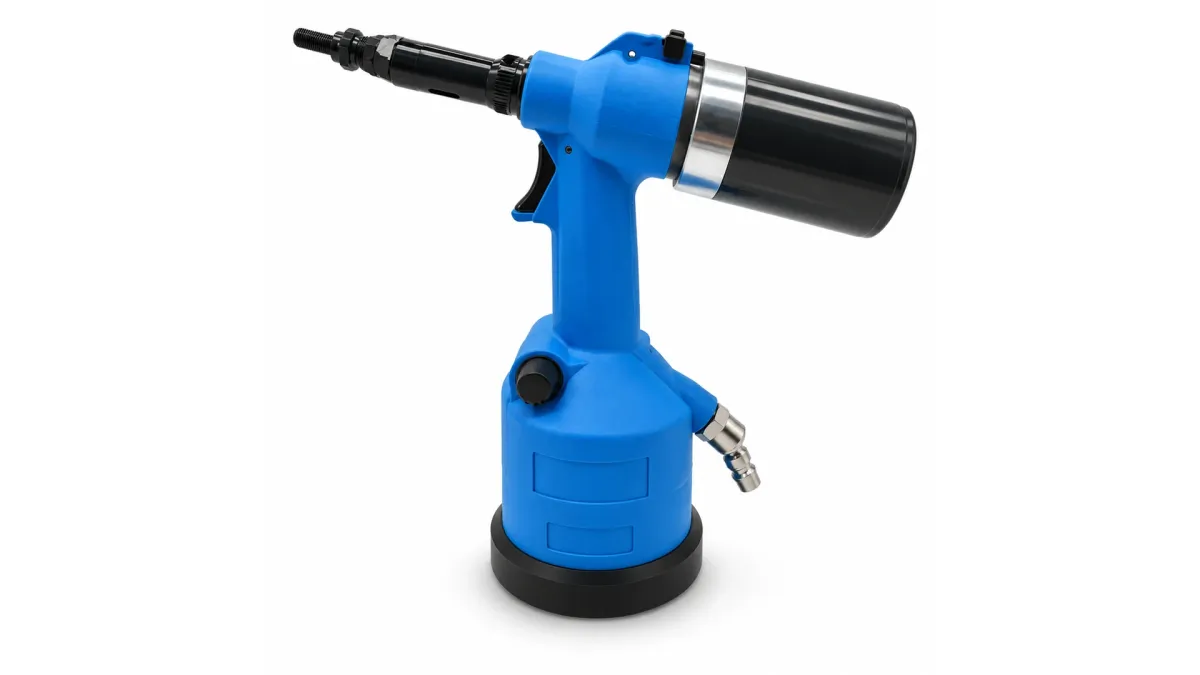
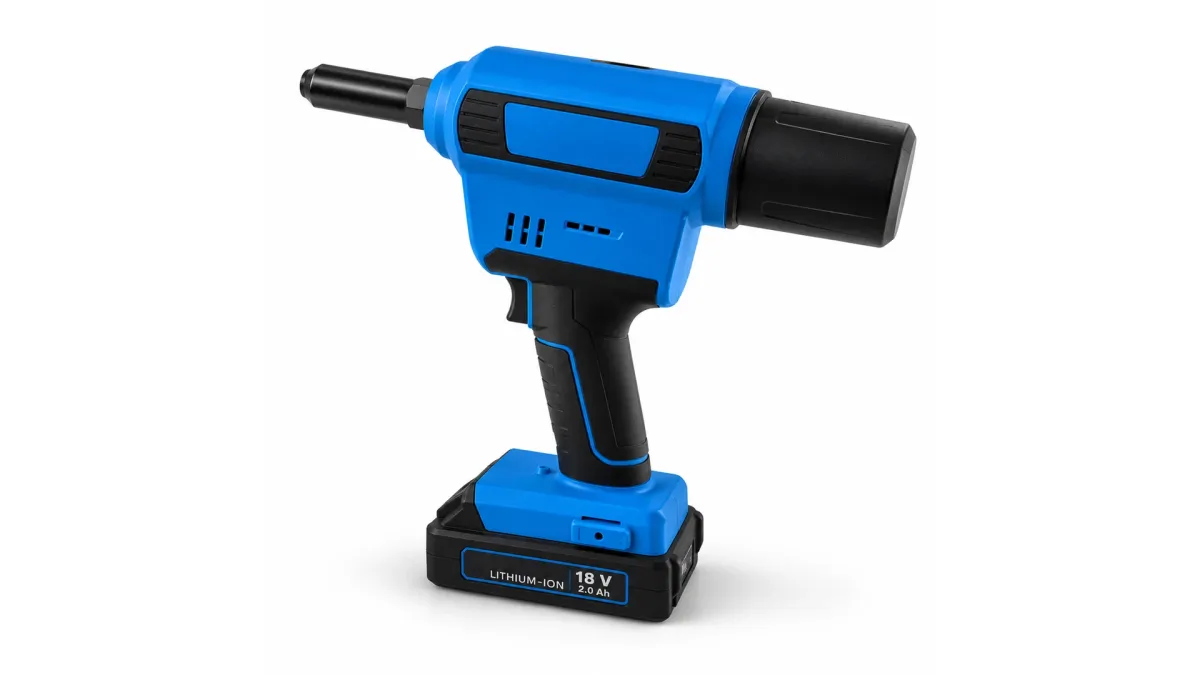
Installation requires compatible rivet nut setting tools, mandrels and nosepieces. Insufficient setting can leave the fastener loose; excessive stroke or force can damage the body or internal thread. Representative installation trials help establish the correct settings before series production.
Choosing the right rivet nut
A smooth round body is worth considering when circular-hole preparation and adequate standard performance are priorities. A knurled body can provide additional rotational restraint without changing the hole to a polygonal shape. Hexagonal designs are appropriate when shaped-hole production is available and positive locking is required, while semi-hexagonal designs serve specific insertion and retention requirements.
A.T.S. supplies these fasteners and compatible installation equipment, with technical advice and after-sales support. Evaluating the hole, sheet material, grip range, tightening conditions and expected assembly cycles before selection reduces the risk of spinning inserts and failed threaded joints.
The right solution for your application, with the support of our experts
Our experts will help you find the right product for your needs, with no obligation. Tell us what you need: together we will find the most suitable solution.
Contact us, no obligation