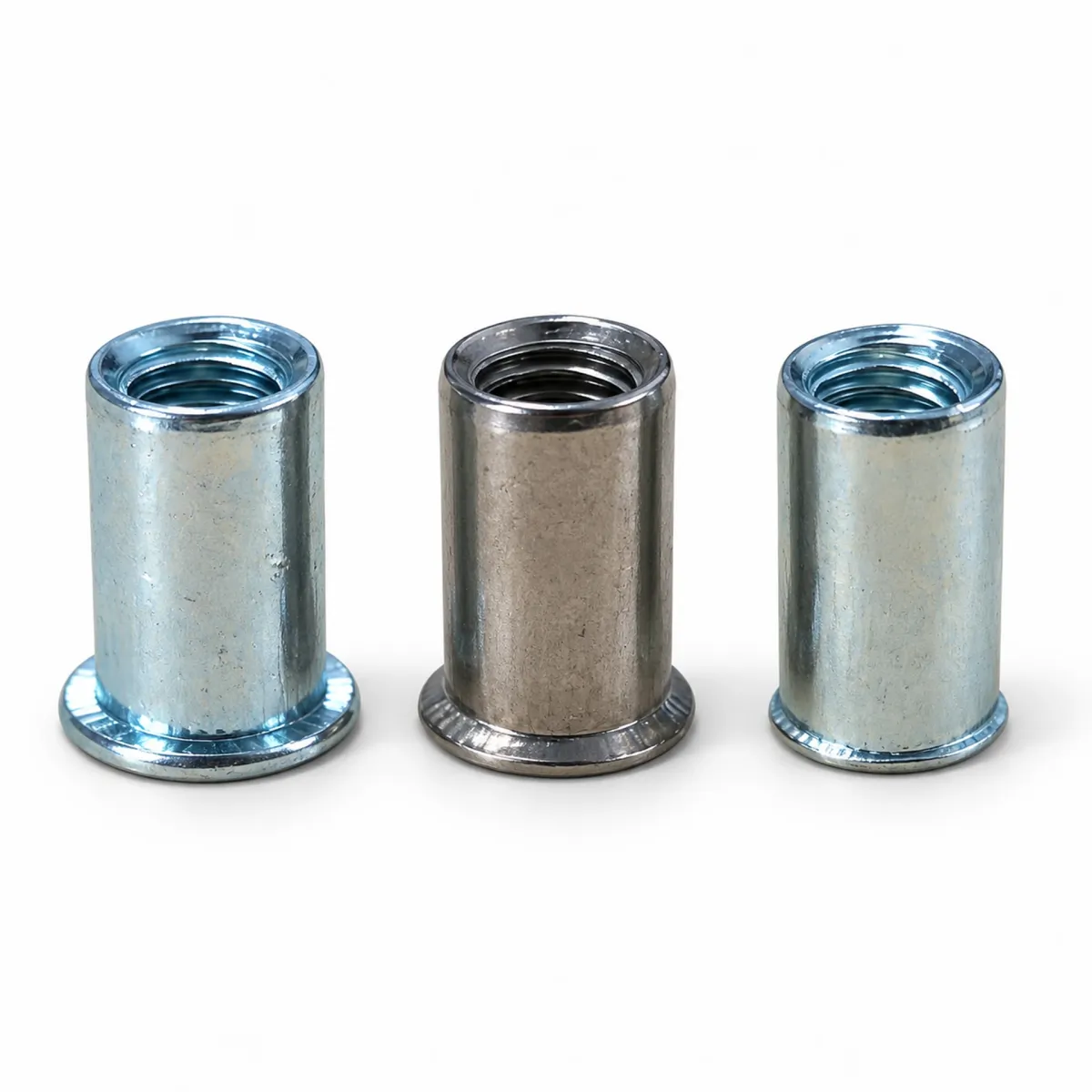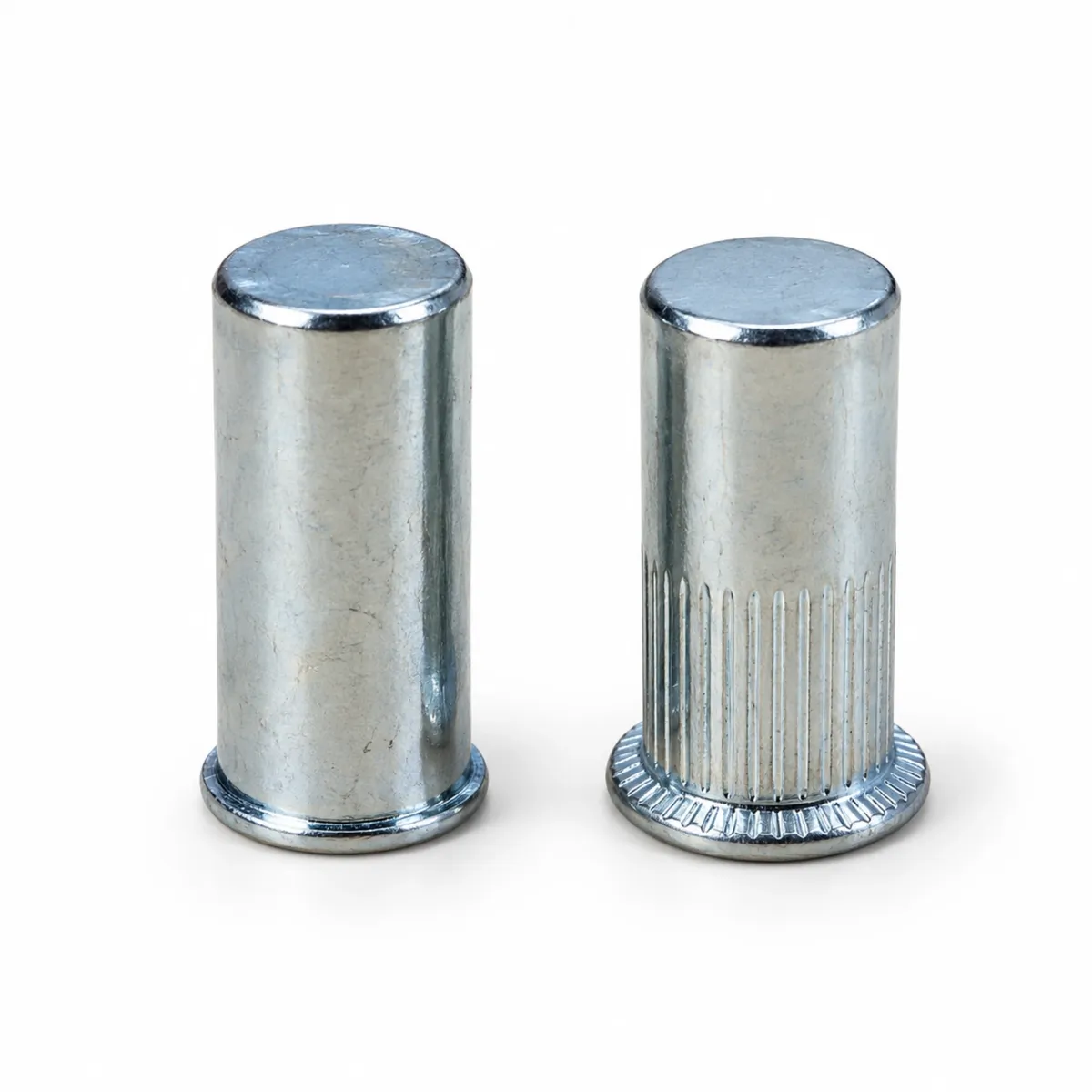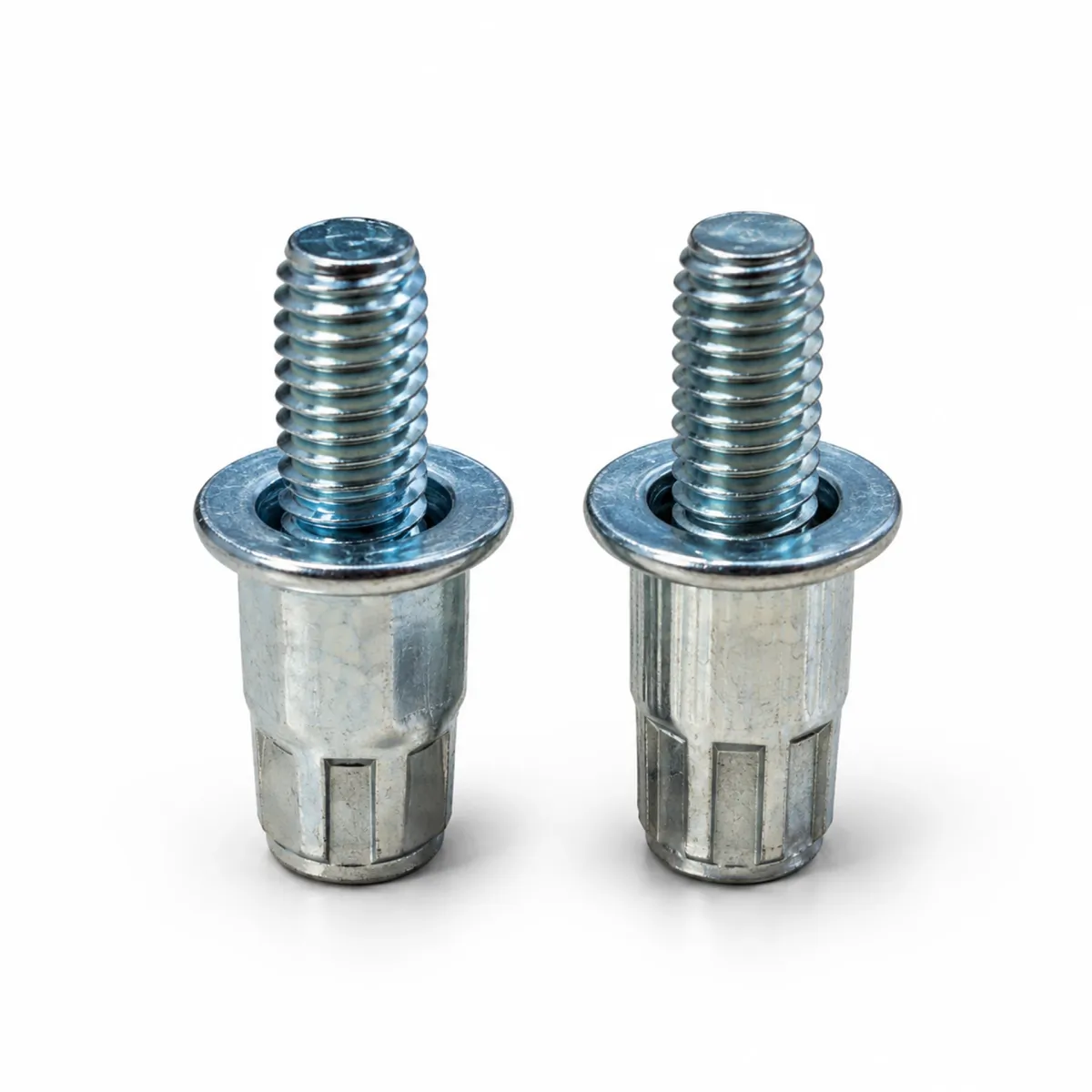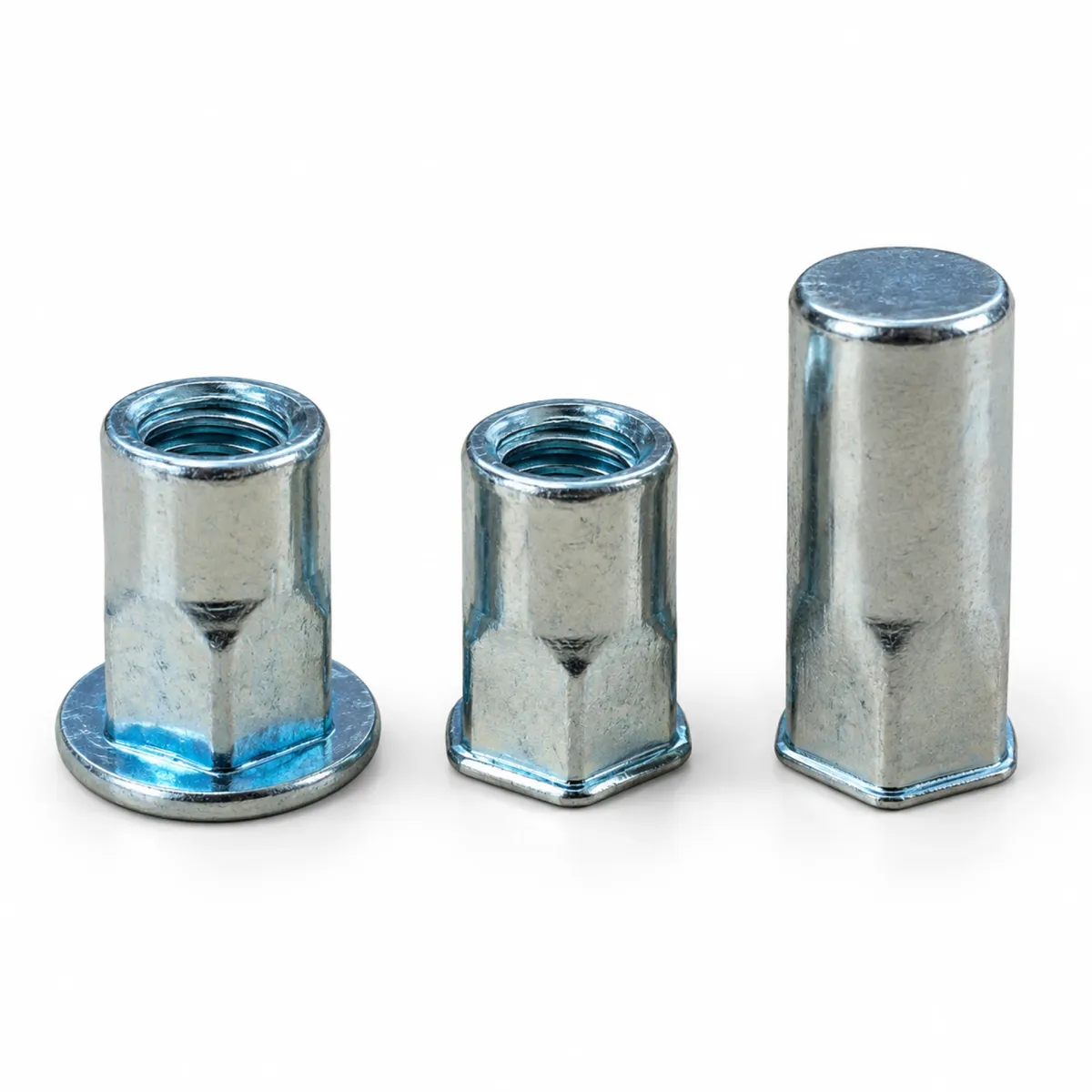





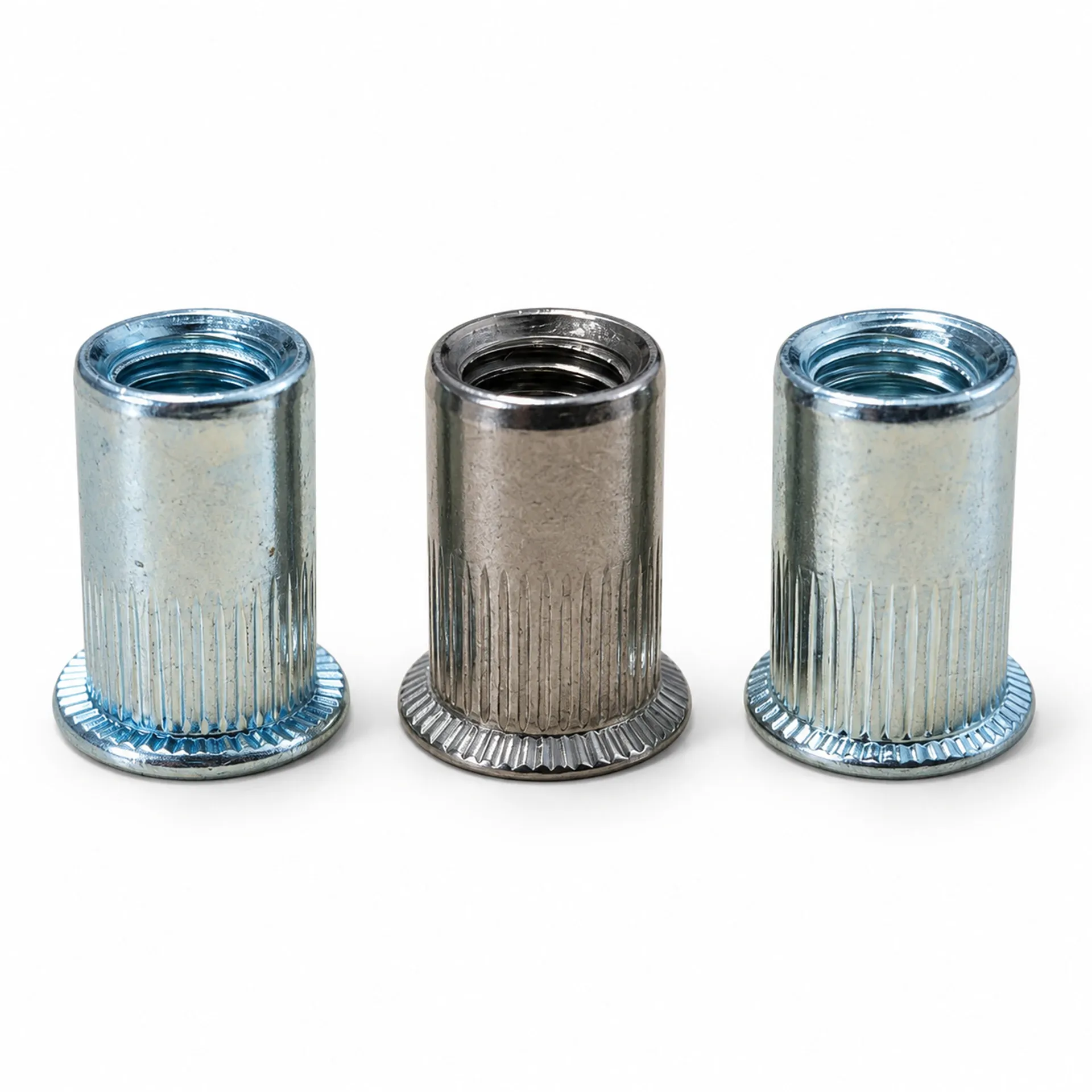
Knurled cylindrical blind rivet nut
Cylindrical knurled rivet nuts
Knurled body blind rivet nuts for sheet metal, available in zinc-plated steel, stainless steel and aluminium, with M3–M12 threads and a choice of head styles.
Knurled body blind rivet nuts provide an internally threaded fixing in thin sheet metal where tapping directly into the material would not offer sufficient thread engagement.
Unlike smooth body rivet nuts, these fasteners feature a textured outer shank. The knurling interacts with the surrounding material during installation, helping to resist rotation when a screw is tightened or removed.
The cylindrical body fits into a round hole, making this type of fixing suitable for sheet metal assemblies manufactured using conventional drilling or punching operations. Installation is carried out from one side, which is particularly useful when the rear of the component cannot be accessed.
A.T.S. supplies knurled body blind rivet nuts in zinc-plated steel, stainless steel and aluminium, with thread sizes across the M3–M12 range, depending on the selected configuration.
Head Styles and Material Options
The head design determines how the rivet nut bears against the sheet and how much clearance is needed around the fixing.
- Flat head: provides a bearing surface on the sheet where a raised head can be accommodated.
- Reduced head: limits projection from the installation surface, making it suitable for assemblies with restricted clearance.
- Countersunk head: can be seated in a correctly prepared countersunk hole to reduce the head's protrusion.
Material selection depends on the required mechanical properties, operating environment and corrosion conditions. Individual thread sizes, grip ranges and head configurations should be checked against the relevant technical specification.
Installing Knurled Blind Rivet Nuts
Installation is performed using a compatible blind rivet nut setting tool, including pneumatic or hydropneumatic equipment.
The rivet nut is placed into a round hole of the specified diameter. The tool then applies an axial pulling force through the internal thread, causing the designated section of the body to deform behind the sheet.
As the rivet nut is clamped into position, the knurled surface helps resist turning within the hole. The result is a threaded attachment point that can be installed without welding or tapping the parent material.
Correct hole preparation and tool settings are essential. The sheet thickness must also fall within the grip range of the chosen fastener.
When Should a Knurled Rivet Nut Be Used?
Knurled blind rivet nuts are used in fabricated metal housings, machinery panels, brackets, enclosures and other sheet metal assemblies requiring threaded connections.
Their textured shank provides additional resistance to rotation compared with an otherwise equivalent smooth body design, provided the installation conditions are suitable.
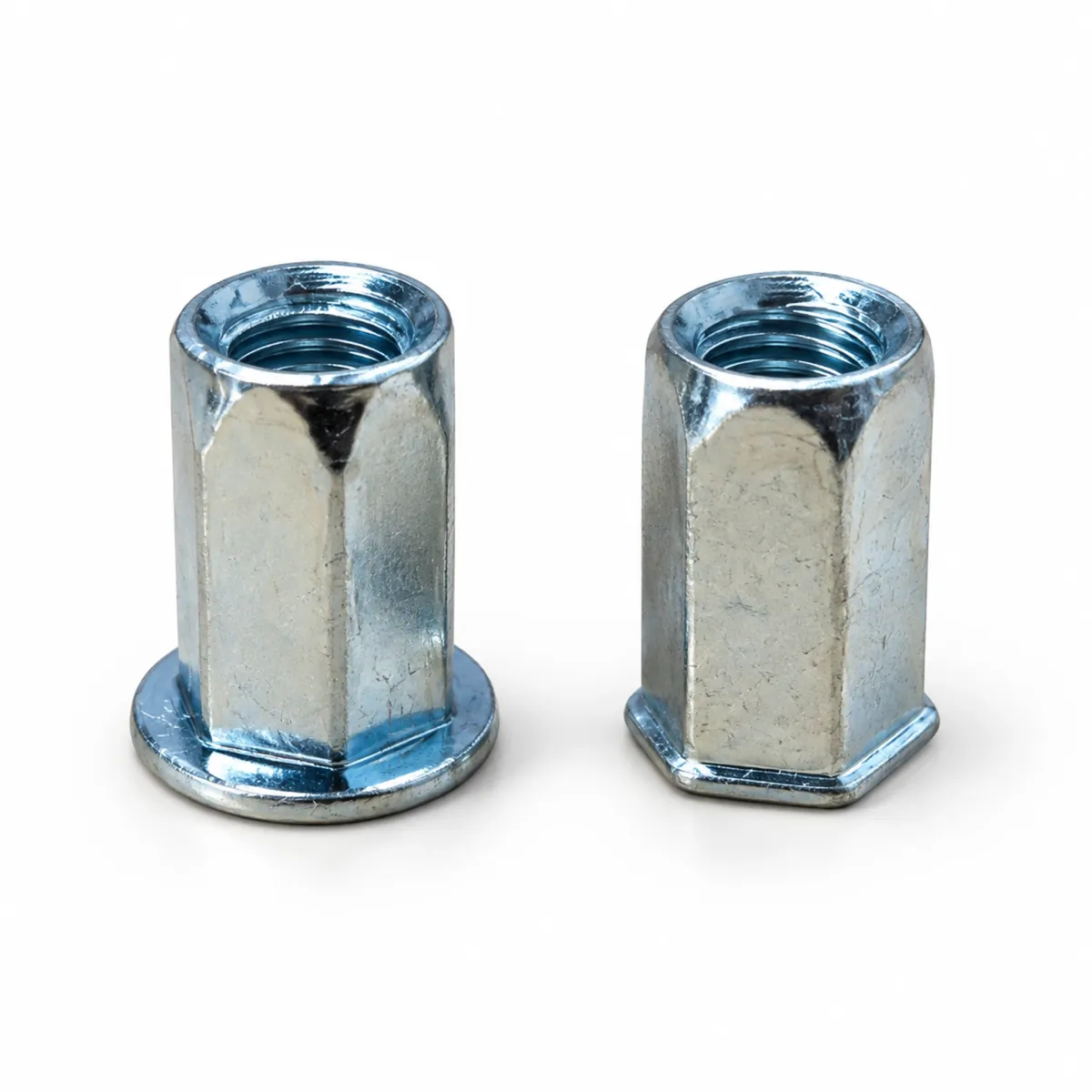
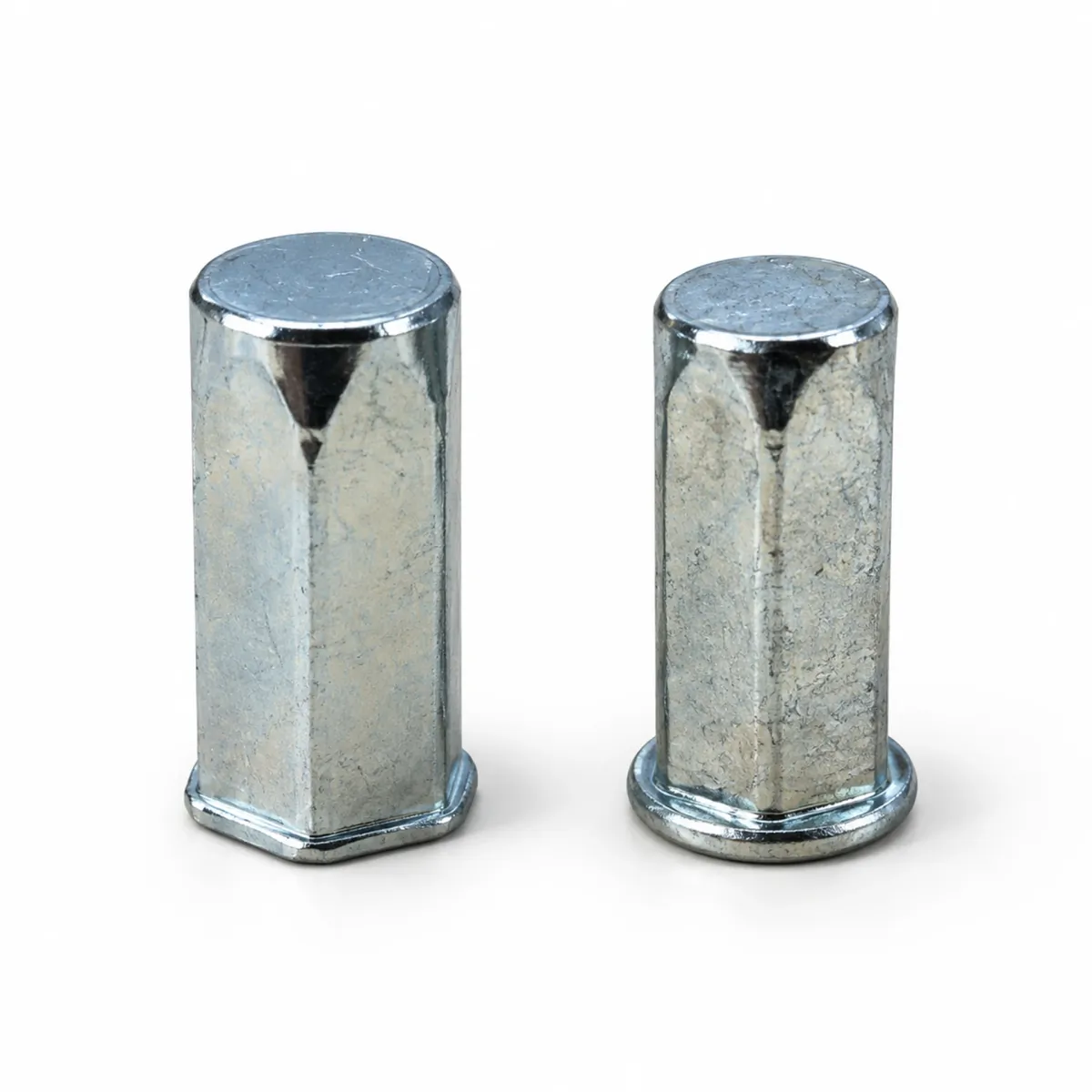
Unlike hexagonal rivet nuts, they can be installed in round holes without requiring a specially shaped opening. However, their anti-rotation performance is influenced by the knurl pattern, sheet material, hole dimensions and setting conditions.
Where high tightening torque or repeated assembly operations are expected, the specified spin-out resistance should be checked against the application requirements.
Product Selection and Technical Support
Choosing the right knurled body blind rivet nut involves assessing the required thread size, material thickness, head clearance, installation method and expected tightening loads.
A.T.S. supplies knurled rivet nuts and compatible installation equipment, helping manufacturers select suitable threaded fasteners for industrial sheet metal applications.
Available dimensions, grip ranges and product configurations can be found in the threaded inserts technical datasheet.
Request information about this product
Leave us your details: we will get back to you as soon as possible with all the information about this product.
Products in the same category
Threaded inserts for sheet metal