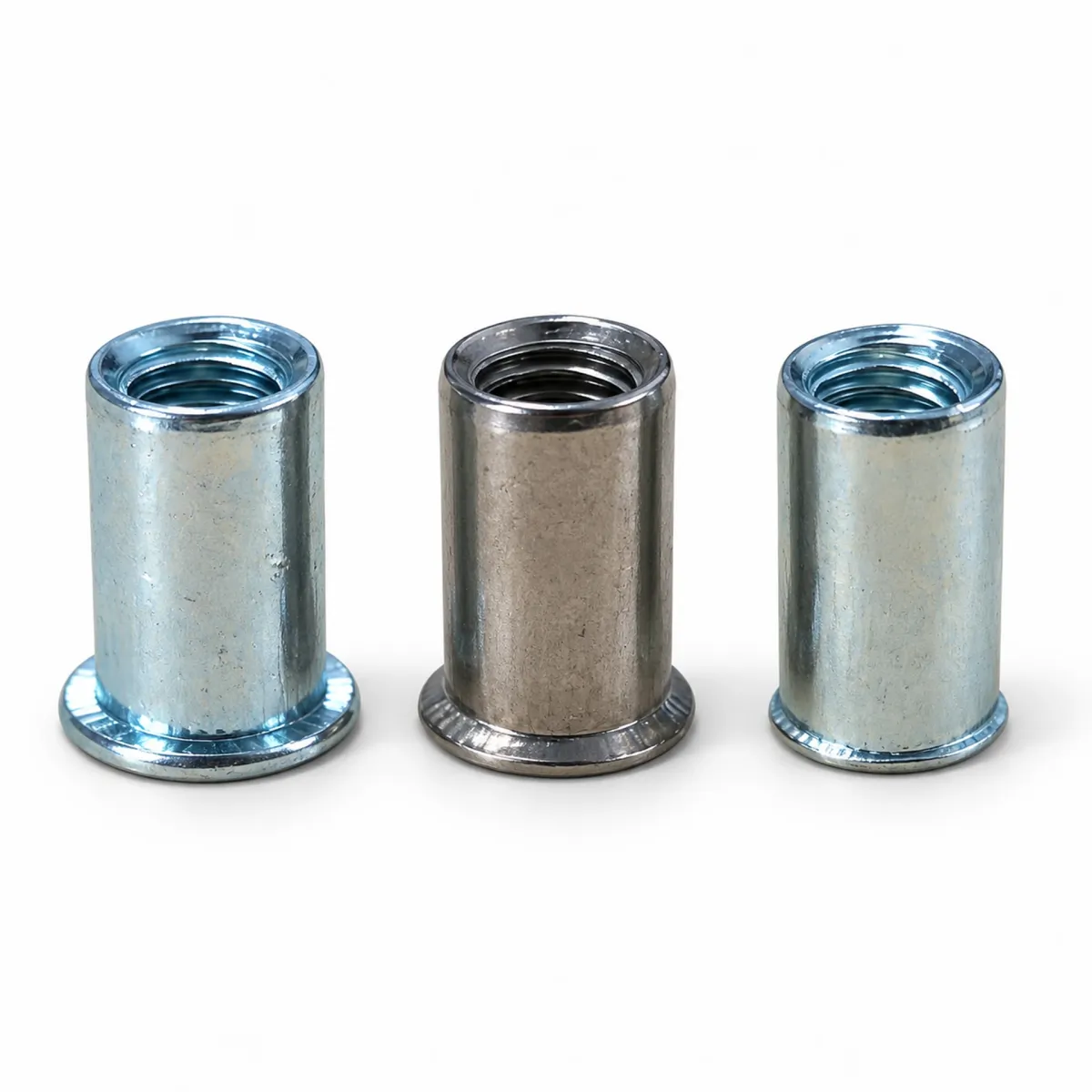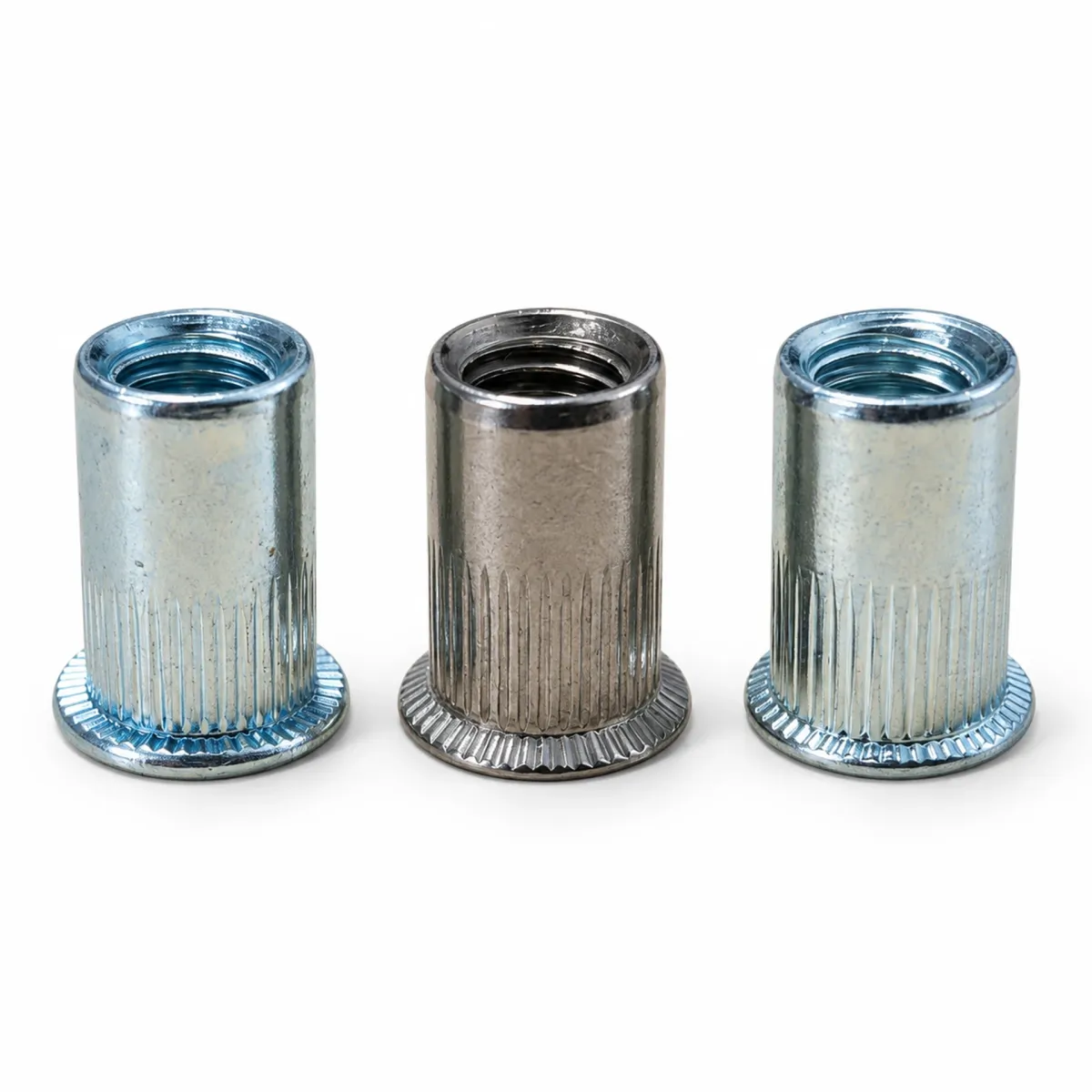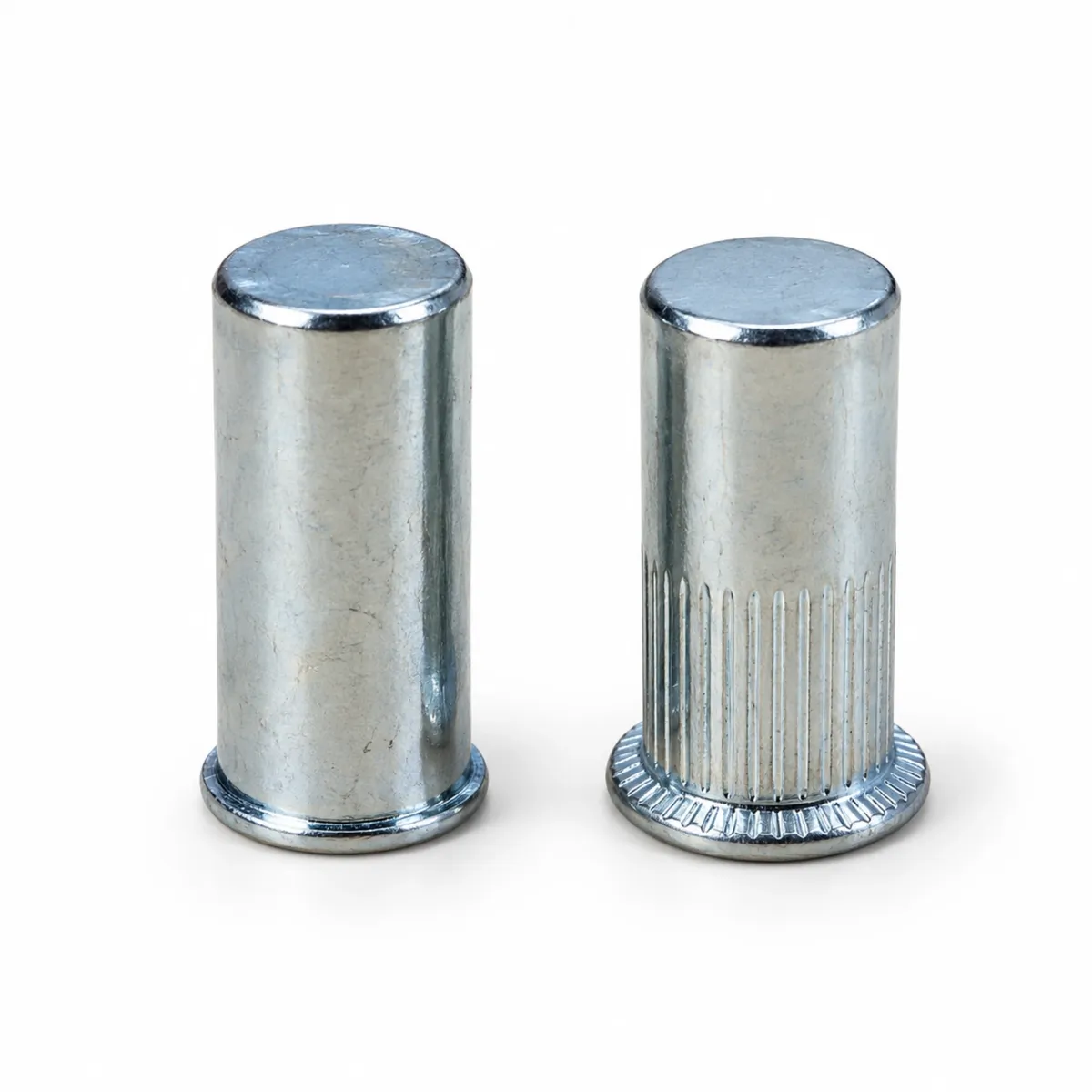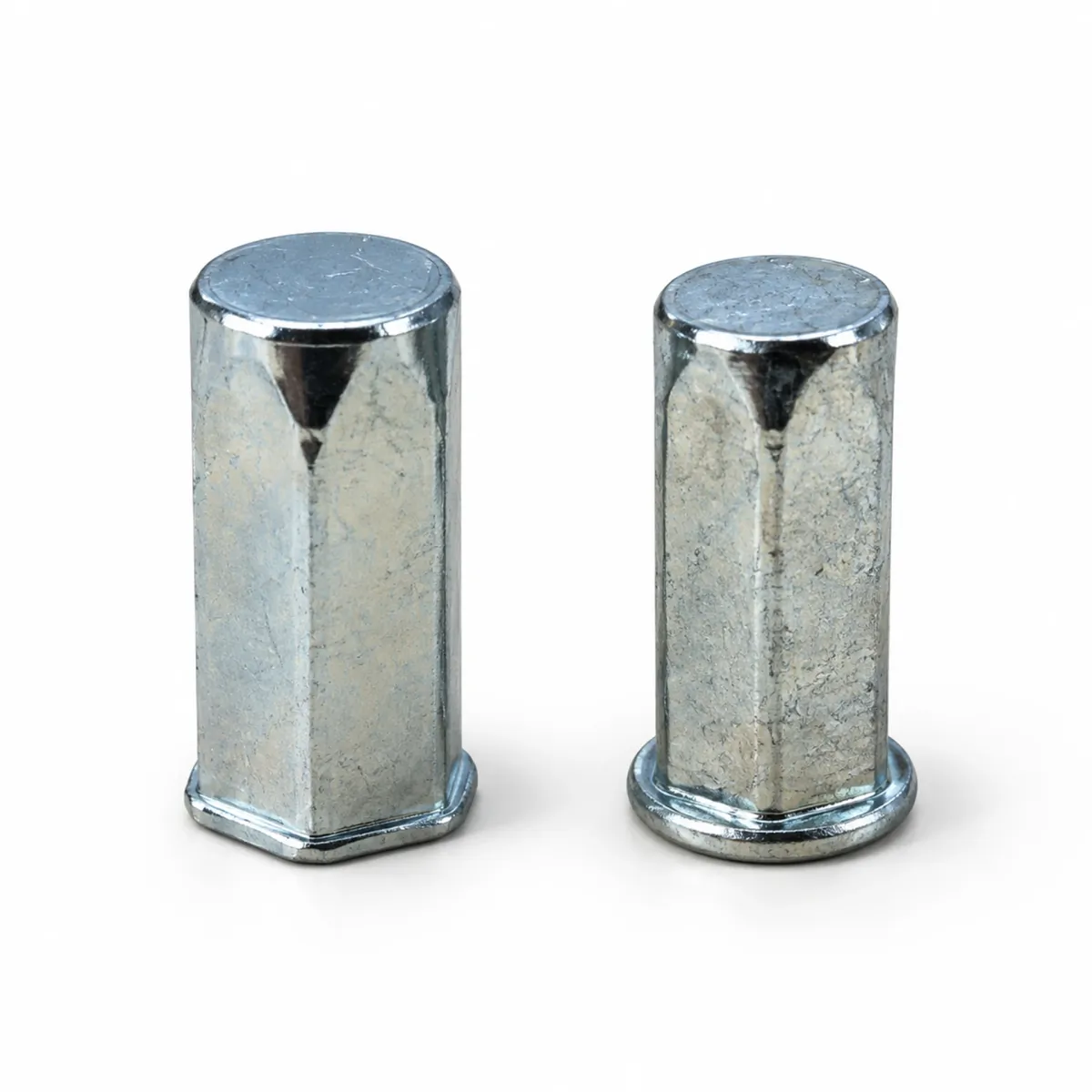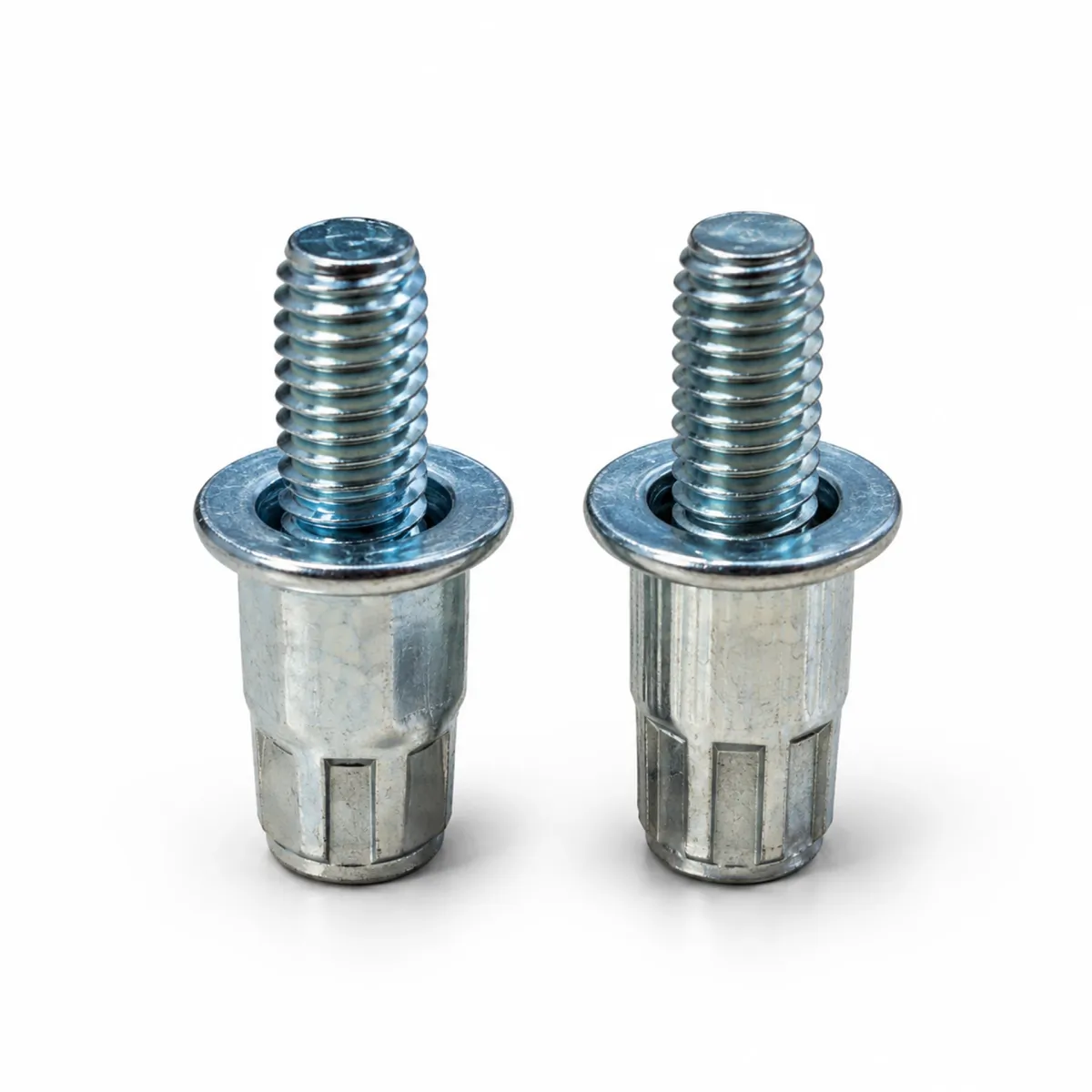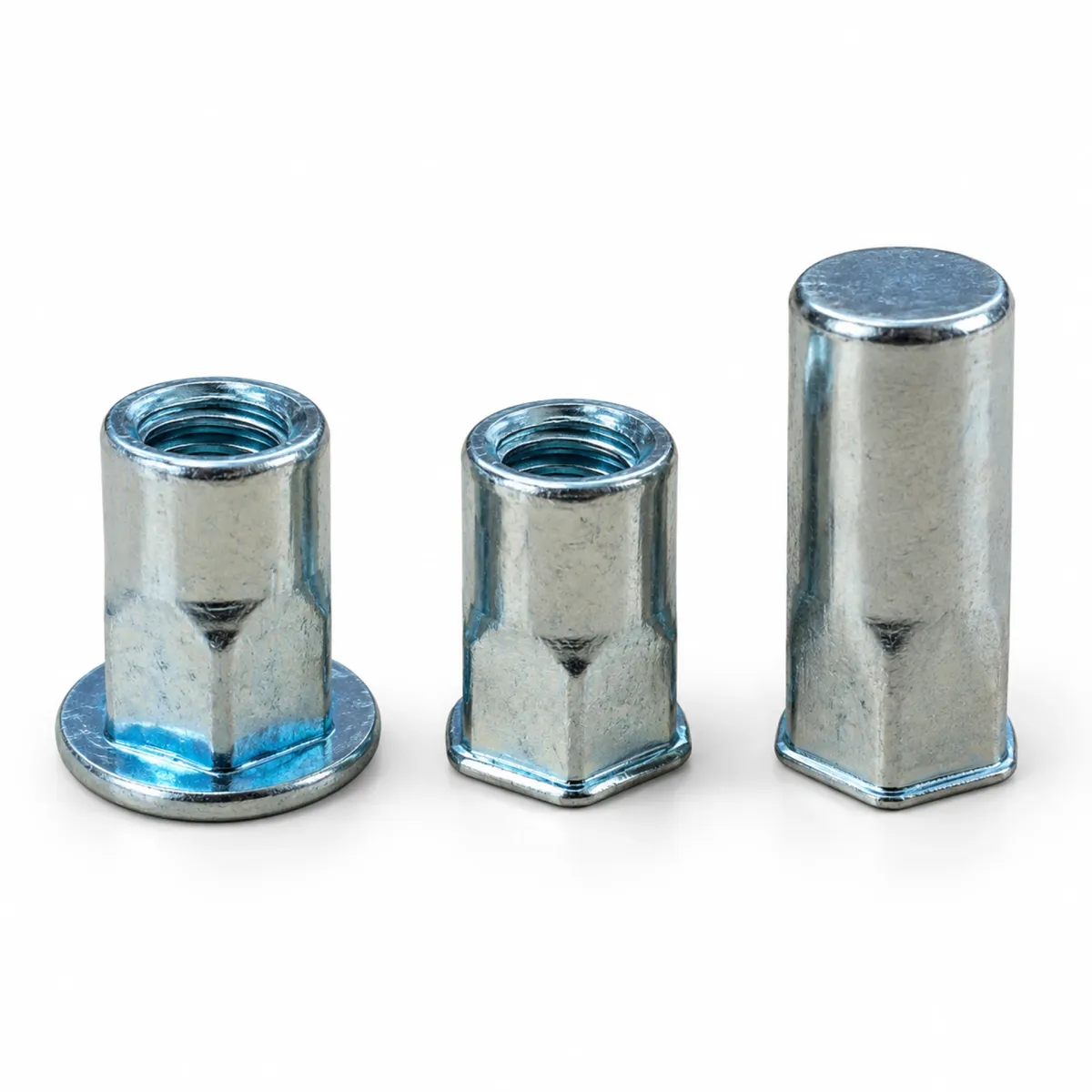





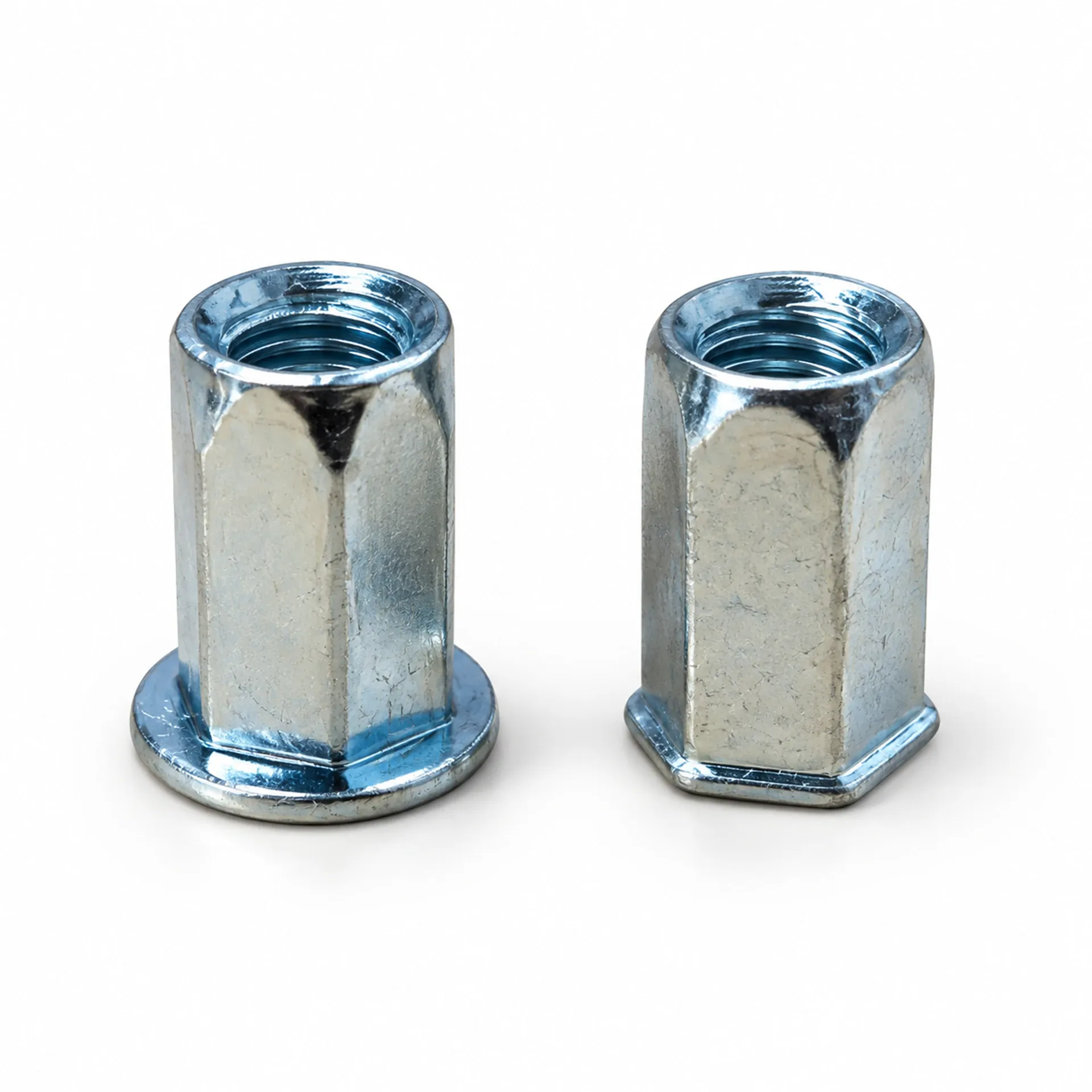
Hexagonal blind rivet nut
Hexagonal threaded inserts
M3–M12 hexagonal blind rivet nuts, available with round or reduced heads for threaded fixings in sheet metal.
Where sheet metal is too thin to accommodate a conventional tapped thread, hexagonal blind rivet nuts provide a practical way of introducing a reusable threaded fixing point without welding or access to the rear of the component. The hexagonal shank, combined with a hole of a compatible geometry, helps to prevent the insert from rotating during tightening.
Unlike round-bodied inserts, these fasteners have a hexagonal shank designed to fit a matching hexagonal hole. The flat faces of the insert engage with the sides of the hole, helping to prevent the fixing from turning when a screw is tightened or removed.
A.T.S. supplies hexagonal blind rivet nuts, with internal threads ranging from M3 to M12 and a choice of flat or reduced heads.
Flat Head and Reduced Head Rivet Nuts
Head design affects how the insert sits against the sheet metal and how much space is required around the fixing.
- Round head: provides a bearing surface against the sheet, with the head remaining above the material.
- Reduced head: has a thinner, less prominent head, making it suitable where protrusion from the sheet surface needs to be kept to a minimum.
Both configurations retain the anti-rotation benefit of the hexagonal body. The correct choice depends on the component design, available clearance and installation requirements.
Installing Hexagonal Blind Rivet Nuts
Installation begins with a correctly sized hexagonal hole in the sheet metal. The insert is then fitted using a suitable rivet nut setting tool, which may be pneumatically operated.
As the tool pulls on the internal thread, the deformable section of the rivet nut collapses behind the sheet, clamping the insert into position. The resulting fixing provides a threaded connection that can be accessed from the installation side.
For a consistent result, the hole dimensions, material thickness and setting conditions must match the specification of the selected rivet nut.
Where Are Hexagonal Rivet Nuts Used?
Hexagonal rivet nuts are particularly useful in sheet metal assemblies where the fixing may be subjected to turning forces during assembly or subsequent maintenance.
Typical applications include metal enclosures, fabricated brackets, machinery panels and industrial equipment housings. They can also be incorporated into components that are assembled or serviced from one side only.
Compared with a smooth-bodied cylindrical insert, the hexagonal profile provides a mechanical means of resisting rotation. It does, however, require a matching hole, which should be considered when specifying the sheet metal manufacturing process.
Product Selection and Technical Support
Selecting the right insert involves more than choosing the thread size. Sheet thickness, hole dimensions, head clearance and the installation method all influence the finished fixing.
A.T.S. supplies hexagonal blind rivet nuts and installation equipment, helping manufacturers identify suitable fastening solutions for their sheet metal assemblies.
Dimensional information and available configurations can be found in the threaded inserts technical datasheet.
Frequently Asked Questions
What is a hexagonal blind rivet nut?
A hexagonal blind rivet nut is an internally threaded fastener with a hexagonal body. It is installed into a matching hole in sheet metal and deformed in place using a setting tool, creating a reusable threaded fixing that resists rotation.
How do hexagonal and round rivet nuts differ?
Hexagonal rivet nuts engage mechanically with the flat faces of a hexagonal hole. Round rivet nuts fit circular holes and may rely on knurling or other design features to resist turning. The most suitable option depends on the application and the hole preparation process.
Which sizes does A.T.S. supply?
The A.T.S. range includes hexagonal blind rivet nuts with M3 to M12 internal threads, available in flat head and reduced head versions. The appropriate configuration should be selected according to the sheet thickness and fixing requirements.
Frequently asked questions
A.T.S. supplies hexagonal blind rivet nuts in zinc-plated steel, with thread sizes from M3 to M12, available in two head styles: flat head, providing a bearing surface against the sheet metal, and reduced head, designed to minimise projection above the component. Both versions feature a hexagonal body that engages with a matching hole to resist turning when the screw is tightened. The appropriate choice depends on sheet thickness, hole dimensions and the available clearance around the fixing.
The main advantage of hexagonal blind rivet nuts is their resistance to turning when screws are tightened or removed. The hexagonal body fits into a matching hole in the sheet metal, providing a mechanical anti-rotation feature. Under comparable installation conditions, this offers greater resistance to turning than a smooth round body rivet nut.
Hexagonal rivet nuts can be installed with a suitable rivet nut setting tool, without tapping the sheet or welding a nut in place. Access from one side of the component is sufficient. A.T.S. supplies zinc-plated steel versions with flat or reduced heads and thread sizes from M3 to M12.
To obtain a secure fixing, the hexagonal hole dimensions, sheet thickness and specified grip range must be compatible with the selected rivet nut.
Request information about this product
Leave us your details: we will get back to you as soon as possible with all the information about this product.
Products in the same category
Threaded inserts for sheet metal