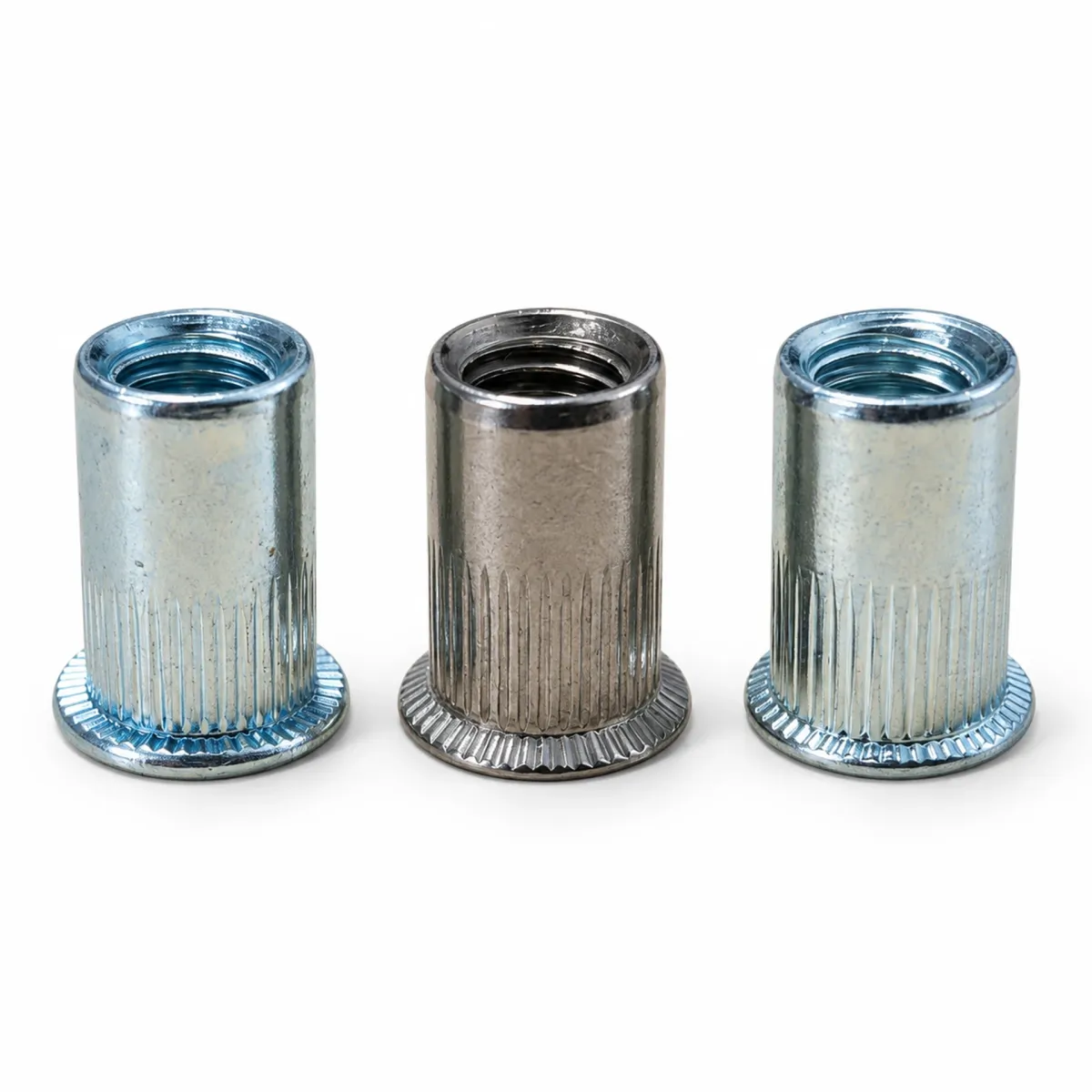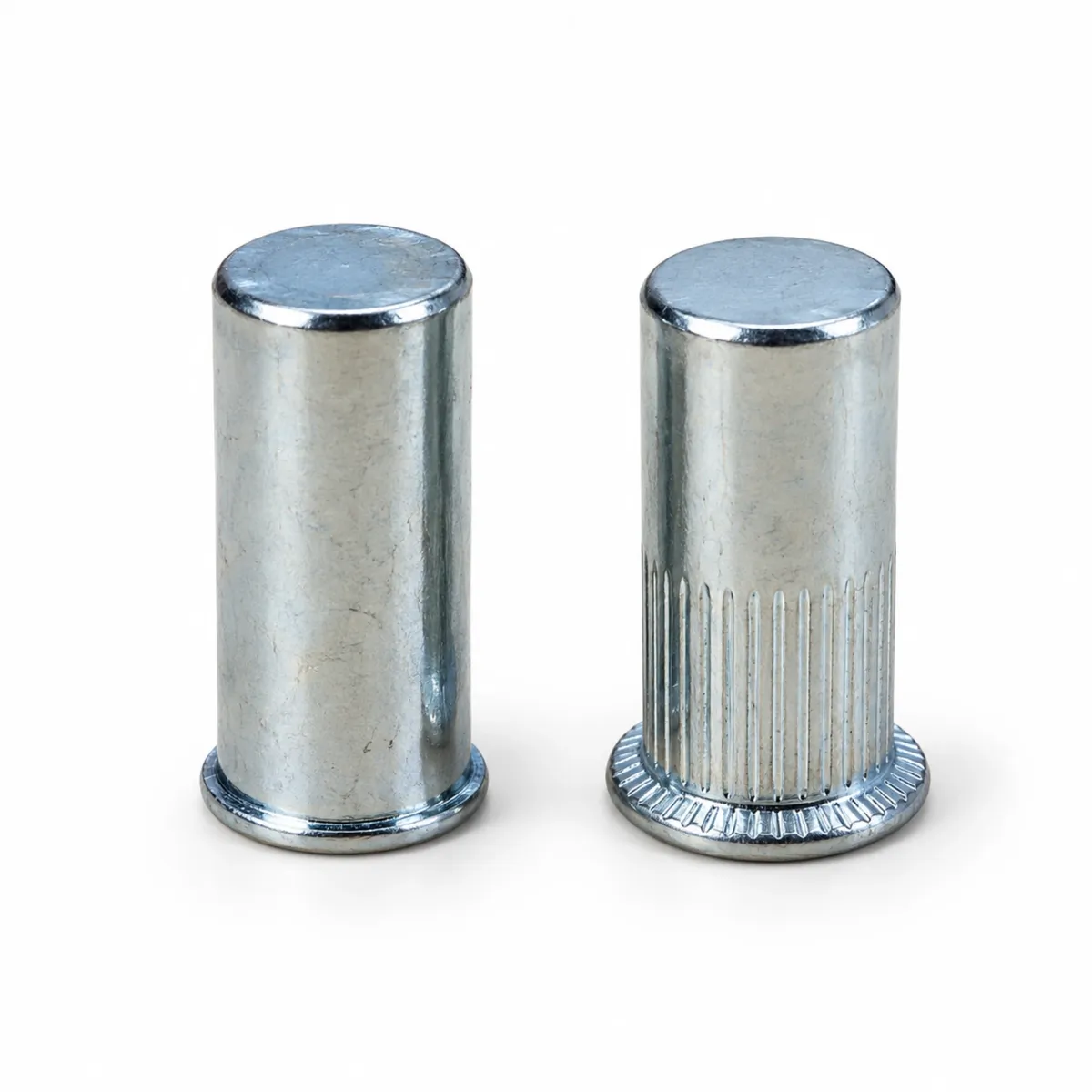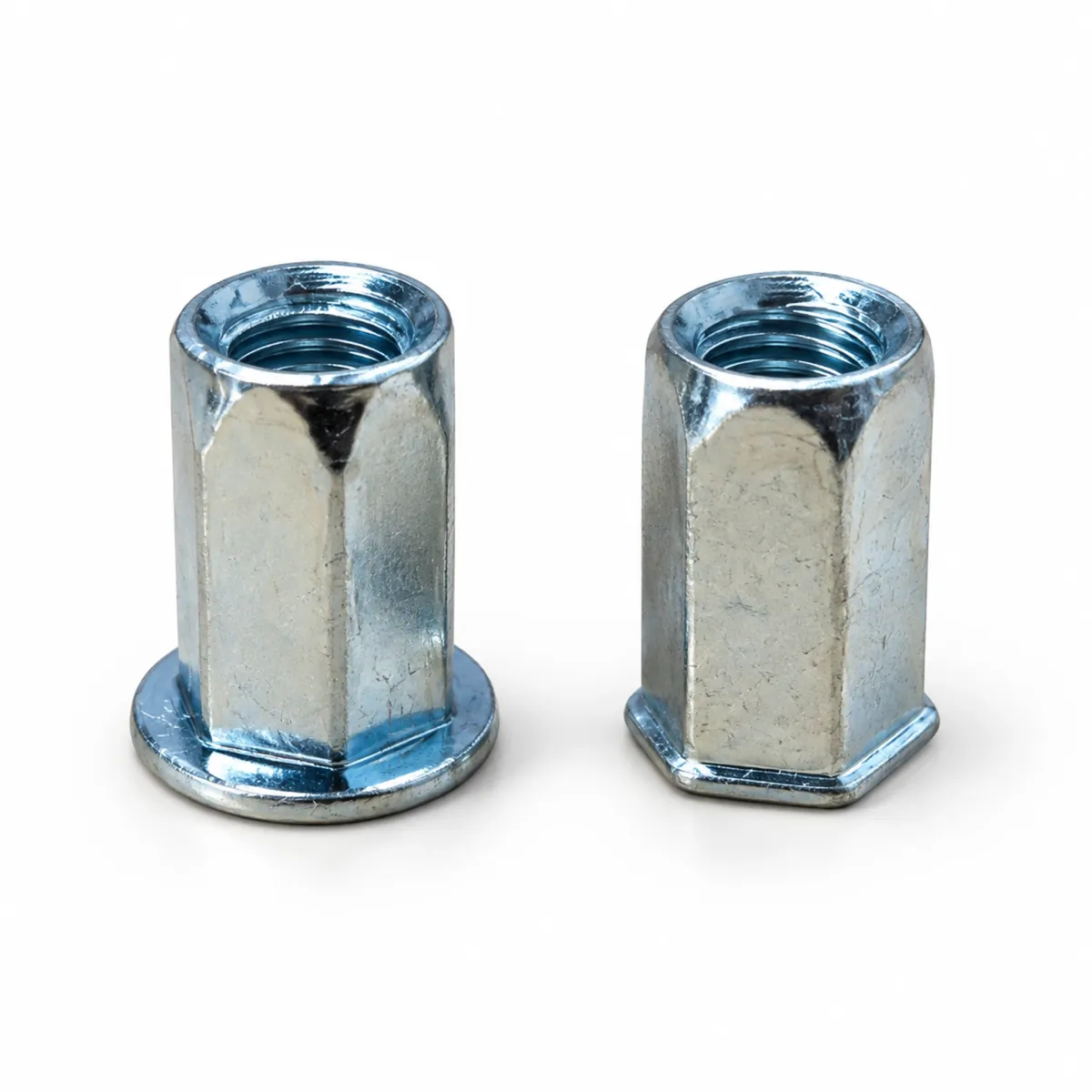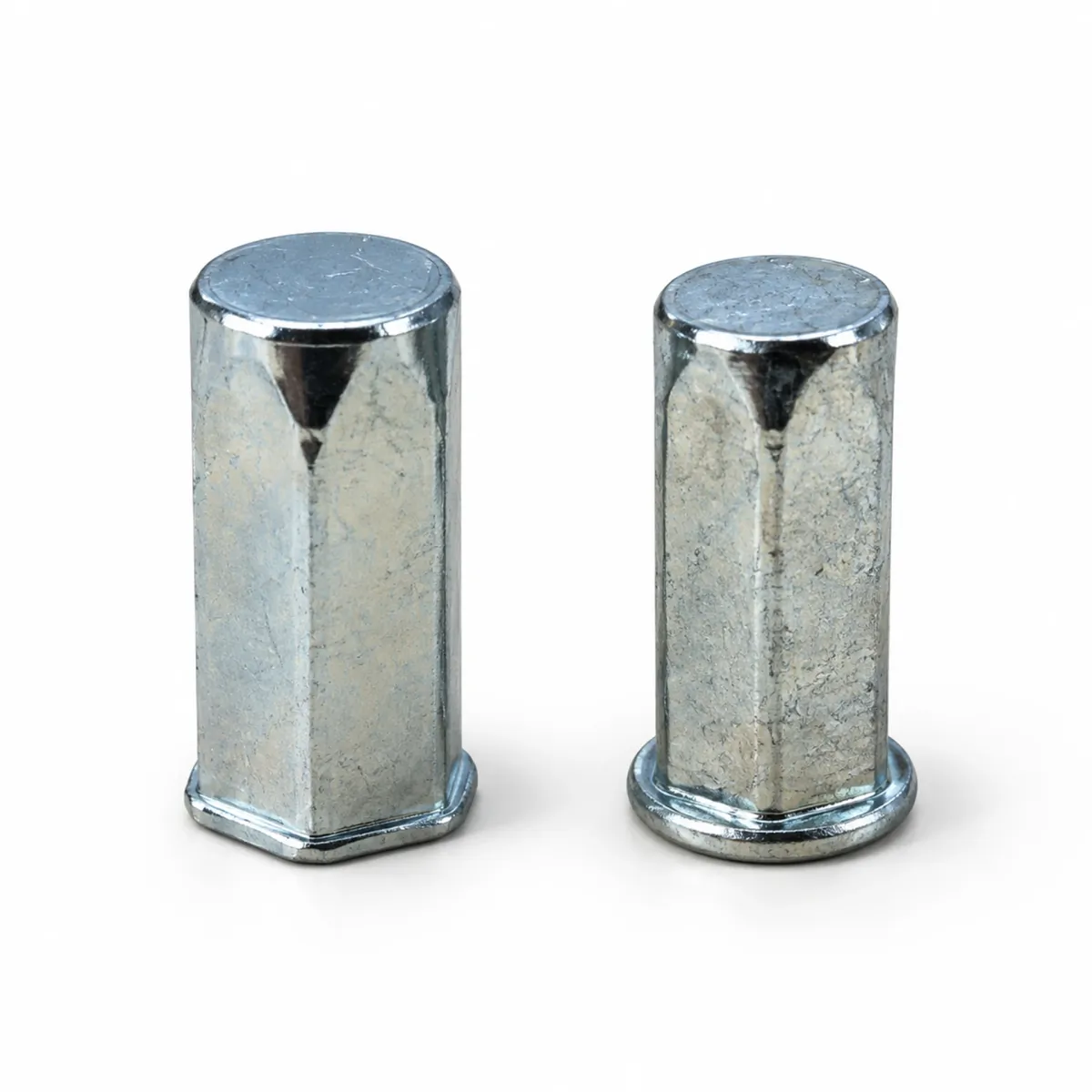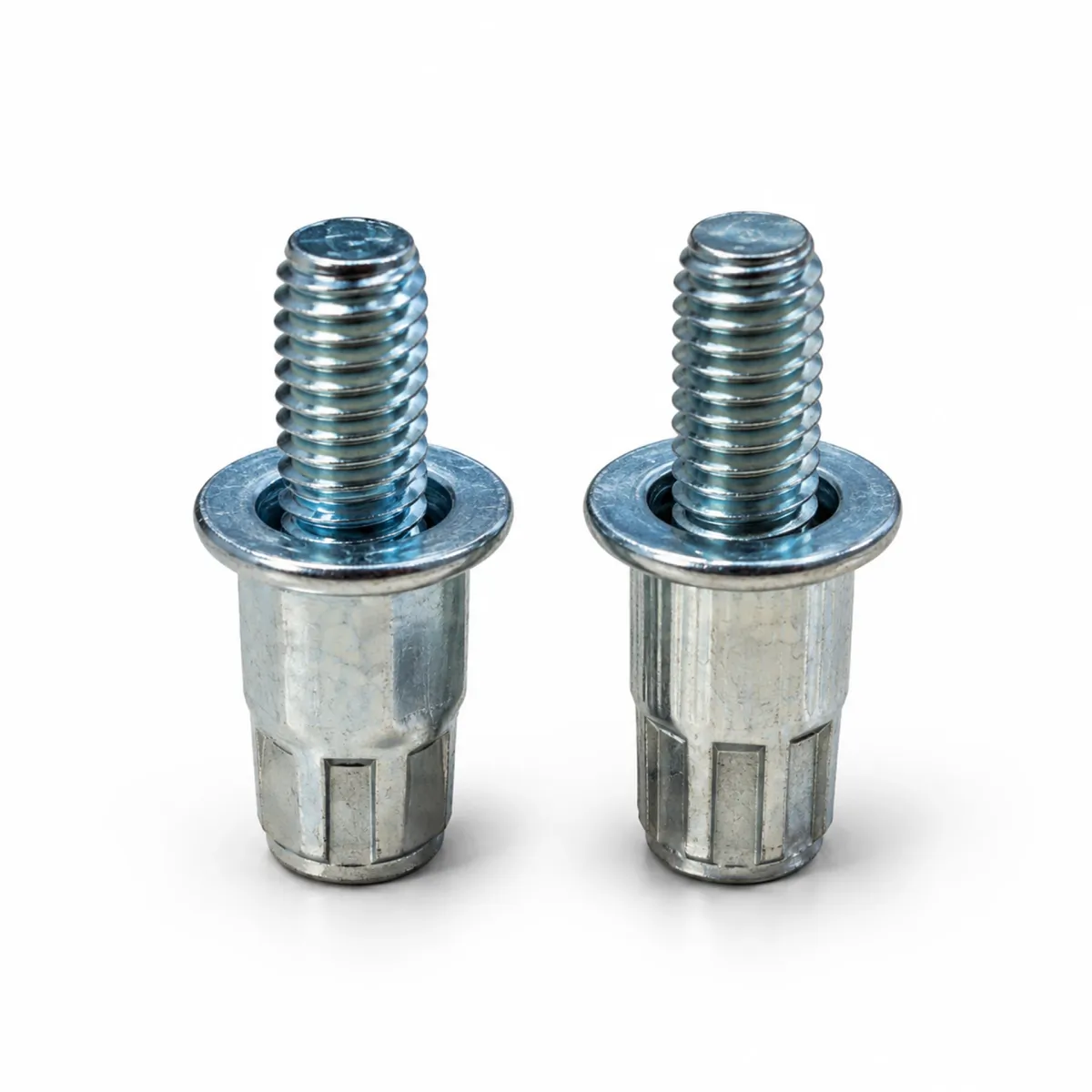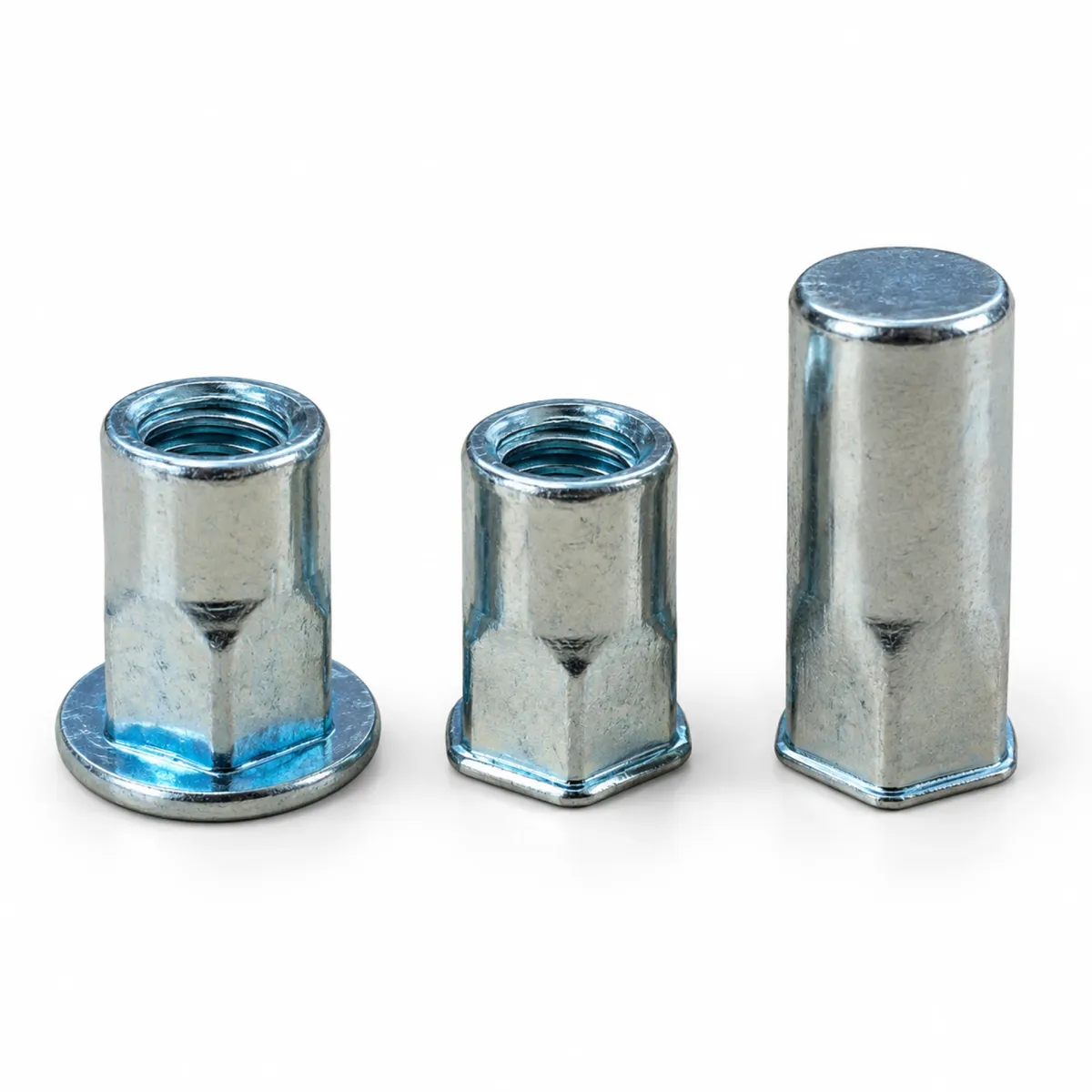





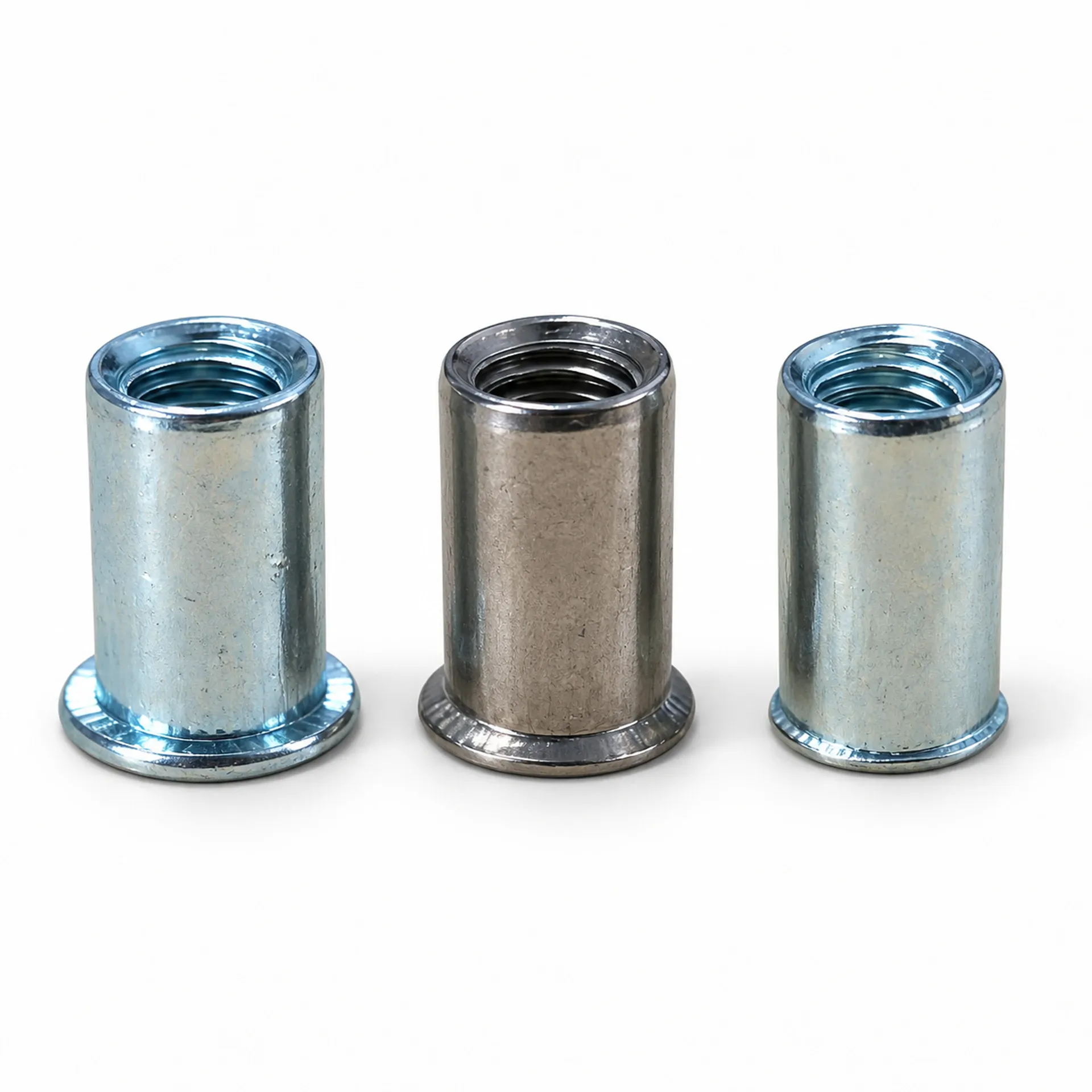
Cylindrical blind rivet nut
Blind rivet nuts
Smooth body blind rivet nuts for sheet metal, available in zinc-plated steel, stainless steel and aluminium, with thread sizes up to M12 and a choice of head styles.
Smooth body blind rivet nuts provide an internally threaded fixing in sheet metal and thin-walled components where the material is not thick enough to accommodate a conventional tapped thread.
Their plain cylindrical body fits into a correctly sized round hole. During installation, a section of the rivet nut deforms behind the sheet, securing the insert and leaving a threaded connection ready for screw assembly.
Because the fixing can be installed from one side, it is particularly useful for enclosed sections, fabricated housings and components where the rear surface cannot be reached.
A.T.S. supplies smooth body blind rivet nuts in zinc-plated steel, stainless steel and aluminium, with M3–M12 thread sizes across the available range and flat, reduced or countersunk heads.
Choosing the Right Head Style
The head determines how the rivet nut sits against the sheet and how much clearance is required around the fixing.
- Flat head: provides a bearing surface on the sheet, making it suitable where some projection above the material is acceptable.
- Reduced head: has a lower-profile head, helping to minimise interference with adjoining components.
- Countersunk head: can be fitted into a suitably countersunk hole where the assembly requires a reduced head projection.
Material choice also needs consideration. Zinc-plated steel, stainless steel and aluminium differ in mechanical properties, weight and corrosion behaviour, so the most appropriate option depends on the working environment and fixing requirements.
Individual thread sizes and grip ranges should always be checked against the corresponding product specification.
How Smooth Body Rivet Nuts Are Installed
Installation is carried out using a suitable blind rivet nut setting tool, which may be pneumatically or hydropneumatically operated.
The insert is placed into a prepared round hole, and the tool applies an axial pulling force through the internal thread. This causes the designated section of the body to collapse behind the sheet, clamping the rivet nut into position.
The process provides a threaded fixing without welding a separate nut or tapping the parent material. Only one side of the component needs to be accessible.
Correct hole dimensions, material thickness and setting parameters are essential. The grip range of the chosen rivet nut must correspond to the thickness of the component being assembled.
Applications in Sheet Metal Fabrication
Smooth body rivet nuts are used in fabricated metal housings, machinery panels, brackets, enclosures and other sheet metal assemblies requiring threaded attachment points.
One practical advantage is their compatibility with round holes, which can be produced using standard drilling or punching processes. Unlike hexagonal rivet nuts, they do not require a specially shaped opening.
However, a smooth cylindrical shank does not provide the additional surface engagement associated with a knurled body or the mechanical anti-rotation engagement of a hexagonal fixing.
Where the joint is likely to experience high tightening torque or repeated assembly operations, the insert's resistance to rotation should be assessed against the application requirements.
Product Selection and Technical Support from A.T.S.
Choosing a suitable rivet nut involves checking the internal thread, sheet thickness, hole diameter, head clearance and anticipated assembly conditions.
A.T.S. supplies smooth body blind rivet nuts and compatible installation equipment, helping manufacturers select fasteners for sheet metal production and industrial assembly.
Detailed dimensions, grip ranges and available configurations are provided in the threaded inserts technical datasheet.
Request information about this product
Leave us your details: we will get back to you as soon as possible with all the information about this product.
Products in the same category
Threaded inserts for sheet metal