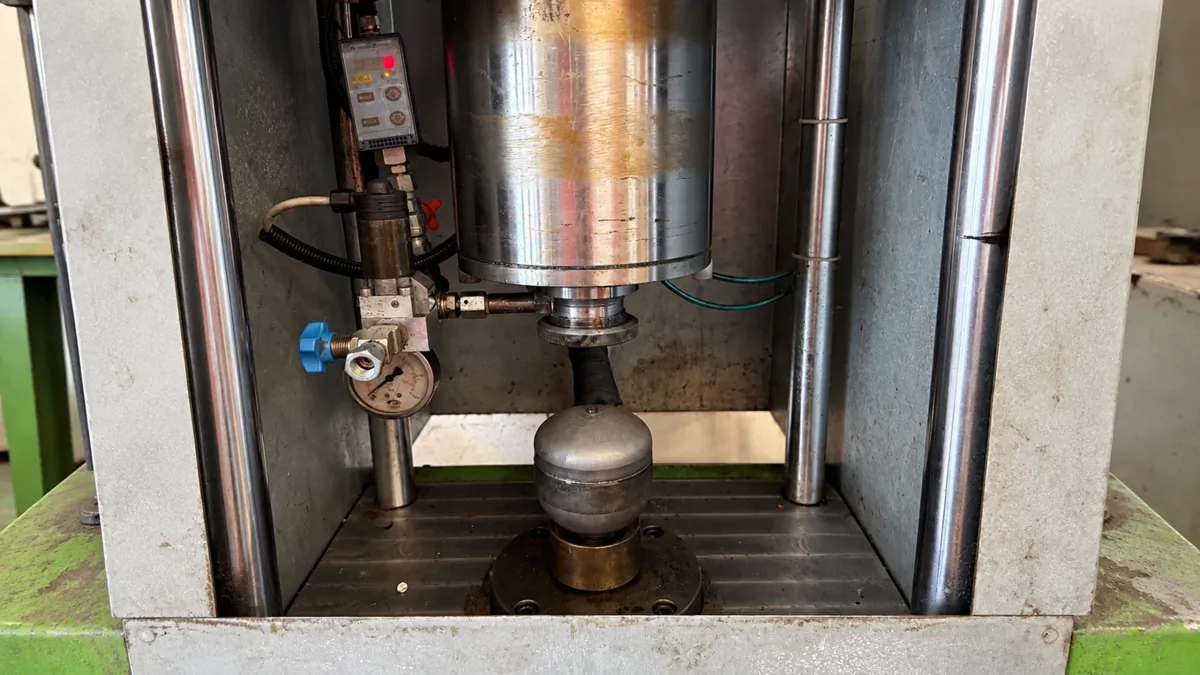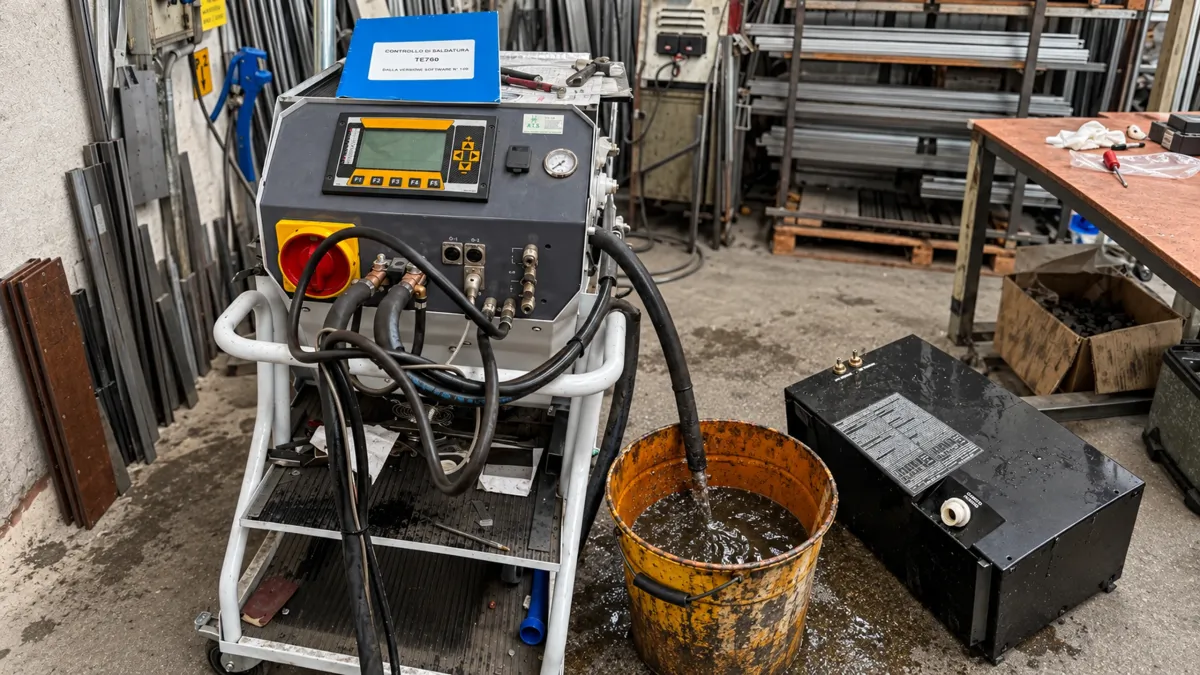





TECNA 4626: Diagnosing Nut-to-Sheet Welding Issues
A real-world resistance welding case from the automotive industry: investigating weld defects, testing actual production samples and assessing whether the spot welder is suitable for the application.
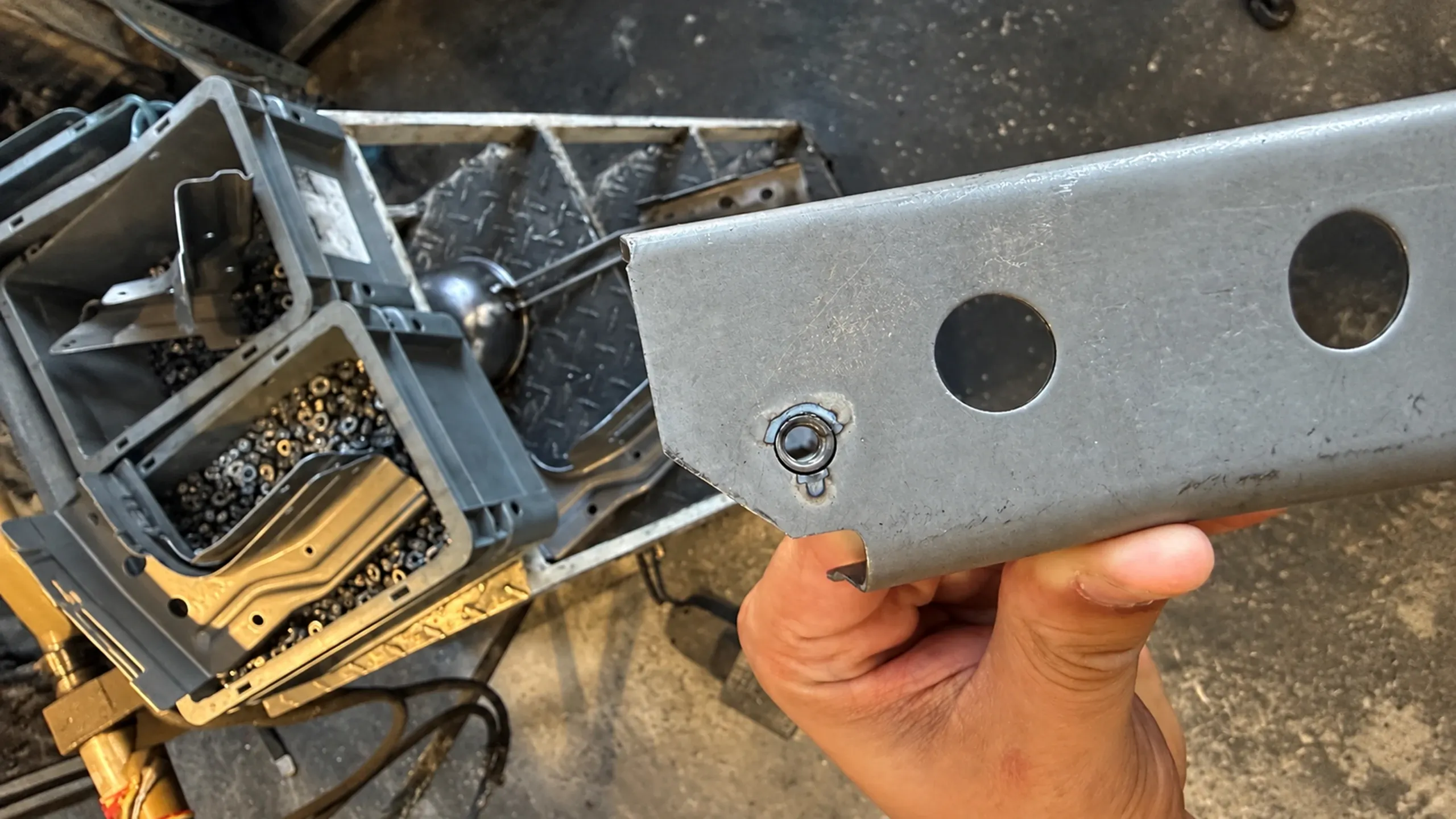
An automotive sheet metal manufacturer based in Monte Roberto (Ancona, Italy) was experiencing difficulties with resistance welding nuts onto sheet metal components.
The TECNA 4626 spot welder used on the production line was not producing satisfactory welds.
Before considering replacing the equipment, an A.T.S. specialist technician investigated whether the problem was caused by a machine fault or by the welder's limitations in relation to the specific application.
The assessment focused particularly on the electrode force required for nut-to-sheet resistance welding.
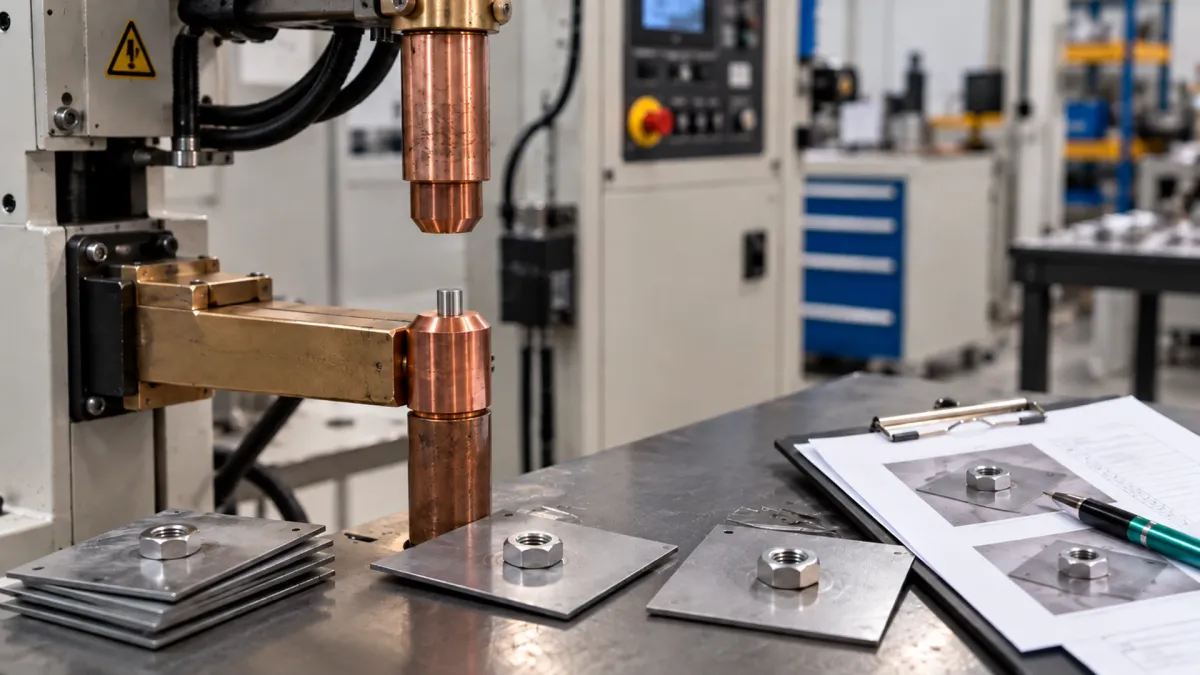
To verify the findings, actual sheet metal and nut samples supplied by the customer were used for welding trials at TECNA.
The tests demonstrated that the nuts could be welded correctly when sufficient electrode force was applied.
The on-site technical assessment took approximately 2 hours. What had initially been described simply as a spot welder that was not welding properly could now be understood more precisely: this particular application required consideration of a welding machine capable of delivering greater electrode force.
The customer will decide whether to replace the existing welder based on upcoming orders and future production requirements.
This case study concerns a specific welding application. Poor weld quality can result from several factors, and each situation must be assessed according to the equipment, materials and actual welding conditions.
The case at a glance
The problem: The nut was not being welded correctly
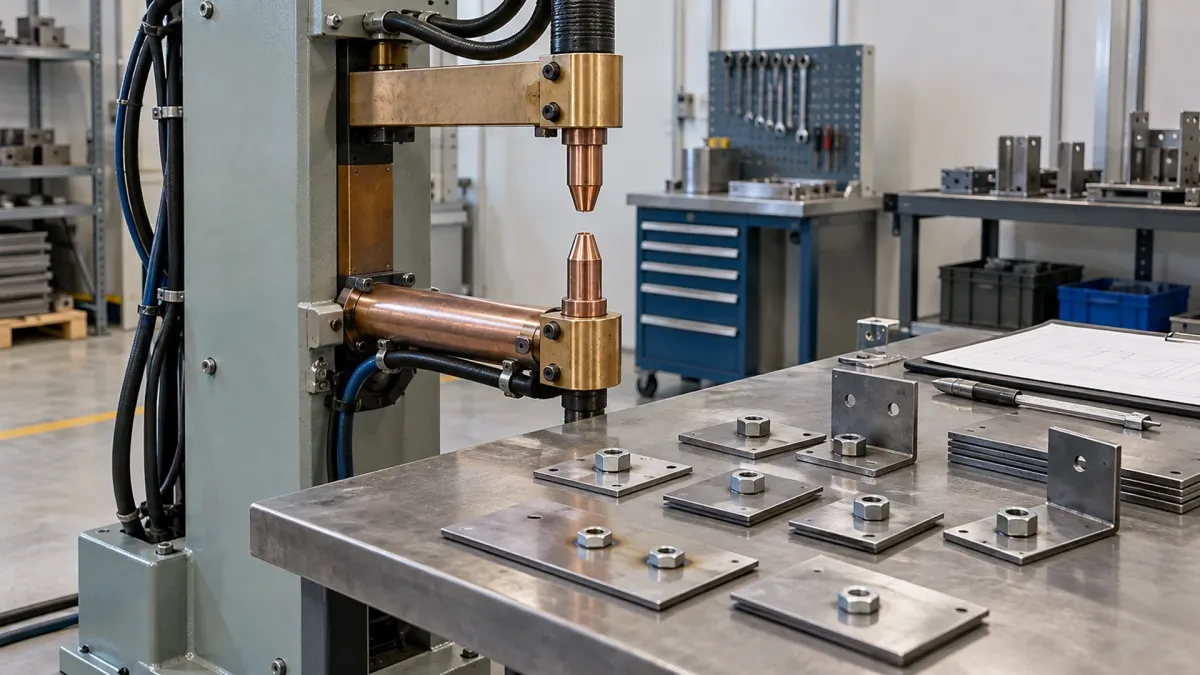
The TECNA 4626 was being used to weld nuts onto sheet metal components.
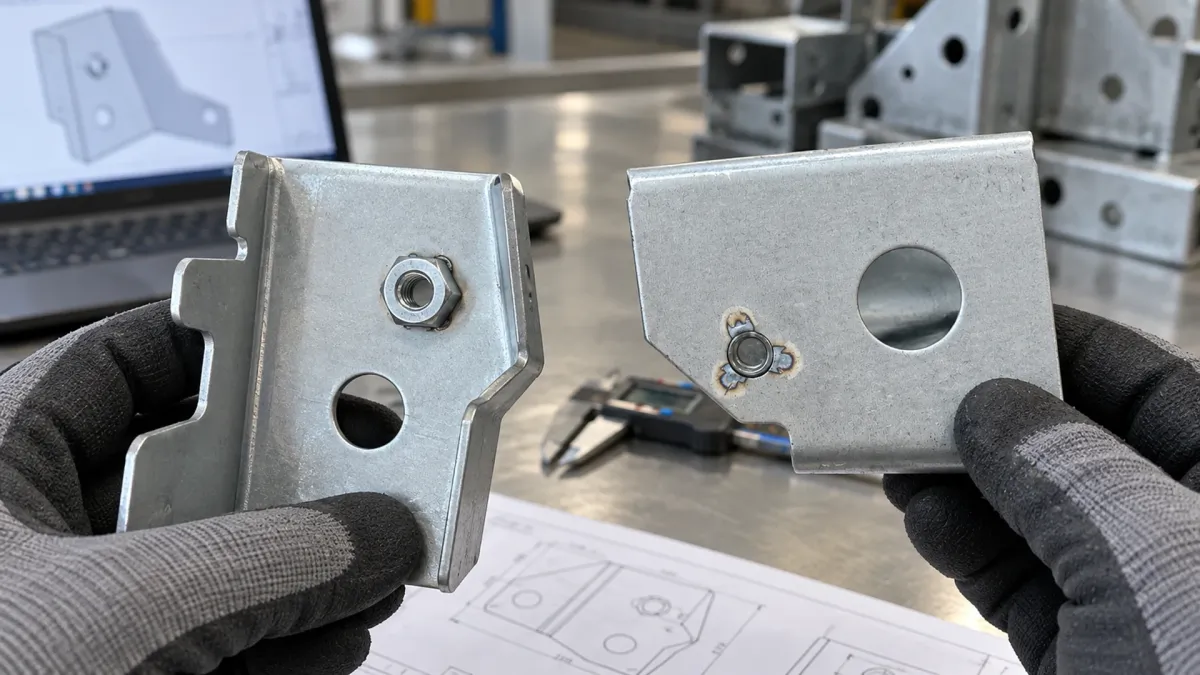
The problem was evident in the finished joint: the nut was not properly welded to the sheet.
However, the weld defect alone did not explain what was going wrong.
Poor resistance welding results can have several causes. Before assuming that the spot welder was faulty or needed replacing, the A.T.S. technician had to establish whether the machine could deliver the conditions required for this particular application.
The investigation therefore focused on one question:
Was the TECNA 4626 experiencing a technical fault, or was the available electrode force insufficient to produce the required weld?
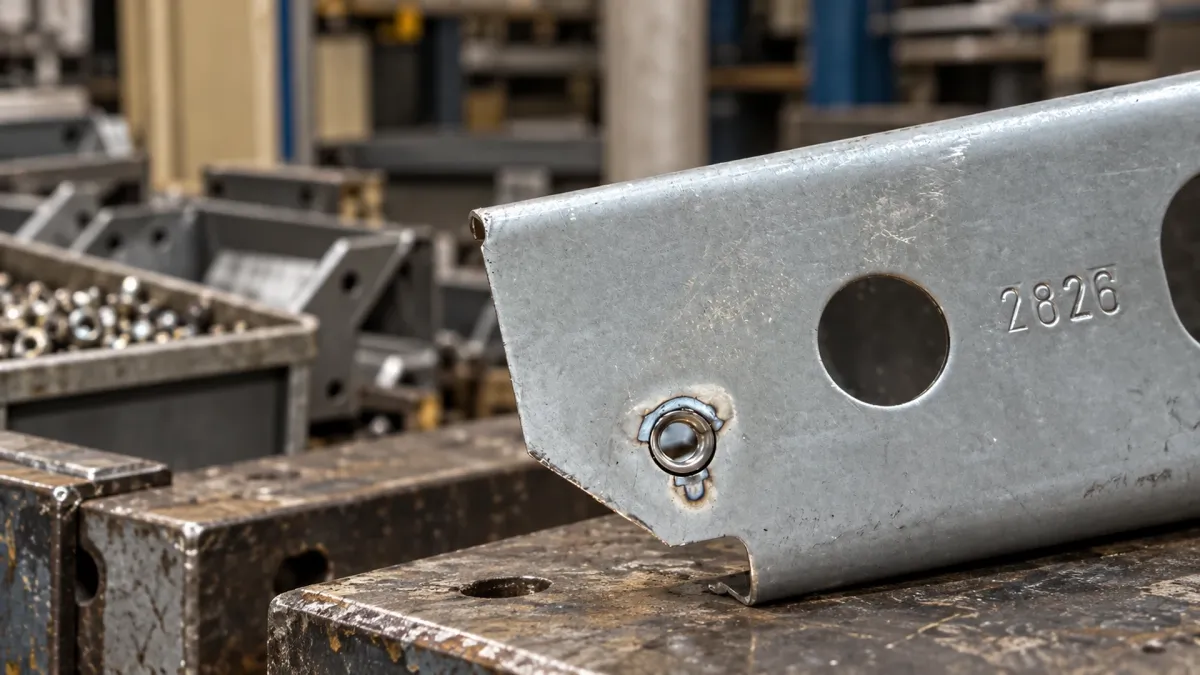
Technical Diagnosis Carried Out by A.T.S.
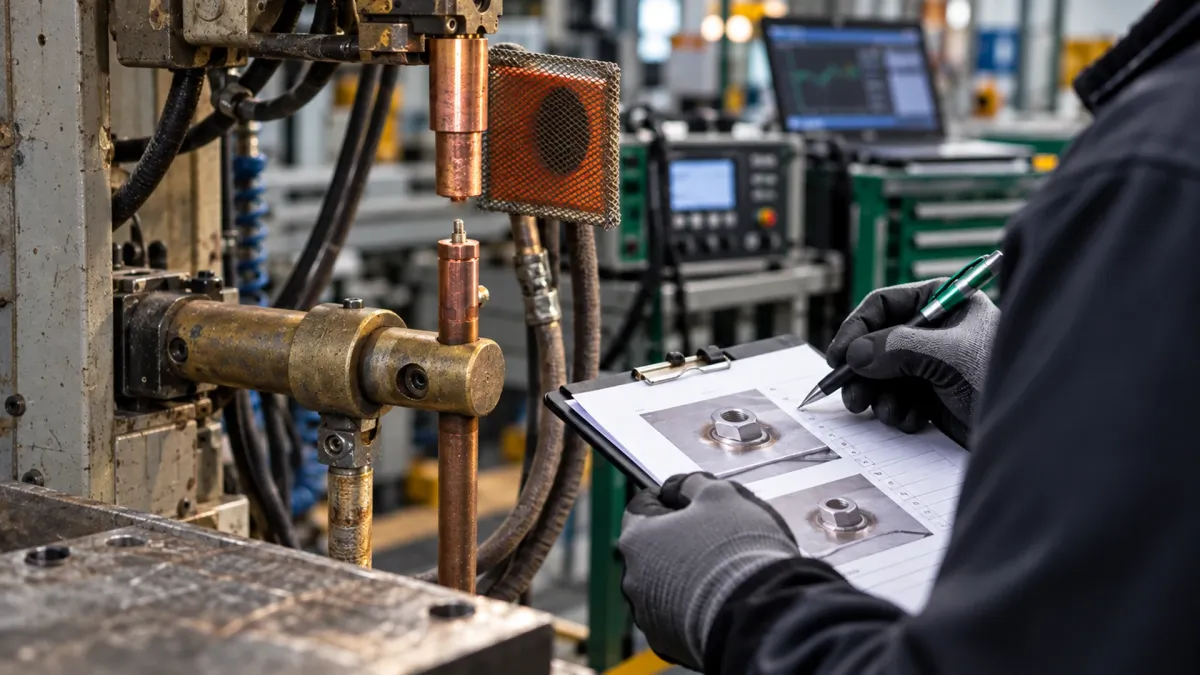
The investigation began with the welding defect observed during production.
Rather than recommending an immediate replacement of the spot welder, the A.T.S. technician examined whether the machine could meet the process requirements for producing a sound nut-to-sheet metal weld.
Particular attention was given to the electrode force applied during welding, as this was identified as a parameter requiring further investigation.
At this stage, however, insufficient electrode force remained a possible explanation rather than a confirmed cause. Welding trials were needed to verify the hypothesis.
Why Electrode Force Matters in Resistance Welding
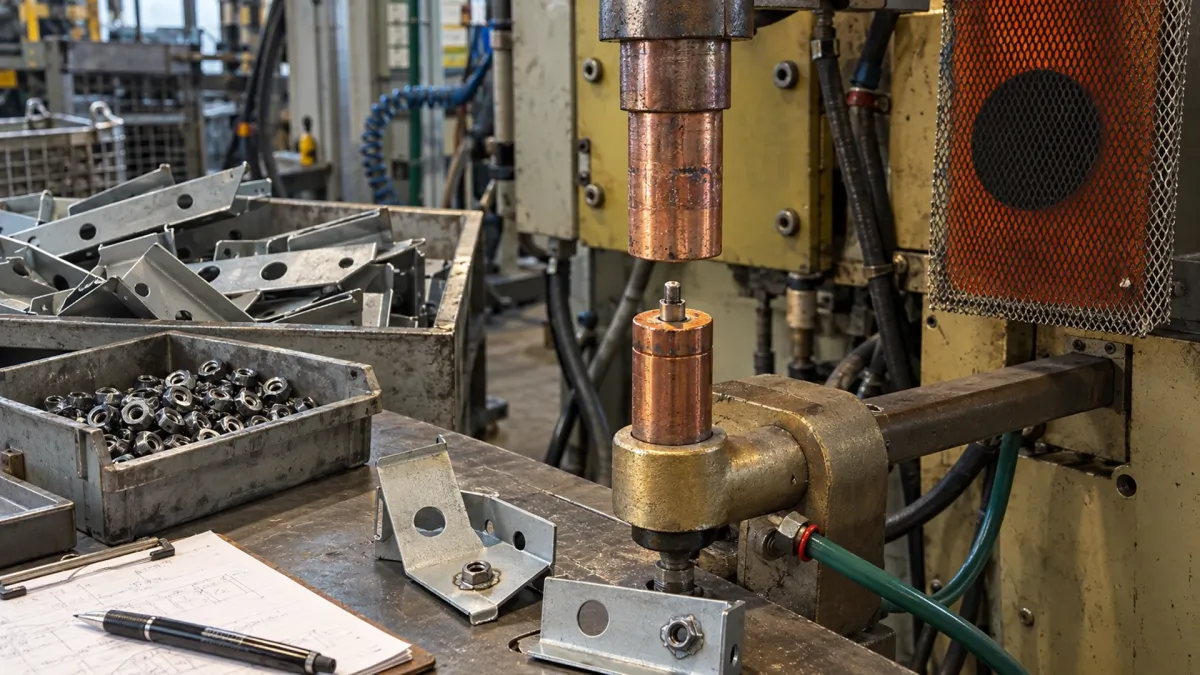
In resistance welding, including projection welding, electrode force is one of the process parameters that directly influences weld formation.
There is no single force setting suitable for every application. The required value depends on several factors, including:
- Sheet metal material;
- Sheet thickness;
- Nut design, geometry and material;
- Welding time and other process settings.
Electrode force affects the contact conditions between the components and, consequently, the electrical resistance and heat generated at the joint.
A spot welder may therefore be operating correctly while still being unsuitable for a particular welding task.
For the TECNA 4626, the investigation focused on whether the machine could deliver sufficient electrode force for the specific combination of sheet metal, nut and welding conditions.
Welding Tests on Actual Sheet Metal and Nut Samples
The initial inspection pointed towards electrode force as a possible explanation for the poor weld quality. However, identifying a potential cause was not enough to determine whether the TECNA 4626 was suitable for the job.
The next step was to test the actual components used in production.
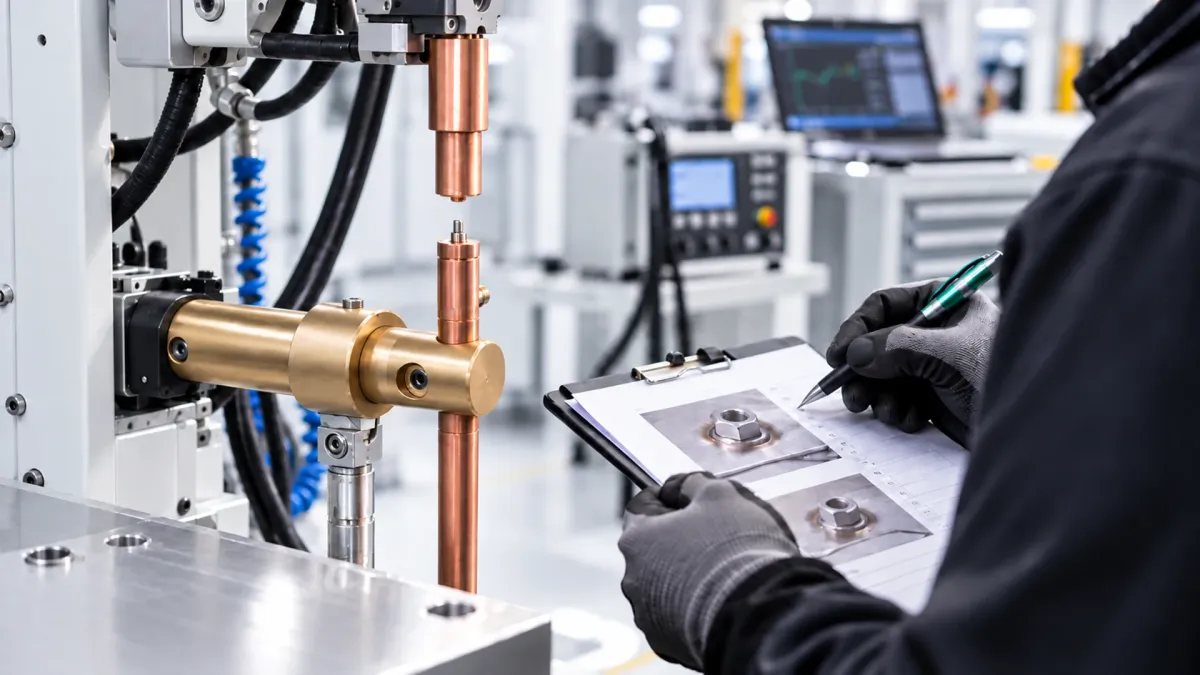
The customer supplied samples of the sheet metal and nuts involved in the application. These were taken to TECNA, where welding trials could be carried out under conditions better suited to the required operation.
Using the customer's own materials was important. A test performed on different sheet thicknesses or nut geometries would not necessarily have provided useful evidence for this particular welding problem.
The investigation therefore moved from the initial production defect to a practical assessment of the welding requirements.
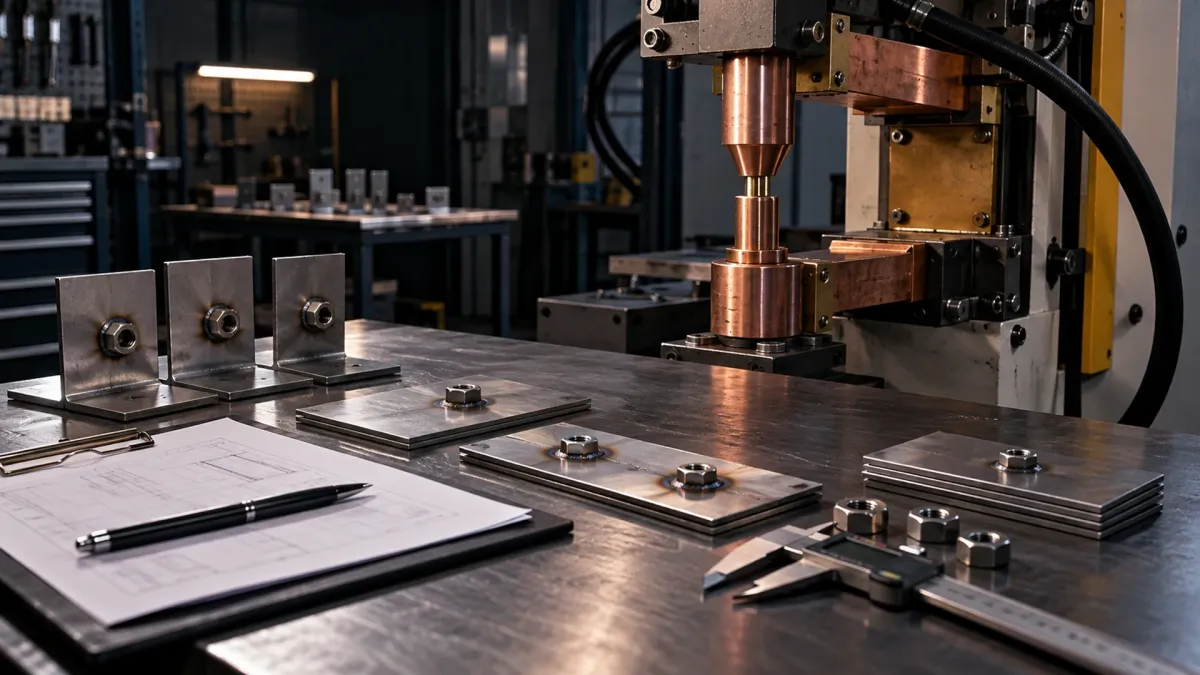
After reviewing the fault and identifying electrode force as a parameter requiring further investigation, TECNA carried out welding trials on the supplied components. The tests included applying a force appropriate for the application and examining the resulting nut-to-sheet welds.
The findings provided a basis for assessing whether the existing welding machine could meet the process requirements or whether equipment capable of delivering greater electrode force should be considered.
The assessment was based on welding results obtained with the customer's actual components, rather than on an assumption about the condition of the machine.
Welding Test Results
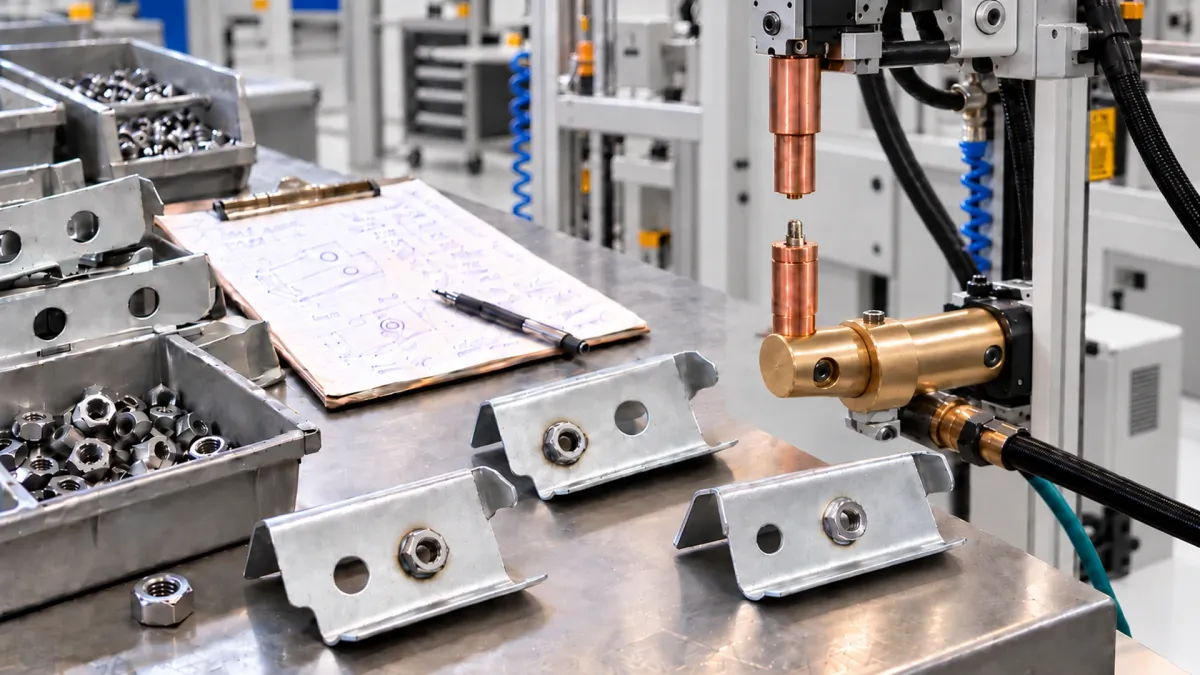
The welding trials at TECNA produced a positive result.
When sufficient electrode force was applied, the nuts were successfully welded to the sheet metal samples.
This provided practical evidence that the force available during welding was an important factor in achieving the joint quality required by the customer.
The findings also helped clarify the limitations of the existing equipment in relation to this particular operation.
Insufficient electrode force should not, however, be regarded as the cause of every nut welding defect. Welding current, weld time, component geometry and contact conditions can also affect the outcome.
For the application examined here, the trials demonstrated that achieving the appropriate electrode force was necessary to produce a satisfactory nut-to-sheet weld.
Before and after the technical diagnosis
| Before the intervention | After the intervention |
|---|---|
| Nut not properly welded to the sheet metal | Successful weld with appropriate electrode force |
| Cause of the weld defect not yet identified | Electrode force identified as a decisive factor in this specific application |
| Uncertainty about the machine's operation | Distinguishing between a machine fault and suitability for the application |
| Potential machine replacement without specific testing | Assessment based on actual production samples |
| No controlled testing carried out | Welding tests performed at TECNA |
| No solution identified | Clear technical course of action established |
Can a Welding Machine Work Correctly but Still Be Unsuitable for the Application?
Yes. A spot welder can be in good working order and still lack the capacity needed for a particular welding operation.
Whether a machine is suitable depends on the actual production requirements and the welding conditions needed to achieve an acceptable joint. Its general operating condition alone does not establish that it can handle every application.
In this case, the welding trials showed that the specific nut-to-sheet metal application required consideration of a machine capable of delivering greater electrode force.
The investigation was therefore about more than establishing whether the TECNA 4626 was working properly.
The question was whether it could deliver the performance required for that particular welding task.
The Outcome: Diagnosis Before Replacement
The main outcome of the intervention was a clearer technical understanding of the welding problem. The TECNA 4626 was not automatically replaced simply because the welds produced during manufacturing were unsatisfactory.
Instead, A.T.S. followed a structured diagnostic process:
Welding defect → Investigation → Hypothesis → Testing → Verification → Technical assessment.
Welding trials using the customer's actual sheet metal and nut samples demonstrated that a satisfactory joint could be achieved when the appropriate electrode force was applied.
These findings indicated that a welding machine capable of delivering greater electrode force should be considered for this particular application.
The technical assessment and the purchasing decision were treated separately. The customer will decide whether to invest in another spot welder based on future orders, production volumes and operational requirements.
The documented technical intervention took approximately 2 hours. During this time, the technician examined the welding defect, identified electrode force as a parameter requiring further investigation and established a direction for the subsequent technical assessment.
This duration applies only to the case described and should not be regarded as a standard diagnostic time for resistance spot welding equipment.
What This Case Study Demonstrates
Investigate the weld defect before replacing equipment
A poor weld does not necessarily mean that the welding machine is faulty. Before replacing components or considering a new machine, it is worth examining the actual welding conditions and identifying what may be affecting the joint.
Match the welding machine to the application
A resistance spot welder must be capable of delivering the process conditions required by the components being joined.
Even when a machine operates correctly, it may not have the necessary capacity for every combination of material, component geometry and welding parameters. Its suitability must therefore be assessed against the specific application.
Use actual production samples to verify the diagnosis
When the cause of a welding defect remains uncertain, trials using representative parts can provide useful technical evidence.
Testing with components that reflect the customer's actual production conditions makes it possible to check a suspected cause against the welding results, rather than relying on assumptions alone.
A.T.S. Technical Support for Resistance Welding
A.T.S. works with industrial manufacturers to assess resistance welding applications, inspect the operating conditions of spot welding machines and identify technical solutions suited to their production requirements.
A machine may be operating correctly without necessarily being suitable for the job. The assessment therefore goes beyond checking its general condition: what matters is whether the equipment can consistently achieve the weld quality required for the specific application.
Having trouble welding nuts, sheet metal or other components?
When a spot welder fails to produce the required weld quality, replacing parts or investing in a new machine should not be the immediate response.
The first step is to establish what is preventing the welding process from achieving the expected result.
Contact A.T.S. and, where possible, provide the following details:
- Spot welder model;
- Sheet metal material and thickness;
- Nut specifications or details of the component being welded;
- Description of the welding defect;
- Production samples or photographs of the application, if available.
This information helps us carry out an initial technical assessment and determine which checks would be most useful before considering equipment modifications or replacement.