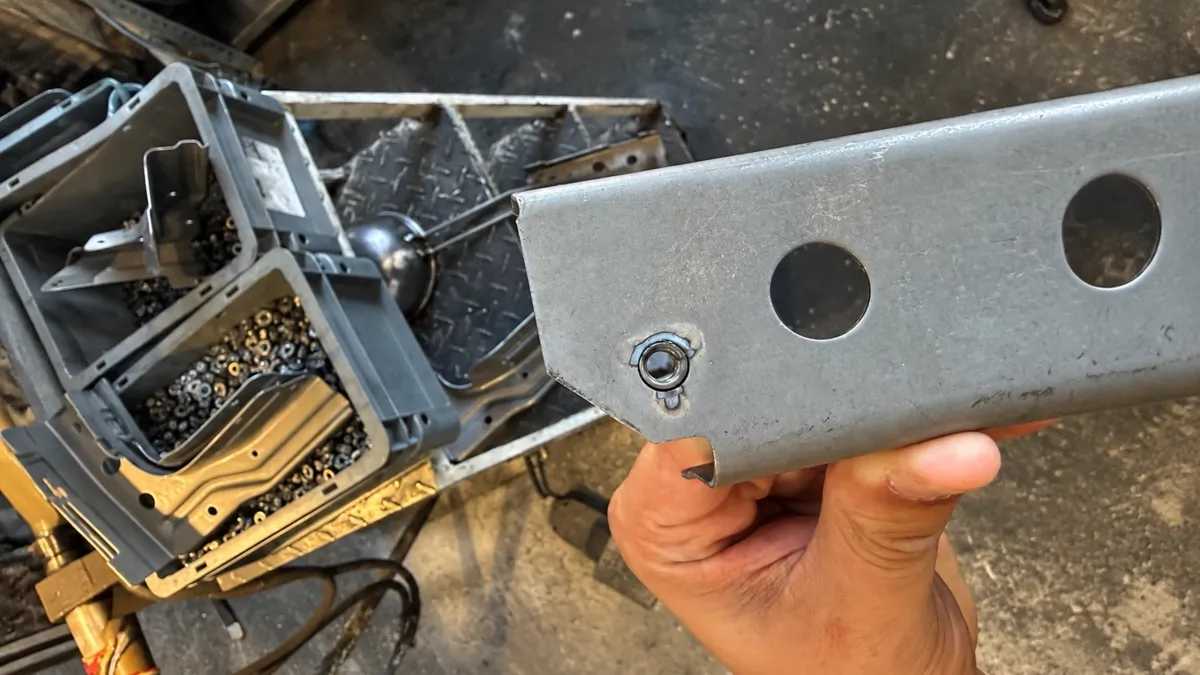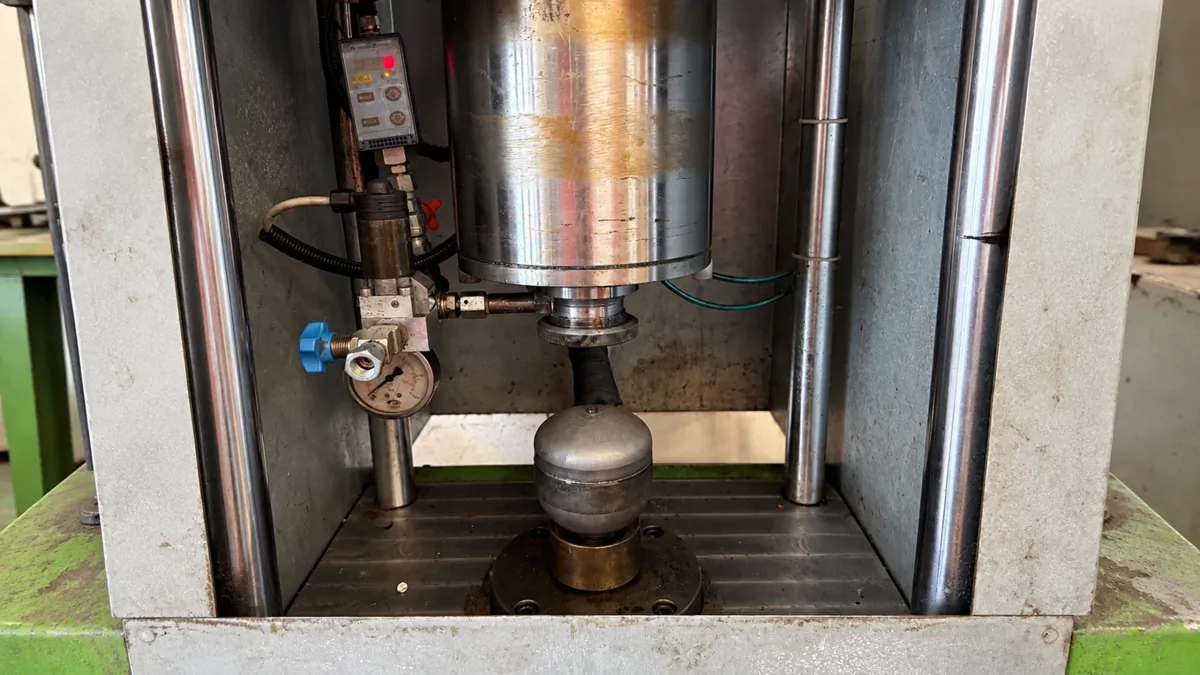





TECNA 3670E: Restoring Electrode Cooling Performance
A real maintenance case involving a TECNA 3670E - CF00 mobile spot welder used in end-of-line operations. Cooling circuit inspection, tank and pipework cleaning, and restoration of electrode cooling in approximately 2 hours.
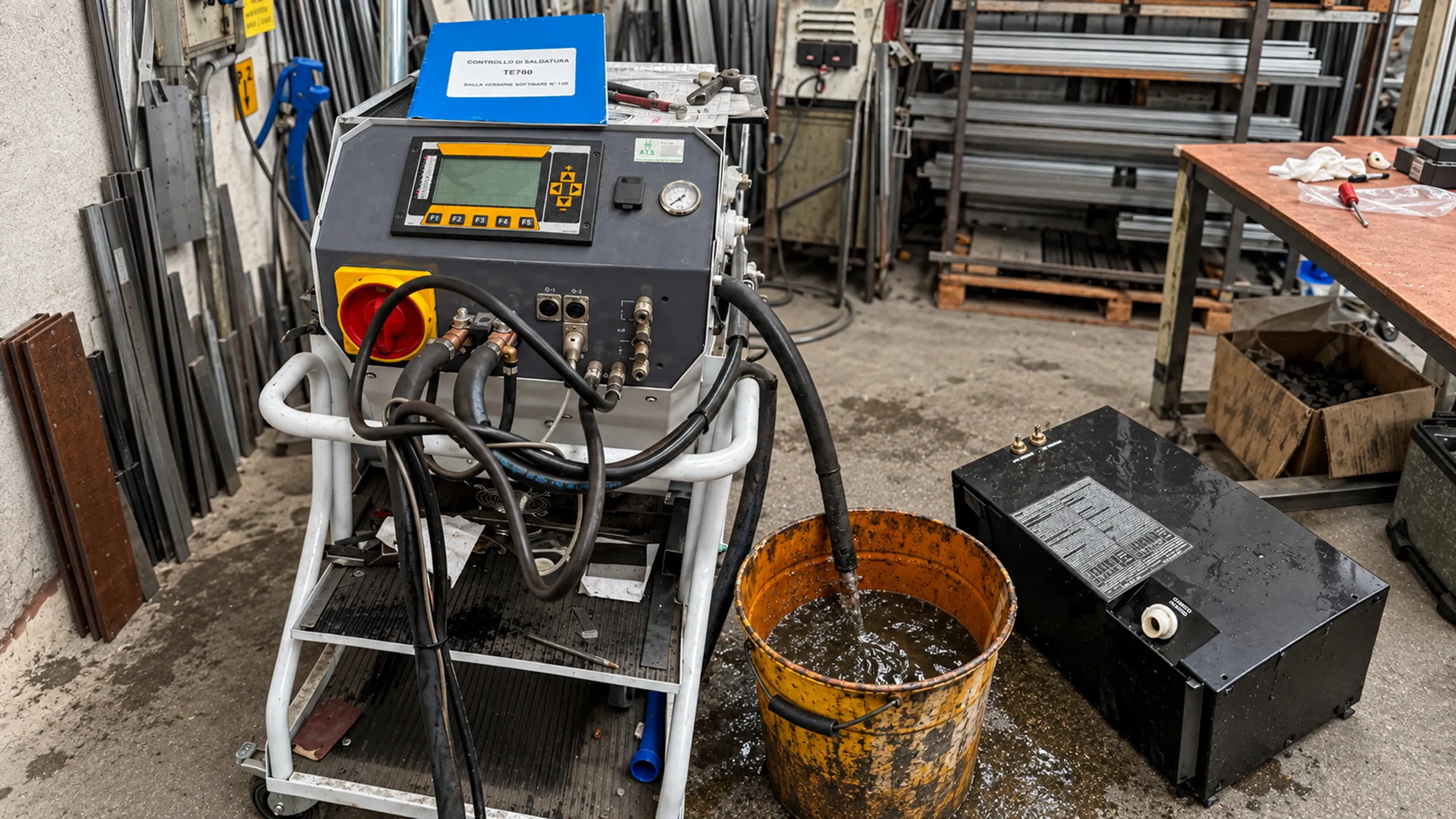
The electrode cooling system on a TECNA 3670E - CF00 mobile spot welder, used in the production of industrial shelving, was no longer operating correctly.
Before carrying out any maintenance work, an A.T.S. specialist technician inspected the cooling circuit to identify the cause of the problem.
An initial compressed-air test confirmed that air could pass through the pipework. The inspection then focused on the water tank and the condition of the cooling fluid, revealing heavily contaminated water with visible sludge deposits.
The technician thoroughly cleaned the tank and flushed the cooling lines, repeating the process until the discharged water ran clear.
After approximately 2 hours of maintenance, the electrode cooling system was operating correctly again.
This case study describes a specific repair carried out on a TECNA 3670E - CF00. Cooling failures can have different causes, so each machine requires its own technical assessment.
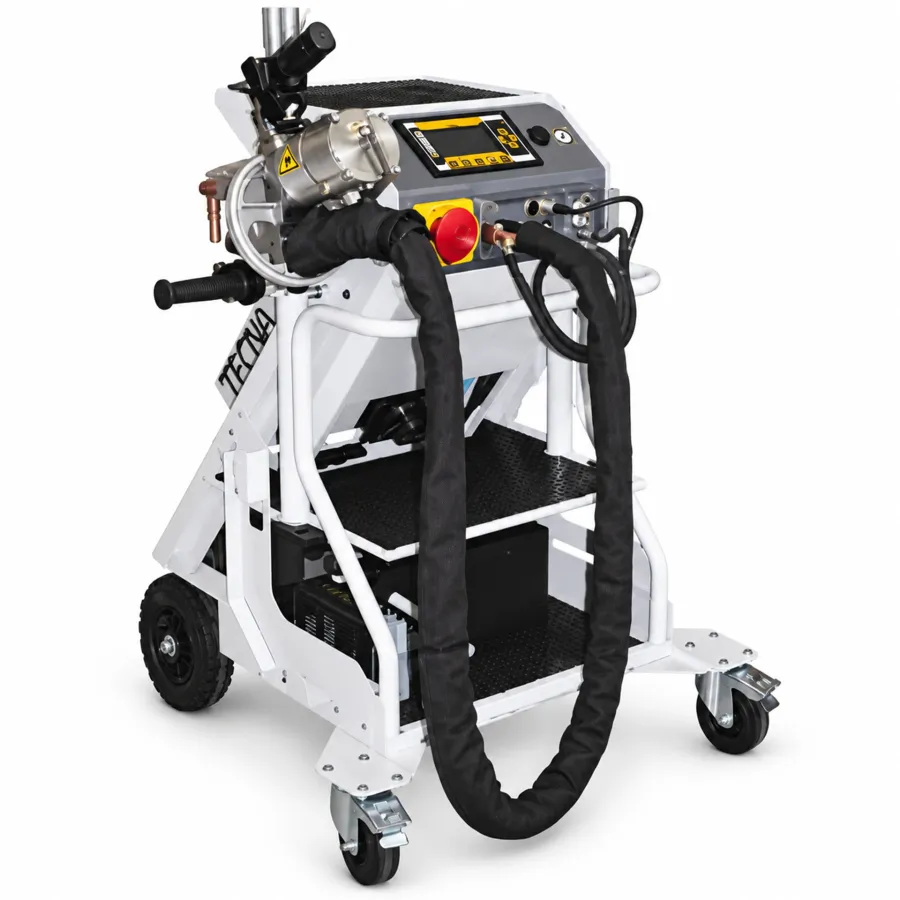 TECNA inverter mobile spot welders (3660E-tech e 3670E-tech)
For high-quality welding in both bodywork and industrial sectors
Read more
The case at a glance
The issue: Electrode cooling was no longer working
The TECNA 3670E - CF00 had developed a fault affecting its electrode cooling system.
A lack of cooling does not necessarily indicate which part of the system is causing the problem. Rather than immediately replacing components or carrying out major repairs, the A.T.S. technician began by inspecting the cooling circuit and checking the path through which the coolant circulates.
The aim was to narrow down the possible causes through a series of checks and determine what action was actually needed based on the machine's condition.
Testing the circuit with compressed air
The first inspection involved introducing compressed air through the circuit inlets.
This test was carried out to check whether air could pass through the pipework and identify any complete blockage.
Air was able to flow through the lines, ruling out a total obstruction. The technician therefore continued the investigation, focusing on other parts of the cooling system.
The next step was to inspect the water tank and assess the condition of the cooling fluid.
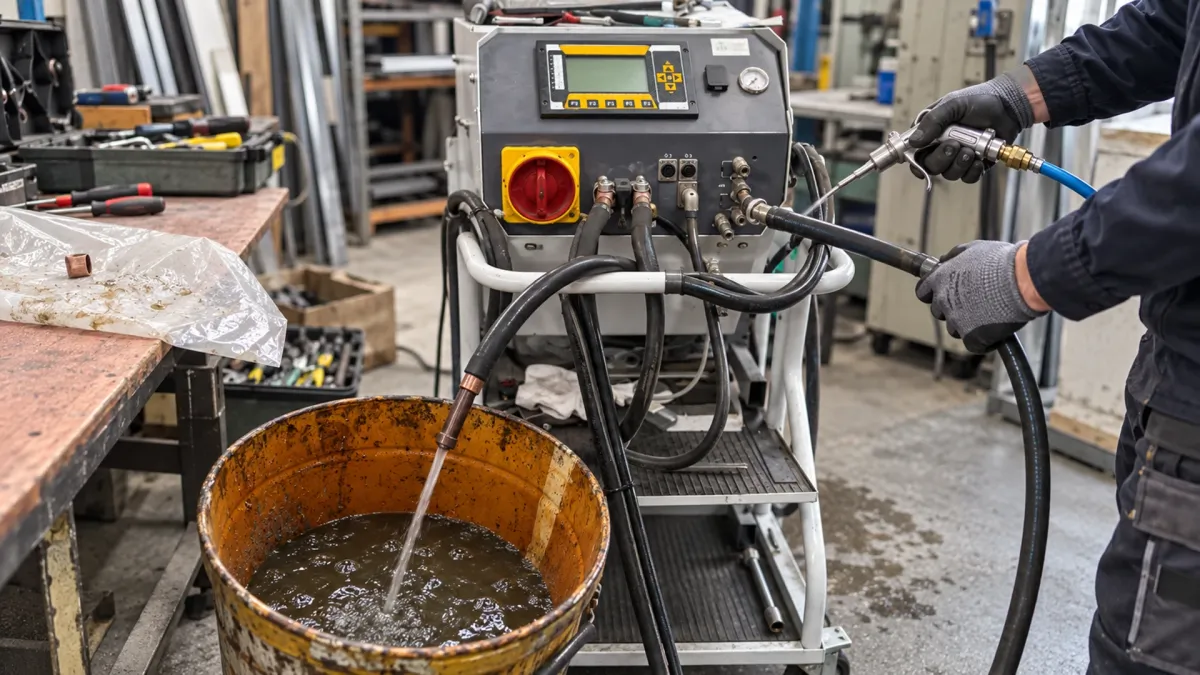
Heavily contaminated water and sludge in the cooling circuit
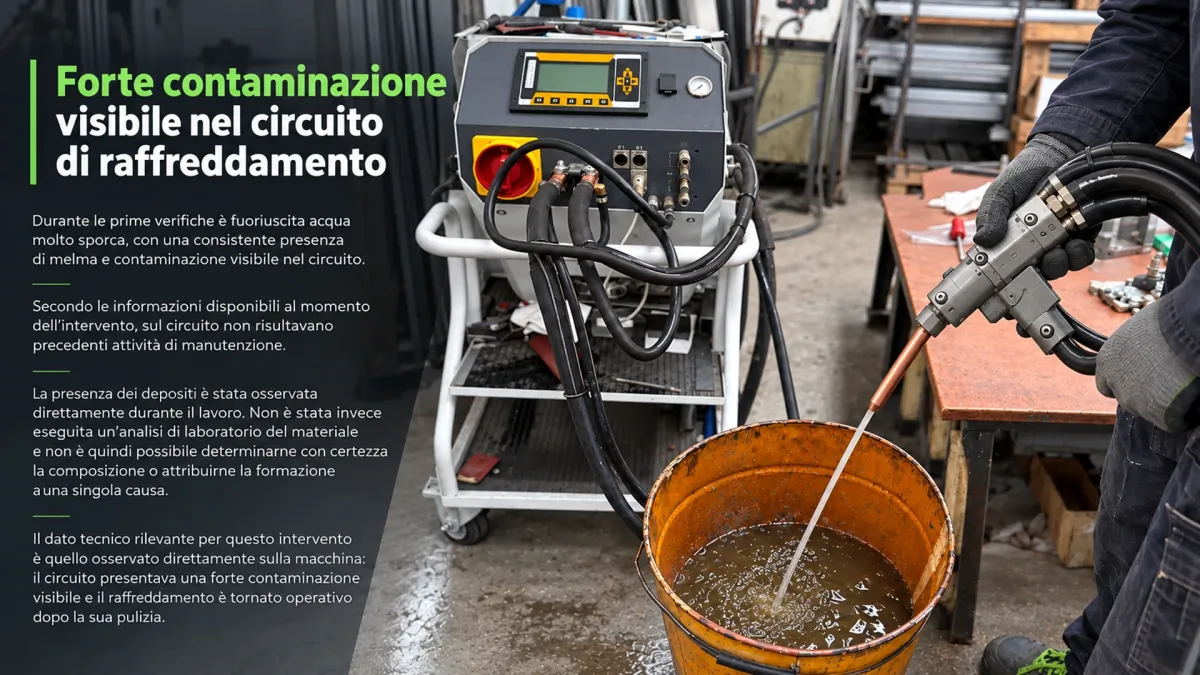
During the initial checks, heavily contaminated water was discharged from the cooling circuit, with a substantial amount of sludge and visible deposits.
According to the information available at the time, no previous maintenance had been carried out on the cooling circuit.
The deposits were observed directly during the inspection. However, no laboratory analysis was performed, so their exact composition could not be established, nor could their formation be attributed to a single cause.
What matters in this particular case is the condition found on the machine: the cooling circuit showed significant visible contamination, and electrode cooling was restored after cleaning.
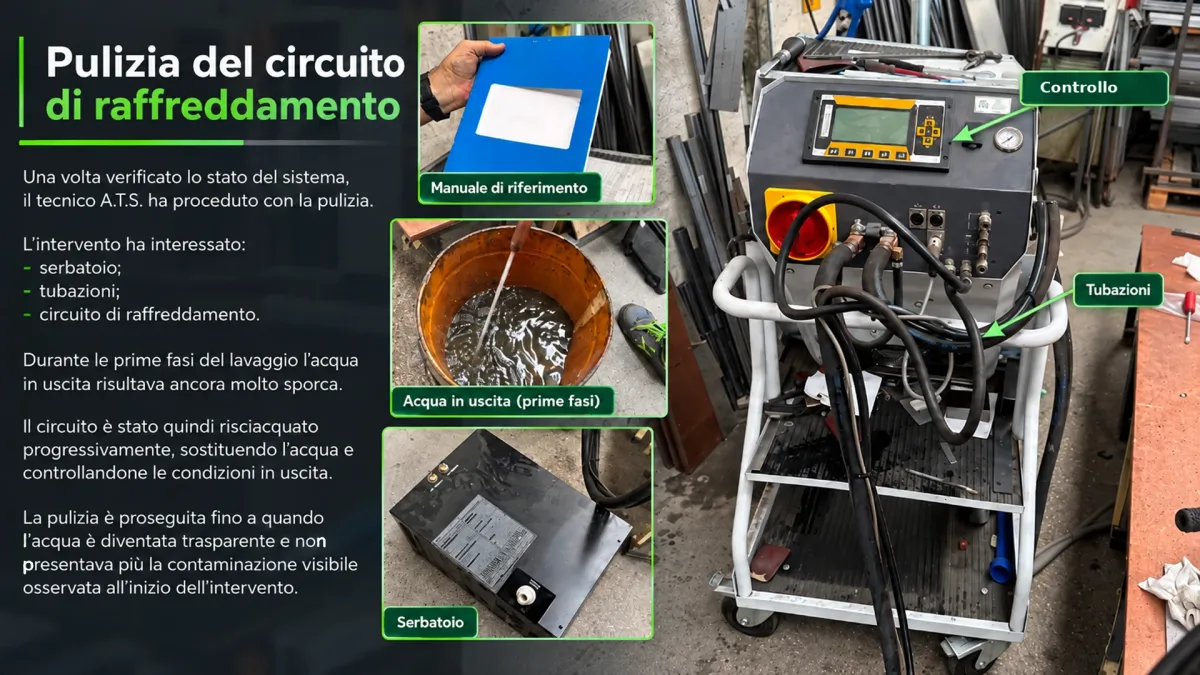
Cleaning the cooling circuit
After assessing the condition of the cooling system, the A.T.S. technician began the cleaning process.
The work covered:
- Water tank;
- Pipework;
- Cooling circuit.
During the initial flushing, the water coming out of the system was still heavily contaminated.
The technician continued flushing the circuit, replacing the water and checking its condition at the outlet after each stage.
Cleaning continued until the discharged water ran clear, with no visible signs of the contamination found at the start of the maintenance work.
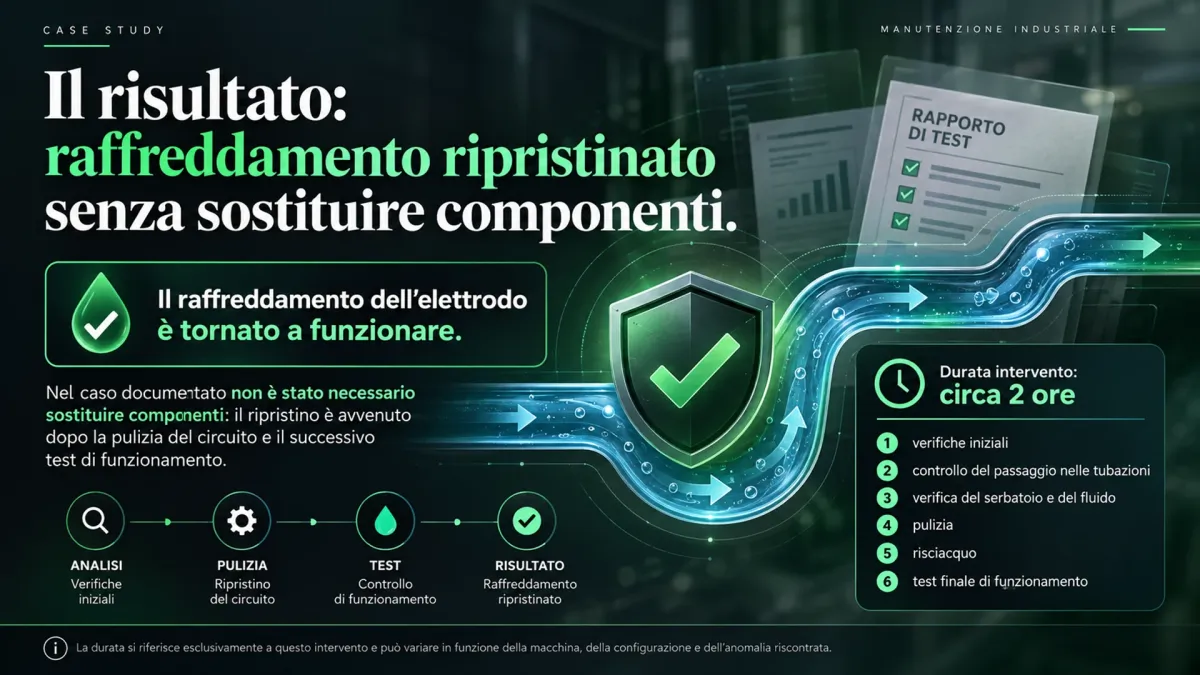
The result: Electrode cooling restored without replacing any components
Following the cleaning of the water tank and pipework, the TECNA 3670E - CF00 was tested again to check whether the cooling system was working correctly.
Electrode cooling was successfully restored.
No components needed replacing in this particular case. Cleaning the cooling circuit, followed by a final operational test, was sufficient to restore its function.
The entire maintenance operation took approximately 2 hours, including:
- Initial inspections;
- Checking airflow through the pipework;
- Inspecting the water tank and cooling fluid;
- Cleaning the system;
- Flushing the circuit;
- Final operational test.
The time required relates specifically to this maintenance case. Other interventions may take longer or shorter depending on the machine, its configuration and the nature of the fault.
Before and After Maintenance
| Before the intervention | After the intervention |
|---|---|
| Electrode cooling not working | Electrode cooling restored |
| Heavily contaminated cooling water | Clear water in the cooling circuit |
| Contamination found in the water tank | Water tank cleaned |
| Pipework checked with compressed air | Pipework cleaned |
| Visible contamination in the cooling circuit | Cooling circuit flushed |
What this maintenance case demonstrates
This maintenance case highlights three points worth considering when dealing with cooling problems on a resistance spot welder.
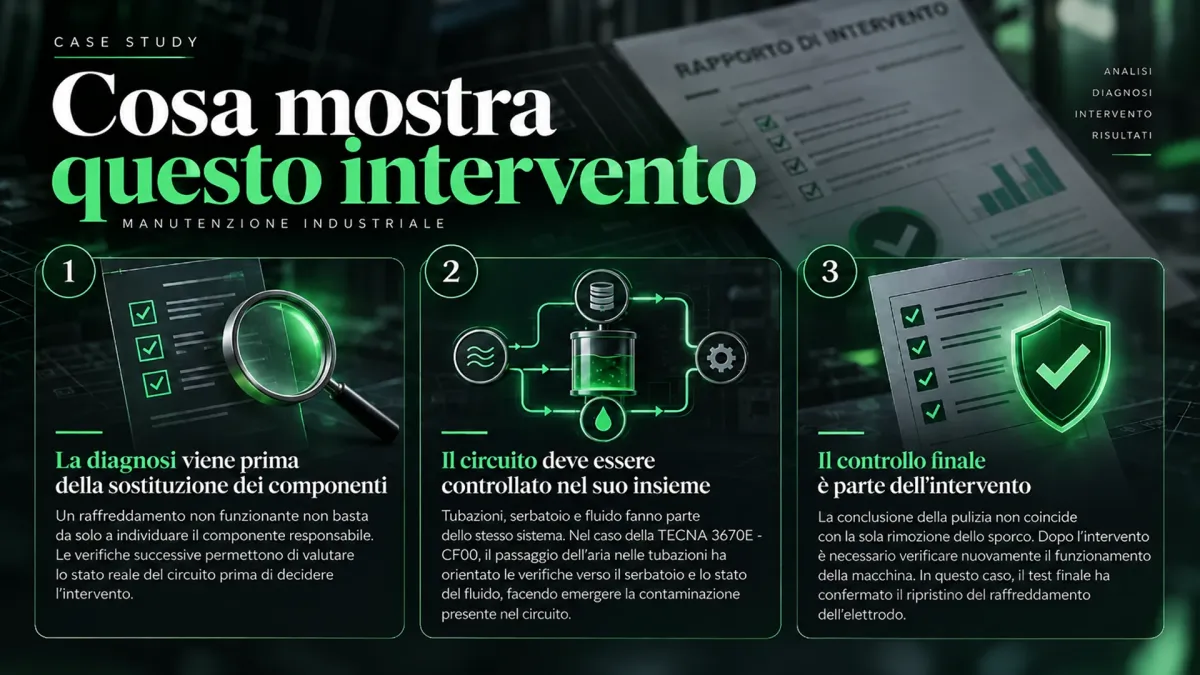
1. Diagnose the fault before replacing parts
When an electrode cooling system stops working, the cause is not immediately obvious. Replacing components without checking the circuit first may leave the original problem unresolved.
A step-by-step inspection helps establish the actual condition of the cooling system and identify what needs attention before any repair work is undertaken.
2. Check the entire cooling circuit
The pipework, water tank and cooling fluid all form part of the same system. Inspecting one element in isolation may not reveal the source of the problem.
On the TECNA 3670E - CF00, compressed air was able to pass through the pipes. This ruled out a complete blockage and led the technician to examine the tank and cooling water more closely, where significant contamination was found.
3. Always confirm the result with a final test
Removing visible dirt does not necessarily mean that the cooling system is working again.
Once cleaning is complete, the machine must be tested to check that the original fault has been resolved.
In this case, the final operational test confirmed that electrode cooling had been successfully restored.
A.T.S. Technical Support for Resistance Welding
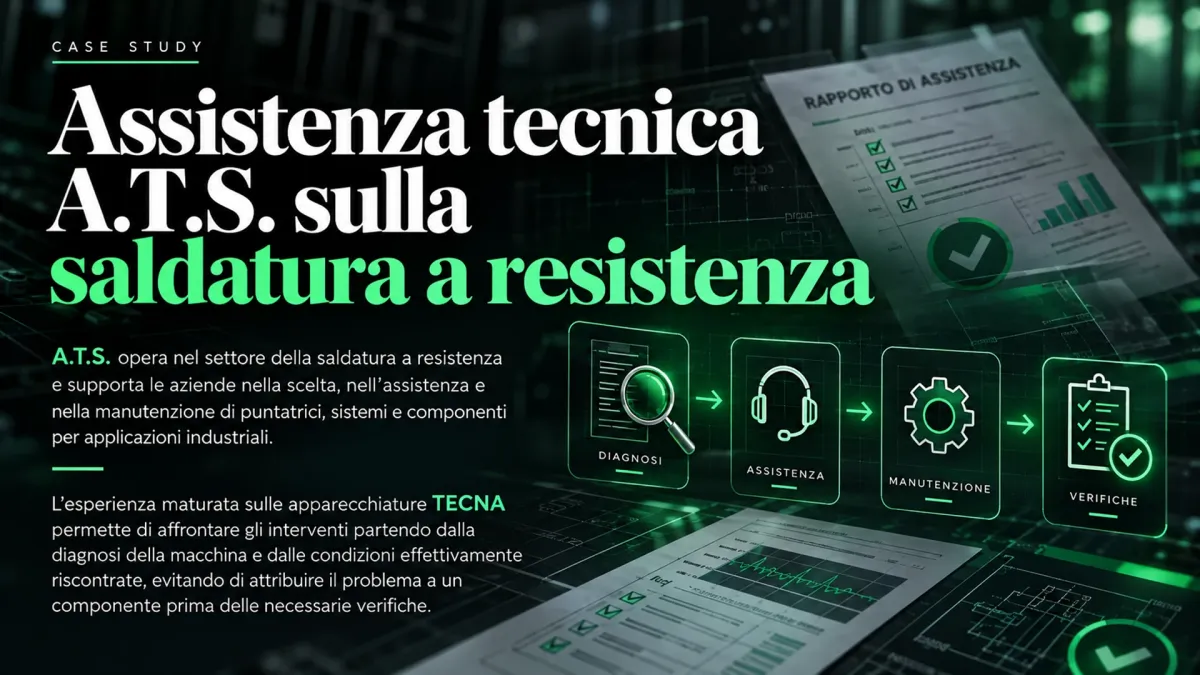
A.T.S. provides technical support for industrial resistance welding, helping companies select, service and maintain spot welding machines, welding systems and related components.
With extensive hands-on experience working with TECNA equipment, A.T.S. approaches maintenance and repair work by examining the machine and identifying the actual operating conditions. This allows technicians to investigate the fault before deciding whether a particular component needs attention or replaceme
Having cooling problems with your TECNA spot welder?
If your TECNA spot welder is experiencing cooling problems, a technical inspection can help determine whether the fault is related to the cooling fluid, pipework, water tank or other components within the circuit.
Contact A.T.S. with your spot welder model and a description of the issue. This information will help us make an initial assessment and arrange the most appropriate technical support.